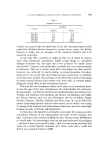
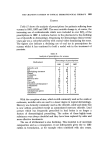
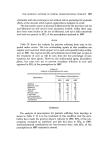
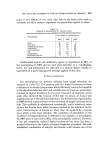
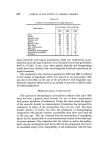
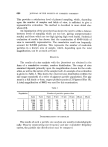
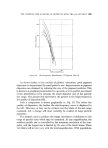
THE CHANGING PATTERN OF TOPICAL DERMATOLOGIGAL THERAPY 673 T•u LECTURER: One of the difficulties of these figures is that there has been a change in the staff over the same period, and therefore the use of mercury salts could well reflect a change in staff as well as a change in the attitude to the treatment. With regard to the preservation of cream containing chlorocresol in the presence ooe cetomacrogol emulsifying wax, I based this comment on a paper that appeared about a year ago in The Lancet in which there had been an outbreak of pseudomonas infection following the use of a proprietary steroid cream that had been diluted with cetomacrogol cream. The information that I had was that the activity of chlorocresol is considerably reduced in the presence of cetomacrogol and in these circumstances a pseudomonas infection was able to proliferate in the cream. Whether this was due to the fact that the cream that was used for dilution was already heavily contaminated with pseudomonas I really do not know. I think that there is little doubt that if you get a heavy inoculum then 0.1% of chlorocresol in the presence o • cetomacrogol will not inhibit a growth of pseudomonas. I made this comment (and I have made it elsewhere) largely to try to discourage dermatologists from requesting that these proprietary products should be diluted. I think that it is highly desirable that the pharmaceutical industry should get together with the dermatologists in order to determine what concentrations of steroids are really wanted so that they can be produced as proprietary preparations. I consider it an undesirable situation when hospital and retail pharmacists are called upon to dilute proprietary products when they do not have the full knowledge of the formulation which the manufacturer has used. DR. C. W. MARSD•: I would like to congratulate you on a very fascinating paper, and at the same time to disagree completely with Dr. Vickers. I think that this paper proves the point that this is what dermatologists do, not what dermatologists think they do. I notice in Table Ioe that you show an increase in the use of topical corticosteroids of over 50% and an increase in the use of antibacterials and antibiotics of only 9%. I think it is true that the combination of corticosteroids, antibacterials and anti- biotics has increased at the same rate. Can you explain this difference in the figures? T• L•CTU•R: I based this survey on the examination of 50 prescriptions selected at random from the records. In my own hospital there are many fewer pre- scriptions for antibiotic corticosteroid combinations in the treatment of eczema, than there are for simple corticosteroid preparations. Du. H. BAKER: I think you flatter clinical dermatologists in suggesting that the changes described reflect a rationalisation and greater understanding of the mode of action of various topical medicaments. As one or two previous speakers have just commented, fashion, teaching and dissatisfaction with previous methods of therapy have partly led to these changes, and partly they involve a desire on the part of dermatologists to jump at any new chance of improving his therapeutic armamen- tarturn. A second point concerns the current use of topical steroids: this very much reflects fashion, I would suspect in ten years' time the figures will be much lower and I xvould support Dr. Vickers' comments, particularly on the use of topical steroids in treatment of psoriasis. In the hands of a physician familiar with its use the old fashioned dithranol (not the newer variant) is undoubtedly the most valuable topical

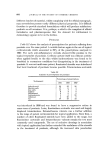
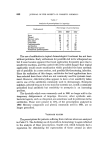
674 JOURNAL OF THE SOCIETY OF COSMETIC CHEMISTS medicament in the management of psoriasis. But it is mainly used in inpatient departments and therefore its use is not reflected in the figures which are derived largely from a large outpatient department. Lastly, I would comment on Table V which shows that 25% of prescriptions for impetigo contain corticosteroids. Impetigo, of course, is a bacterial infection of the epidermis and corticosteroids have absolutely no place in its management. I know perfectly well that the dermatologists on the staff of the Royal Free Hospital know this even better than I do and I would think that those figures to some extent include patients with eczema who became secondarily infected, whose skin became impetigonised, and who were treated with partly steroid combinations to combat the eczema and the antibiotic to deal with the impetigo.
Purchased for the exclusive use of nofirst nolast (unknown)
From: SCC Media Library & Resource Center (library.scconline.org)