THE CHANGING PATTERN OF TOPICAL DERMATOLOGICAL THERAPY 671 in which it is incorporated, and to the role of the vehicle in releasing the medicament on the skin surface and promoting its penetration into the skin. Some of these aspects are dealt with by Barrett (1) and Baker (2). However it is relevant here to mention the effect which the use of these more sophisticated preparations in dermatology has had on prescribing practice. Many of the preparations in use in topical dermatology today are the result of scientific formulation in the pharmaceutical industry, and it is no longer possible for the dermatologist to mix together several preparations in the hope that the mixture will be compatible. A recent outbreak of pseudomonas infection in a skin hospital was found to be due to contamin- ated steroid cream which had been prepared by diluting a proprietary preparation with an aqueous cream containing cetomacrogol emulsifying wax as the emulsifying agent. The preservative present was chlorocresol and in the presence of cetomacrogol its antiseptic activity had been reduced with the result that the cream became heavily contaminated with pseudo- monas. Experiences such as these emphasise the utmost care that has to be exercised both on the part of the dermatologist in directing that a pro- prietary product should be mixed or diluted with another preparation, and also on the part of the pharmacist when he is called upon to carry out such an operation. It is to be expected in the future that as a more scientific understanding of skin diseases is acquired it will become possible to treat the underlying causes by systemic administration of drugs designed to correct a metabolic disturbance or other underlying physiological cause. Topical treatment, however, is likely to play an important part in dermatology for some con- siderable time to come and the study of preparations used in topical dermatology will remain of interest for many years. (Received: 9th September 1968) REFERENCES. (1) Barrett, C. W. J. Soc. Cosmetic Chemists 9•0 487 (1969) (2) Baker, H. ibid. 239 DISCUSSION DR. P. F. WILDE: Why don't the columns add up to 100 when they are a per~ centage of prescriptions? THE LECTURER: They do not add up to 100 in all cases because there were some prescriptions for preparations which were not easily classified on the basis that I have

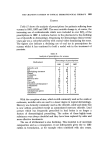
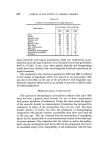
672 JOURNAL OF THE SOCIETY OF COSMETIC CHEMISTS chosen. These were mainly special shampoos used particularly in eczematous patients, and they were, very largely, cetrimide shampoos. MR. P. Mox•¾: Would you suggest that the results shown in your Tables would be applicable to most other institutions dealing with these problems in the United Kingdom? TI• L•CTUR•R: I can not really comment. I had access only to the records of the Royal Free Hospital, but my experience in discussing problems with dermatologists would lead me to believe that it is a general trend, which may be more pronounced in some cases than in others. MR. N.J. VAN ABex: Is there any evidence to indicate how far the patient has benefited by the changing pattern of dermatological prescribing since 19517 Pre- sumably, data on the resolution of skin diseases in out-patients is difficult to obtain, but can this be derived from numbers of working days lost? TI• L•CTUR•R: My examination of the records did not extend that far. As I went through the records I obtained the impression that they were outpatients, the majority of whom did not come back. Whether this was because they were cured or because they decided to find some other treatment I would not like to say. DR. C. F. H. V•cI(•Rs: If I may, I •vould like to comment on this from the clinical angle because the question has been raised whether your figures represent the whole of this country. I think I can speak quite definitely for at least two, and probably three or four, northern centres and I •vould think that there would be several striking differences. The first of these would be in eczema where crude coal tar is still used to a very much greater extent than Table II would suggest, though I would entirely agree that topical corticosteroids have revolutionised this disease. Their long term management is still helped tremendously by the use of crude coal tar. With regard to psoriasis, I think if you took figures from the four Northern centres with outpatient psoriasis treatment units, you would find a completely different set of results. Tar and dithranol would top the bill by a very long way, with corticosteroids probably used only in perhaps 10% of these patients. I •vonder if I could also comment on the very real question--has the change in therapy in any •vay influenced the wellbeing of our patients? I am sure that the most important thing that has happened here has been the fact that patients with previously incapacitating diseases, sometimes requiring admission to hospital, are no longer admitted to hospital, but remain at work. This is reflected in the decrease in the number of beds in many dermatological units over the last few years. MR. M. J. BussE: It seems that between 1951 and 1957 (Table IV) there was a craze for mercury salts and this has dropped to nil by 1967. I wonder whether you could elaborate and tell us the background for this. In page 671, you refer to the inactivation of chlorocresol in a cream in the presence of cetomacrogol. I would like to say that there is unpublished laboratory evidence available showing that 0.1% chlorocresol in a cream base containing cetomacrogol is quite effective both antifungally and antibacterially, against heavy inoculate.
Purchased for the exclusive use of nofirst nolast (unknown)
From: SCC Media Library & Resource Center (library.scconline.org)