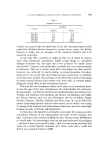
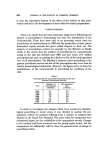
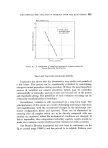
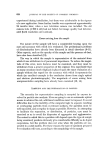
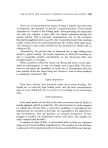
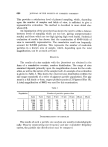
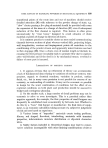
THE CHANGING PATTERN OF TOPICAL DERMATOLOGICAL THERAPY 667 obtainable with this technique is not without risk in producing the systemic effects of the steroids which topical application is designed to avoid. The intractable nature of psoriasis is illustrated by the fact that coal tar and dithranol are still used in local treatment. Indeed, whilst there may have been some decline in the use of dithranol, coal tar is still extensively used and was present in 22% of the prescriptions analysed in 1967. ACNE Table IV shows the analysis for patients suffering from acne in the period under review. The two outstanding agents in this condition are sulphur and resorcinol which appear to be used as frequently today as they were in 1951. The topical steroids and antibiotics have little part to play in the treatment of acne as will be seen from the low percentage of pre- scriptions for these agents. However, the antibacterial agent, hexachloro- phane, has come into use to prevent secondary infection in acne and appeared in 20% of the prescriptions in 1967. Table IV Analysis of prescriptions for acne ! Medicament Percentage of prescriptions ß 1••1 1 7 1967 Sulphur 66 I 54 Salicylic acid i 17 I 6 Resorcin 17 26 Zinc salts 66 26 Phenol • 33 0 Mercury salts I 170 0 Lead salts 0 Corticosteroids 00 12 Hexachlorophane 20 Antibiotics 0 3 IMPETIGO The analysis of prescriptions for patients suffering from impetigo is shown in Table V. It ,.'s in the treatment of this condition that the anti- biotics have made the greatest impact. Already in 1957, 60% of the pre- scriptions contained an antibiotic and this had risen to 75% in 1967. Antibiotic/steroid combinations are less favoured since only 25}/0 of the prescriptions in 1967 contained asteroid.

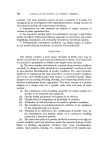
668 JOURNAL OF THE SOCIETY OF COSMETIC CHEMISTS Table V Analysis of prescriptions for impetigo Medicament Dyes Phenol Mercury salts Zinc salts Lead salts Corticosteroids Antibiotics Antibacterial agents Potassium permanganate Percentage of prescriptions 1951 50 25 50 0 0 1957 7 7 7 2O 7 14 6O 0 0 1967 0 0 0 0 0 25 75 12 12 The use of antibiotics in topical dermatological treatment has not been without problems. Early enthusiasm for penicillin led to its widespread use but it soon became apparent that local application frequently gave rise to sensitivity reactions, and this carried with it the added danger that topical application would create sensitization which precluded the later systemic use of penicillin in a more serious, and possibly life-threatening, infection. Since the realization of this danger, antibiotics for local applications have been selected from those which are not commonly used for systemic treat- ment. However, chlortetracycline appears to have a low sensitivity index and is one of the antibiotics commonly used in dermatology. Neomycin sulphate, selected because it is too toxic for systemic use, is still a commonly prescribed local antibiotic but sensitivity to neomycin is an increasing problem. The dyestuffs which were commonly used in 1951 no longer add to the temporary disfigurement of impetigo. However, other synthetic anti- bacterial agents, such as clioquinol, are sometimes used in preference to the antibiotics. These were present in 12% of the prescriptions analysed in 1967. Mercury compounds and phenol, commonly used in 1951, are no longer prescribed. VARICOSE ULCERS The prescriptions for patients suffering from varicose ulcers are analysed in Table VI. The declining use of dyestuffs in dermatology is again reflected in the analysis of these prescriptions. Scarlet red, which formerly had a reputation for stimulating the regeneration of tissue around an ulcer
Purchased for the exclusive use of nofirst nolast (unknown)
From: SCC Media Library & Resource Center (library.scconline.org)