MOLECULAR WEIGHT OF POLYETHER SURFACTANTS 155 work has been done on polyethylene glyco.1 very little has been reported on polypropylene glycol. Gildenberg and Trowbridge (1) used gas-liquid chromatography to separate ethylene oxide adducts of fatty alcohols. The hydroxyl groups were converted to the acetate esters. This increased the stability of the molecule to high temperatures and permitted temperature programming, enabling them to obtain separate peaks for adducts with up to 13 ethyl- ene oxide units. Calzolari (2) studied the molecular weight fractionation of polyethyl- ene glycol by gas chromatography. Of several derivatives of the poly- ethylene glycol which were tried, the trimethylsilyl derivative was se- lected because it had the highest volatility and thermal stability and the lowest energy of absorption on the support, thus making it the most suit- able for the analysis of polyethylene glycol products with a molecular weight of less than 1000. Withers (3) has also reported on the gas chromatography of poly- ethylene glycols. Identification of the series of polyethylene glycols was made by running the first four members of the series since these were available as pure materials. The assumption was then made that suc- cessive peaks following these four each represent an increment of one ethylene oxide residue since the standards correspond to the first four peaks. Ludwig (4) used a variety of techniques for the separation of oligo- mers of ethylene oxide and propylene oxide adducts of alkylphenols. The procedures applied were gas chromatography on derivatives, thin- layer chromatography, and gel permeation chromatography. In addi- tion, nuclear magnetic resonance spectroscopy was used to determine the ethylene oxide/propylene oxide ratio in a copolymer. This work gave the average molecular composition, but did not concern itself with the exact molecular weight distribution. Another technique which has been widely used successfully to deter- mine molecular weight distributions is gel permeation chromatography. One advantage of this method is that it permits one to obtain separations in molecular weight ranges far exceeding 1000. The advent of high- speed liquid chromatography has done much to eliminate one of the drawbacks of column chromatography, namely, the time involved for an analysis. The area of gel permeation chromatography is a very broad field in itself. An excellent monograph by Determann (5) describes its varied applications.

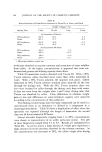
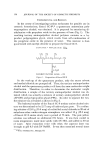
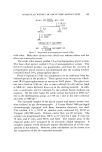
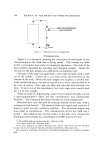
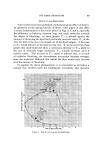
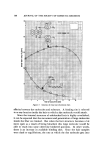
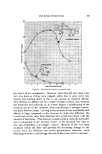
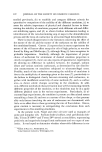
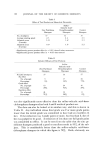
156 JOURNAL OF THE SOCIETY OF COSMETIC CHEMISTS EXPERIMENTAL AND RESULTS In the course of investigating various surfactants for possible use in cosmetic formulations, Eracol CC-9©, *• a quaternary ammonium poly- oxypropylene alcohol, was obtained. It is prepared by autoclaving di- ethylamine with propylene oxide in the presence of base (Fig. 1). The resulting tertiary aminopolyether alcohol polymer contains as a by- product polypropylene glycol, which results from self-condensation of the propylene oxide in the presence of water. This mixture is then quaternized with methyl chloride to prepare the Emcol CC-9. DIETHYLAMINE + PROPYLENE OXIDE C2H5 iH3 •H3 C2H5-N-iH2-CH-O-(CHPi+ G CH3CL a,CH30H QUATERNARY POLYETHER ALCOHOL + PPG Figure 1. Preparation of Emcol CC-9 In the work-up of the quaternary product, only the excess solvent and methyl chloride are pumped off. Thus, the tertiary aminopolyether alcohol and the quaternary product will have the same molecular weight distribution. Therefore, in order to determine the molecular weight distribution, a sample of the tertiary aminopolyether alcohol was ob- tained which was actually a mixture of tertiary aminopolyether alcohol (AP-OH) and polypropylene glycol (PPG). In order to separate the two, the mixture was acetylated as shown in Fig. 2. The hydroxyl number of the Emcol CC-9 tertiary amino alcohol mix- ture was determined to be 2.17 meq of hydroxyl per gram. To a reflux- ing solution of 2.81 g (35.8 meq) of redistilled acetyl chloride in 20 ml of anhydrous ether under nitrogen atmosphere was added 15 g (32.5 meq) of Emcol CC-9 amine slowly over a period of 75 min. The pale yellow solution was refluxed an additional 2« hours. It was then cooled to room temperature, made more acidic with 2N HC1, and added to 40 ml of water. After extraction twice with ether, the aqueous layer was brought to pH 9.5 with 5N NaOH. It was then extracted several times * Witco Chemical Co., Chicago, Ill.
Purchased for the exclusive use of nofirst nolast (unknown)
From: SCC Media Library & Resource Center (library.scconline.org)