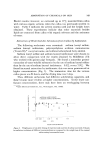
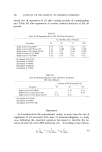
ULTRACENTRIFUGAL STABILITY OF EMULSIONS 173 bility could be explained in terms of physical characteristics (e.g., viscos- ity, interfacial tension, drop size distribution, etc.) or whether less quan- titative concepts (e.g., the chemical nature and the geometric fit between the oil and the surfactant molecules) were of greater importance, the lat- ter having been emphasized by Schulman et al. (10). Since not only the quantity and rate of separation of oil from the emulsion but also the qualitative nature of the time dependence of the rate of separation of oil were found to change markedly with both the nature of the oil and the nature of the surfactant, it seems apparent that chemical and geometrical factors must be considered in addition to the nonspecific physical factors. EXPERIMENTAL Materials The sodium dodecyl sulfate (SDS) was a pure sample used in another investigation (11) and estimated to contain not more than 0.05% lauryl alcohol as an impurity. Cetyl pyridinium chloride (CPC) • was used as received and was found to be 98% active by titration (8) against pure SDS. Triton X-100 (Lot 2788) was used directly as furnished and is re- ported to be 100% polyoxyethylene p-t octyl phenyl ether with 9 to 10 ethylene oxide groups. Tween 20 was also used directly as furnished and is reported to be polyoxyethylene (20) sorbitan monolaurate, HLB number 16.7. Preparation of Emulsions Emulsions were generally prepared as in previous work (8) by first stirring 150 ml of oil and 120 ml of 0.2% aqueous solution of the surfac- tant for 5 min at 5000 rpm in a Brookfield counter-rotating mixer, fol- lowed by eight passes through a motorized Cenco hand homogenizer. After standing overnight, 45-ml aliquots were taken and gently blended with 5-ml solutions of surfactant of appropriate concentration to give 50 ml of emulsion containing a 50-50 volume ratio of oil and water and any desired concentration of surfactant. By this method, it was possible to prepare a set of emulsions of the same drop size distribution but of vary- ing initial concentration of surfactant in the aqueous phase. In the case of emulsions stabilized with Tween 20 and Triton X-100, 0.15% solu- tions of the surfactant were used in the initial preparation, and 0.1% solutions in the case of CPC, since 0.2% solutions of the latter gave such stable emulsions that oil did not separate at a sufficiently rapid rate in the * Matheson, Coleman 8c Bell, East Rutherford, N. J.

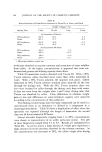
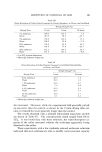
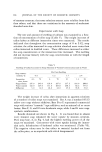
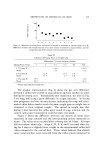
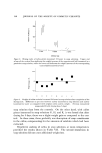
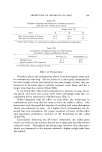
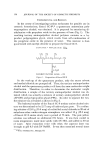
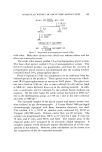
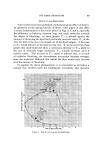
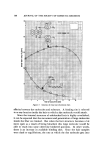
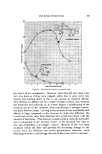
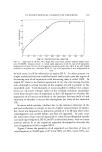
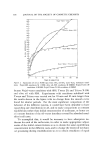
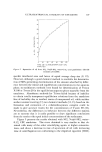
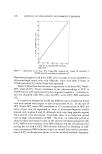
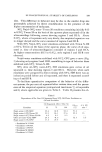
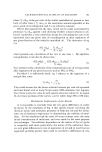
174 JOURNAL OF THE SOCIETY OF COSMETIC CHEMISTS ultracentrifuge. Where larger quantities of emulsion were required, two batches of 270 ml each were prepared separately as described above, and blended together before addition of the final portions of aqueous surfactant solution. Ultracentrifugation Technique and Treatment of Data Unless otherwise indicated, all the emulsions were centrifuged in a Beckman Model E ultracentrifuge at 39,460 rpm at 25øC. The technique of ultracentrifugation and the treatment of the data to deduce the vol- ume of separated oil from the experimental observations were the same as used previously (8, 11). Generally, determinations were made at least in duplicate to establish the reproducibility of the behavior observed. RESULTS In previous ultracentrifugal studies of Nujol-water emulsions sta- bilized with SDS (8, 9, 11, 12), the rate at which oil separated was found to be constant independent of time except for a transitory more rapid separation at the beginning of the experiment. It now appears that this behavior is the exception rather than the rule, since most of the systems studied in the present work showed a decreasing rate of separation of oil with increasing time of centrifugation approaching zero as a limit. Such behavior is also found with Nujol-water emulsions themselves, provided centrifugation is carried out for much longer periods of time, i.e., result- ing in reduction of the residual emulsified oil to smaller fractions of the original amount present (Fig. 1). Figure 1 shows the per cent of oil separated from a 50% Nujol-50% water-0.2% SDS emulsion as a [unction of time of centrifugation at 39,460 rpm at 25øC over a period of 7 hours. The curve has been divided into four regions. In region I at the beginning of centrifugation, the rate of oil separation is relatively much [aster and changes rapidly with time. In region II, the rate is constant, i.e., a linear relation between amount separated and time of centrifugation. In region III, this relation is no longer linear, but the rate of separation decreases progressively with increasing time of centrifugation. With some systems, including Nujol- water-SDS emulsions, this behavior is accurately represented by an em- pirical equation (11). t 1 t - + % oilse•, b. % oilmax % Oilmax
Purchased for the exclusive use of nofirst nolast (unknown)
From: SCC Media Library & Resource Center (library.scconline.org)