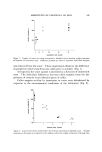
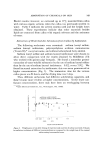
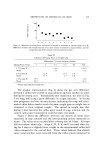
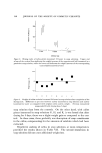
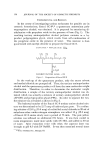
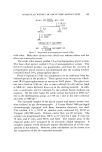
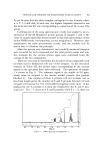
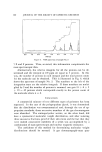
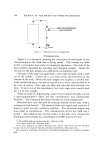
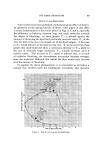
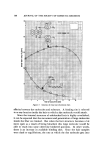
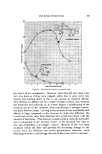
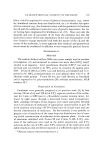
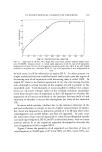
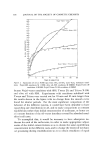
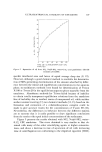
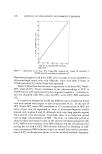
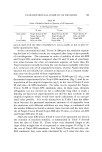
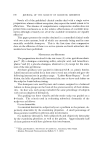
ABSORPTION OF CHEMICALS ON SKIN 141 2o0. lOO. x [] o i i i 3 10 17 X o ß [] 30 5O IMMERSION TIME, HOURS Figure I. Uptake of water by callus immersed in distilled water showing weight increases as function of immersion time. Different symbols are used to represent individual samples was removed from the water. These experiments illustrate the difference in properties which exist from one callus piece to another (Fig. 1). As expected, the water uptake is increased as a function of immersion time. The individual differences between callus samples stress the im- portance of controls on an identical piece ot• callus. Callus samples swollen by immersion in water were dehydrated by exposure to the environmental conditions of the laboratory (Fig. 2). • 2oo• -- • •oo o mmm + o A [] 1 2 3 +• DRYING TIME, HOURS Figure 2. Loss of water from callus swollen by 24 hours immersion in distilled water. Weight increases or decreases as compared to the original callus dry weight as function of drying time

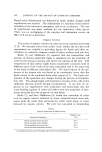
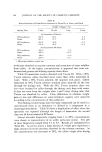
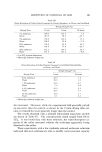
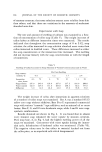
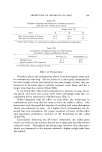
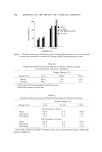
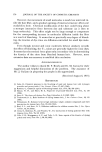
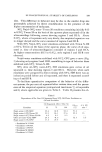
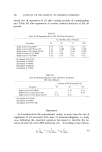
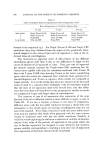
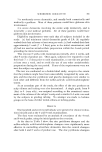
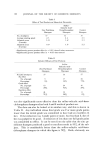
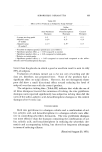
142 JOURNAL OF THE SOCIETY OF COSMETIC CHEMISTS Rapid initial dehydration was followed by much smaller changes until equilibrium was reached. The dehydration is a function of the relative humidity of the laboratory atmosphere and of air circulation. The rate of dehydration was quite uniform for the individual callus pieces. There was no overlapping of the s,orption and desorption curves, an effect well known as hysteresis. Organic Solvents The action of organic solvents on callus has been reported previously (7, 9). We repeated some of the earlier work besides the fact that such experiments are valuable in providing figures for lipids and other ex- tractibles, we wanted to compare results of earlier workers with our own. Blank (7) and Middleton (9) reported that the composition and amount of human epidermal lipids is significant for the retention o[ water by the stratum comeurn and, hence, the softness of the skin. The composition of skin surface lipids shows considerable variations both in different areas of the body of the same individual and in the same area of the body of different individuals (10). The lipid content of the epi- dermis of the human sole was found ,to be consistently lower than the lipid content of the epidermis from other regions (11). The lipid com- position of the epidermis also changes during the process of keratiniza- tion (12). The phospholipid and cholesterol contents of the cells of the epidermis decrease greatly during keratinization. It can thus be ex- pected in our experiments with surfactants and humectants that the water-binding capacity of callus will reflect more the properties of kera- tinous materials than the properties of skin lipids. Blank (7), and later Mi,ddleton (9), found that extraction of callus with an organic solvent, followed by water, extracted much more sub- stance from the callus than extraction by either water alone or water followed by organic solvent. We were not successful in duplicating Table I Solvent Extraction of Callus Pieces Weight Loss • Extraction Sequence (%) Water-acetone-water-acetone Water-alcohol-water-alcohol Water-pyridine-water-acetone Water-alcohol-chloroform-alcohol 10.7 17.0 12.5 15.4 • Of experimental in excess of weight loss of water-extracted control.
Purchased for the exclusive use of nofirst nolast (unknown)
From: SCC Media Library & Resource Center (library.scconline.org)