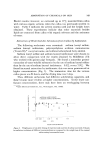
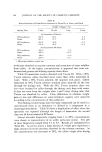
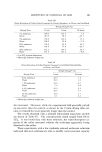
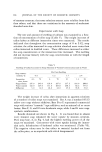
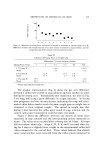
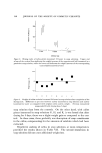
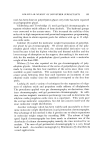
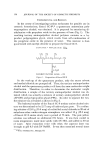
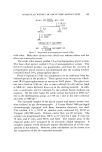
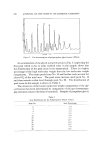
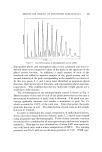
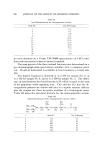
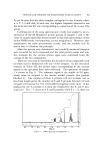
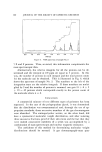
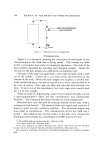
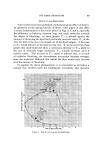
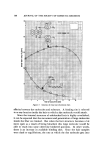
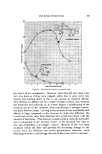
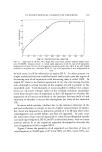
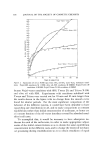
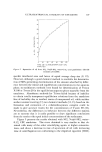
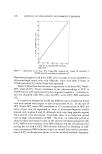
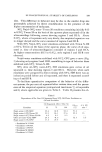
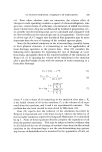
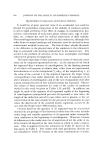
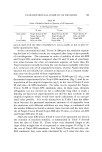
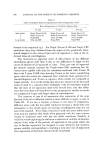
DYE RINSE FROM HAIR 167 RrsvI•S ^Nr• DISCUSSION Some studies have been published (6-9) showing the effect of molecu- lar geometry on the dyeing kinetics of fibers. One aspect of this effect is amply demonstrated by the results shown in Figs. 2, 3, and 4, especially the difference in behavior between large and small molecules towards the degree of bleaching. In these graphs, T i/2 is plotted against the amount of bleaching the dyed hair previously received, where Tv2 is the time for half of the dye to be rinsed out of the dyed sample. A decrease in Tv2would indicate an increase in rinse rate. It can be seen from these graphs that small molecules show a continuous decrease in TV,, while in the case of relatively larger molecules, rv2 actually increases until it reaches a peak. This increase in T,/2 seems to indicate that, as a result of oxidative bleaching, the dye-substrate interaction becomes stronger, since the molecular diffusion rate within the fiber would only increase with the amount of bleaching. To explain the above phenomenon, it is convenient to introduce a concept that involves both the binding-site availability and chemical o i z 2 4 6 8 10 12 14 16 TIME OF BLEACHING Figure 2. Kinetics of rinse-out of neutral dyes

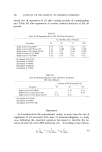
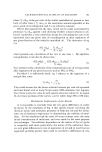
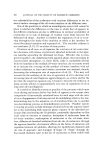
168 JOURNAL OF THE SOCIETY OF COSMETIC CHEMISTS 2 4 6 8 10 12 14 16 TIME OF 8LEACHING (HR) Figure 3. Kinetics of rinse-out of anionic dyes affinity between dye molecules and substrate. A binding site is referred to as any location inside the hair to which a dye molecule would attach. Since the internal structure of unbleached hair is highly crosslinked, it can be expected that the movement and penetration of large molecules inside the fiber are limited. But when the hair structure becomes a bit more open as a result of being bleached, this large molecule would be able to reach into some otherwise hindered positions. In other words, there is an increase in available binding sites. Since the hair samples were dyed to equilibrium, the rate at which the dye molecule gets into
Purchased for the exclusive use of nofirst nolast (unknown)
From: SCC Media Library & Resource Center (library.scconline.org)