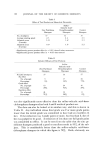
SEBORRHEIC DERMATITIS 191 3 is moderately severe dermatitis, and usually both cosmetically and medically a problem. Most of these patients would have glabrous skin involvement. 4 is severe dermatitis involving the entire scalp intensively, and is invariably a real medical problem. All of these patients would have glabrous skin involvement. Eligibility requirements were such that all subjects included in the study: (a) had minimum initial dermatitis grade of 2.0 (b) regularly washed their hair at home at least once per week (c) had washed their hair approximately 1 week (7 --+ 2 days) prior to the initial examination and (d) had not used an antiseborrheic preparation within the 4-week period preceding the initial examination. This test ran 8 weeks with examinations initially, after 4 weeks, and after 8 weeks of product use. Once again, subjects were required to wash their hair 7 --+ 2 days prior to each examination, to use the test product at least once a week, and to avoid the use of any other antiseborrheic preparation during the test period. If any of the requirements were not met, the subject was rejected. The test was conducted as a double-blind study, except to the extent that the products might have been unavoidably recognized by some sub- jects and that the zinc pyrithione and placebo shampoos were similar to each other and different from the sulfur-salicylic acid-hexachlorophene system. As an attendant part of the study, the effect of the test products on scalp oiliness and itching were also determined. A single grade, from 0 (dry) to 4 (very oily), was assigned according to the examiner's assess- ment of the oiliness of the subject's scalp and a similar 0-4 scale was used by the subjects in grading itching. No attempt was made to balance groups on the basis of either initial oiliness or itching grades. RESULTS One hundred and seventy individuals were present for clinical evalua- tions initially and at the 4- and 8-week examinations. The data were evaluated by an analysis of covariance of the 4-week and 8-week grades, using the initial grades as the covariate. As the data in Table I show, the zinc pyrithione shampoo and the sulfur-salicylic acid-hexachlorophene shampoo were significantly more effective in controlling seborrheic dermatitis than the control shampoo after both 4 and 8 weeks of product use. The zinc pyrithione shampoo

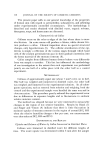
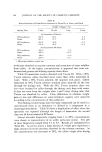
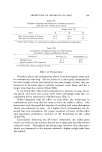
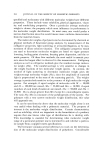
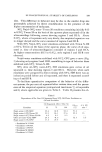
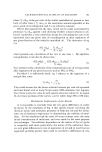
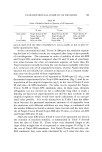
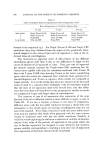
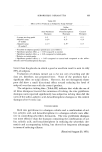
192 JOURNAL OF THE SOCIETY OF COSMETIC CHEMISTS Table I Effect of Test Products on Seborrheic Dermatitis No. of subjects Average starting grade Adjusted mean (4 weeks) Adjusted mean (8 weeks) Sulfur- Salicylic Acid- Zinc Pyrithione Hexachlorophene Shampoo Shampoo Control Shampoo 57 56 2.5 2.6 1.0 ø 1.6 b O. 6 a 1.3 b 57 2.5 2.3 2.2 Significantly greater product effect (a = 0.05) than all other treatments. Significantly greater product effect (a = 0.05) than control. Table II Relative Efficacy of Test Products Su'-fur- Salicylic Acid- Zinc Pyrithione Hexachlorophcne Control Shampoo Shampoo Shampoo Number of subjects 57 56 57 No effect No. of people 3 17 41 Percentage 5 % 30 % 71% Good effect No. of people 13 24 16 Percentage 24 % 42 % 29 % Excellent effect No. of people 41 15 0 Percentage 71% 28 % 0 % was also significantly more effective than the sulfur-salicylic acid-hexa- cholorophene shampoo after both 4 and 8 weeks of product use. The data can also be looked at in another way, and this is shown in 'Fable II. Any individual whose final grade was 2 or more grade points lower than the initial grade was considered to have had an excellent ef- fect. If the reduction was 1 grade point or more, but less than 2, the ef- fect was judged to be good. A reduction of less than one full grade point was considered no effect. It can be seen from the table that the zinc py- rithione shampoo produced a good or excellent result in 95% of the sub- jects. This is considerably better than the sulfur-salicylic acid-hexa- chlorophene shampoo in which this figure is 70%. Both, obviously, are
Purchased for the exclusive use of nofirst nolast (unknown)
From: SCC Media Library & Resource Center (library.scconline.org)