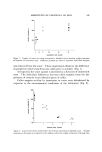
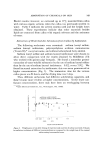
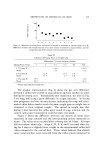
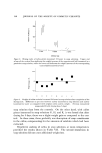
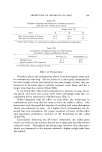
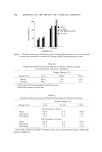
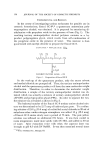
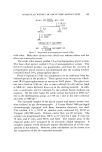
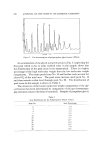
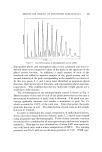
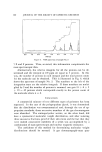
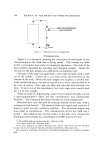
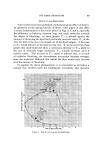
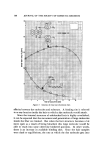
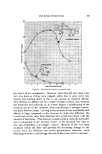
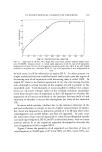
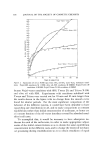
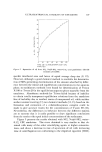
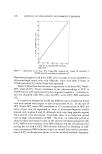
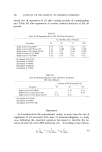
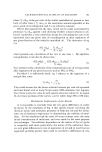
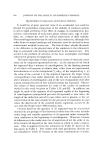
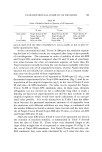
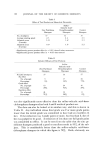
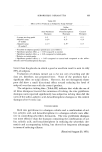
DYE RINSE FROM HAIR 169 8O 2 4 6 8 10 12 14 16 TIME OF BLEACHINO (HR) Figure 4. Kinetics .of rinse-out of cationic dyes the sites is of no consequence. However, once they fall into these sites, they stay there as if they were trapped, either due to some steric con- straints surrounding them, or due to an increase in chemical affin,it¾. The increase in affinity can be a result of larger contact area between dye molecules and substrate, or, to a lesser degree, a modification of the chemical nature of the substrate, thus contributing a stronger interac- tive force between them. As long as the increase in site availability and affinity is large compared to the increase in molecular diffusion, the overall rate of dye rinse from bleached hair would slow down with the amount of bleaching. This behavior would continue until the molecular size is comparable to the internal "holes" of the bleached hair fiber so that site availability is no longer a factor. Because of the very open structure within the fiber and possibly the increasing damage to the cuticle layer, the diffusion rate would predominate therefore, when bleaching reaches a critical stage, the rate of dye rinse starts to increase.

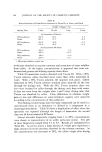
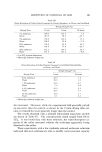
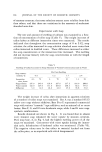
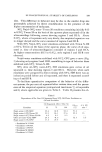
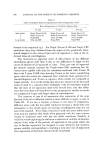
170 JOURNAL OF THE SOCIETY OF COSMETIC CHEMISTS However, the movement of small molecules is much less restricted in- side the hair fiber, and a gradual opening of internal structure affects site availability little. Chemical modification of the hair could bring about a stronger interactive force between dye and substrate (as it does to large molecules). This effect might not be large enough to compensate for the corresponding increase in molecular diffusion inside the fiber as a result of bleaching. It seems that at practically any degree of bleach- ing, the kinetics of dye rinse are diffusion-controlled for small dye mole- cules. Even though neutral and ionic molecules behave similarly towards the effect of bleaching, the T1/, values are generally higher for ionic dyes. It seems that electrostatic force plays only a secondary role in determining the kinetics of dye rinse from bleached human hair. However, more extensive data are necessary to establish this conclusion. ACKNOWLEDGMENTS The author wishes to thank Dr. F. Brody and Dr. M. Garcia for their suggestions and helpful discussions of the problem. The assistance of Mr. J. Guliano in preparing the graphs is also appreciated. (Received August 6, 1971) REFERENCES (I) Zahn, H., Chemical processes in the bleaching of wool and human hair with hydrogen peroxide and peroxy acids, J. Soc. Cosmet. Chem., 17, 687 (1966). (2) Robbins, C., Chemical aspects of bleaching human hair, Ibid., 22, 339 (1971). (3) Edman, W. W., and Marti, M. E., Properties of peroxide-bleached hair, Ibid., 11, 133 (1960). (4) Jones, F., The theory of dyeing, Rev. Prog. Coloration, 1, 15 (1967-1969). (5) Underwood, D. L., Basic elements of dyeing human hair, J. Soc. Cosmet. Chem., 12, 155 (1961). (6) Wilmsmann, H., Relation between high molecular weight aromatic compounds and their penetration for human hair, Ibid., 12, 490 (1961). (7) Bird, C. L., and Scott, D. F., Diffusion coefficient in cellulose acetate film, J. $oc. Dyers Colour., 72, 49 (1956a). (8) Glenz, O., Beckman, W., and Wunder, W., The mechanism of dyeing polyester fiber with disperse dyes, Ibid., 75, 141 (1959). (9) Giles, C. H., Montgomery, A. P., and Tolia, A. H., Some aspects of the kinetics of dyeing .gelatin and wool, Text. Res. J., 32, 99 (1962).
Purchased for the exclusive use of nofirst nolast (unknown)
From: SCC Media Library & Resource Center (library.scconline.org)