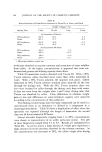
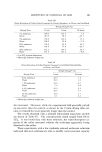
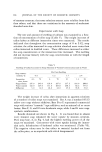
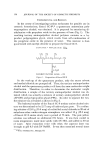
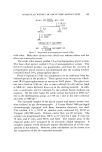
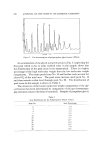
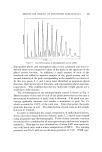
140 JOURNAL OF THE SOCIETY OF COSMETIC CHEMISTS The present paper adds to our general knowledge of the properties of human skin with regard to permeability, substantivity, and softening under experimentally controlled circumstances. The methodology is described and results obtained with distilled water, organic solvents, detergents, soaps, and humectants are discussed. Characteristics of Callus Calluses occur on the soles or edges ot5 the 15eet where there is exces- sive friction. An acute excess will produce a blister, while chronic 15fic- tion produces a callus. Clinical inspection shows no special structural changes, only hyperkeratosis (5). The cellular stratification of the epi- dermis is simply a reflection o15 the various stages through which basal cells o15 the stratum germinativum pass in their gradual conversion into the horny material o15 the stratum corneum (6). Callus samples from different human donors behave very differently from one sample to another. This fact has influenced the methodology o15 our investigation to the extent that each experiment was performed jointly on one hal15 o15 a callus piece with the other hal15 as a control experiment. METHODOLOGY Calluses o15 approximately equal size (about 7 mm '•) were cut in half. One haft was weighed and immersed in distilled water, the other half was weighed and immersed in the experimental solution. In all subse- quent operations, such as removal from solution and weighing, both the control and the experimental sample were handled the same way and in close succession. This procedure greatly reduced the experimental error due to differences in exposure lengths and to fluctuations in ambient relative moisture content. The method was adopted because we were interested in measurable changes in the region o15 low relative humidity. Results by Blank (7) and Singer and Vinson (8) indicate that there is little fluctuation in moisture uptake o15 stratum corneum in the region of around 20% RH when the relative humidity changes a 15ew per cent our measurements were thus taken at 20% RH and 22øC. EXPERIMENTAL AND RESULTS Uptake and Release of Water by Callus Irnrnersed in Distilled Water Calluses were immersed in distilled water 15or different lengths of time. The water uptake was determined within 5 min a15ter the sample

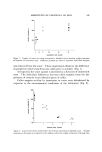
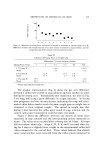
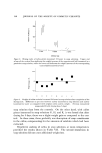
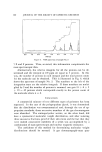
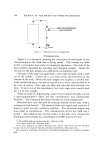
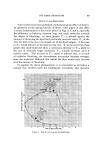
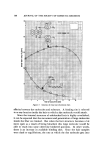
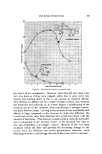
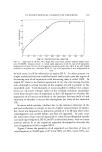
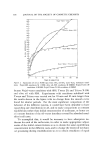
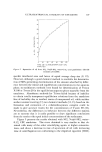
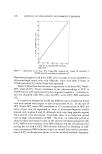
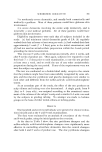
ABSORPTION OF CHEMICALS ON SKIN 141 2o0. lOO. x [] o i i i 3 10 17 X o ß [] 30 5O IMMERSION TIME, HOURS Figure I. Uptake of water by callus immersed in distilled water showing weight increases as function of immersion time. Different symbols are used to represent individual samples was removed from the water. These experiments illustrate the difference in properties which exist from one callus piece to another (Fig. 1). As expected, the water uptake is increased as a function of immersion time. The individual differences between callus samples stress the im- portance of controls on an identical piece ot• callus. Callus samples swollen by immersion in water were dehydrated by exposure to the environmental conditions of the laboratory (Fig. 2). • 2oo• -- • •oo o mmm + o A [] 1 2 3 +• DRYING TIME, HOURS Figure 2. Loss of water from callus swollen by 24 hours immersion in distilled water. Weight increases or decreases as compared to the original callus dry weight as function of drying time
Purchased for the exclusive use of nofirst nolast (unknown)
From: SCC Media Library & Resource Center (library.scconline.org)