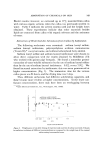
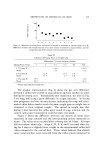
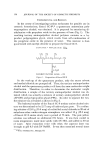
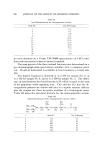
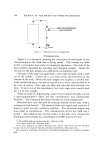
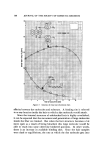
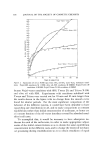
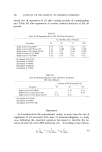
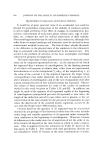
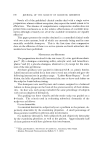
166 JOURNAL OF THE SOCIETY OF COSMETIC CHEMISTS •TO SPECTROPHOTOMETER FROM PHOTOMETER Figure 1. Schematic of rinse-out apparatus EXPERIMENTAL Figure 1 is a schematic showing the continuous measurement of dye concentration as the dyed hair is being rinsed. The rinsing was done inside a rectangular box made of transparent plexiglass. One side of the box could be detached for inserting and changing samples. Inside the rinsing box the hair sample was confined in a rectangular cage. One part of the cage was made from a thin slide of plastic with a hole cut in the middle. A piece of 1/16 in. wire screen was mounted on the bottom of the hole. When the hair sample was in place, a second simi- larly constructed piece was put on top of it as a cover, and secured to it by a set of screws. The cage was then slid into the box between two slots. In each run of the experiment, four such cages were usually used for 1 g of hair sample. With the help of a liquid pump, water was circulated through a cell in a spectrophotometer* where the dye concentration was continuously recorded. The rinsing of dyed hair was done at room temperature. Bleached hair was obtained by treating normal brown hair with a commercial hair bleach? The bleached hair was rinsed with water for 2 hours to leach out any residual persulfate. The bleached sample was then dyed* to equilibrium. The concentration of the dye bath was 1 g/liter. The residual dyes on the surface of the hair were removed by leaving the dyed sample in a centrifugeõ at 10,000 rpm for 45 min. * Gilford 2000, Beckman Instruments, Inc., Fullerton, Calif. • Ultra Blue, Clairol Inc., Stamford, Conn. * Dyes were prepared at Clairol Research Lab. except Acid Green 25 and Deorlene Orange, which were obtained from Ciba Chemical and Dye Co., Fair Lawn, N.J. õ International Centrifuge, Model HG, International Equipment Co., Needham Heights, Mass.

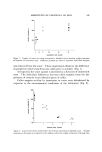
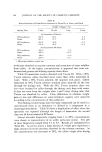
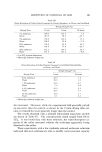
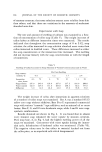
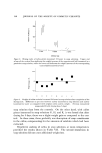
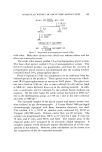
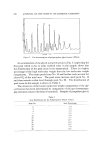
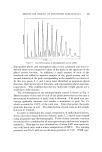
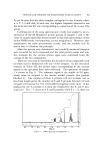
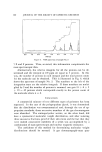
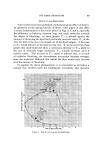
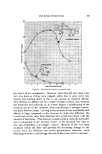
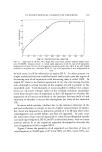
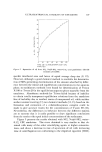
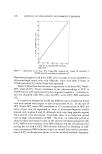
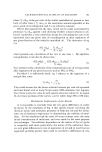
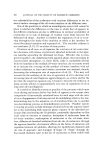
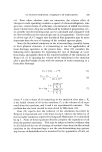
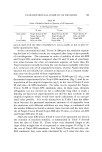
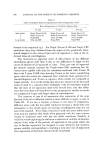
DYE RINSE FROM HAIR 167 RrsvI•S ^Nr• DISCUSSION Some studies have been published (6-9) showing the effect of molecu- lar geometry on the dyeing kinetics of fibers. One aspect of this effect is amply demonstrated by the results shown in Figs. 2, 3, and 4, especially the difference in behavior between large and small molecules towards the degree of bleaching. In these graphs, T i/2 is plotted against the amount of bleaching the dyed hair previously received, where Tv2 is the time for half of the dye to be rinsed out of the dyed sample. A decrease in Tv2would indicate an increase in rinse rate. It can be seen from these graphs that small molecules show a continuous decrease in TV,, while in the case of relatively larger molecules, rv2 actually increases until it reaches a peak. This increase in T,/2 seems to indicate that, as a result of oxidative bleaching, the dye-substrate interaction becomes stronger, since the molecular diffusion rate within the fiber would only increase with the amount of bleaching. To explain the above phenomenon, it is convenient to introduce a concept that involves both the binding-site availability and chemical o i z 2 4 6 8 10 12 14 16 TIME OF BLEACHING Figure 2. Kinetics of rinse-out of neutral dyes
Purchased for the exclusive use of nofirst nolast (unknown)
From: SCC Media Library & Resource Center (library.scconline.org)