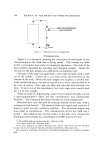
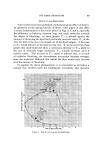
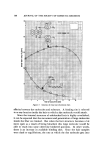
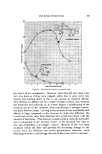
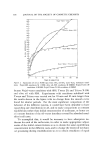
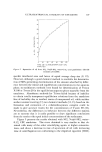
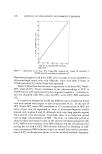
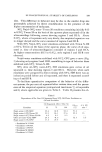
170 JOURNAL OF THE SOCIETY OF COSMETIC CHEMISTS However, the movement of small molecules is much less restricted in- side the hair fiber, and a gradual opening of internal structure affects site availability little. Chemical modification of the hair could bring about a stronger interactive force between dye and substrate (as it does to large molecules). This effect might not be large enough to compensate for the corresponding increase in molecular diffusion inside the fiber as a result of bleaching. It seems that at practically any degree of bleach- ing, the kinetics of dye rinse are diffusion-controlled for small dye mole- cules. Even though neutral and ionic molecules behave similarly towards the effect of bleaching, the T1/, values are generally higher for ionic dyes. It seems that electrostatic force plays only a secondary role in determining the kinetics of dye rinse from bleached human hair. However, more extensive data are necessary to establish this conclusion. ACKNOWLEDGMENTS The author wishes to thank Dr. F. Brody and Dr. M. Garcia for their suggestions and helpful discussions of the problem. The assistance of Mr. J. Guliano in preparing the graphs is also appreciated. (Received August 6, 1971) REFERENCES (I) Zahn, H., Chemical processes in the bleaching of wool and human hair with hydrogen peroxide and peroxy acids, J. Soc. Cosmet. Chem., 17, 687 (1966). (2) Robbins, C., Chemical aspects of bleaching human hair, Ibid., 22, 339 (1971). (3) Edman, W. W., and Marti, M. E., Properties of peroxide-bleached hair, Ibid., 11, 133 (1960). (4) Jones, F., The theory of dyeing, Rev. Prog. Coloration, 1, 15 (1967-1969). (5) Underwood, D. L., Basic elements of dyeing human hair, J. Soc. Cosmet. Chem., 12, 155 (1961). (6) Wilmsmann, H., Relation between high molecular weight aromatic compounds and their penetration for human hair, Ibid., 12, 490 (1961). (7) Bird, C. L., and Scott, D. F., Diffusion coefficient in cellulose acetate film, J. $oc. Dyers Colour., 72, 49 (1956a). (8) Glenz, O., Beckman, W., and Wunder, W., The mechanism of dyeing polyester fiber with disperse dyes, Ibid., 75, 141 (1959). (9) Giles, C. H., Montgomery, A. P., and Tolia, A. H., Some aspects of the kinetics of dyeing .gelatin and wool, Text. Res. J., 32, 99 (1962).

J. $oc. Cosmet. them., 25, 171-188 (March 3, 1972) Diffe ' Ult 'fug 1 rences racentrl a Stability of Various Oil-in-Water Emulsions* ROBERT D. VOLD, Ph.D., and KASHMIRI L. MITTAL, Ph.D.t Presented in part May 26, 1970, Society of Cosmetic Chemists, New York City, and in part March 29, 1971, American Chemical Society, Los Angeles, Calif. Synopsis--Studies of Nujo1-water and olive OIL-WATER EMULSIONS stabilized with sodium dodecyl sulfate, cetyl pyridinium chloride, Tween 20, or Triton X-100 show that generally the rate of separation of oil in an ultracentrifuge decreases with time of CEN- TRIFUGATION, app•,oaching zero at sufficiently long times. The marked differences in be- havior of these systems suggest that the chemical nature of the oil and of the SURFACTANT, and the molecular geometrical compatibility, may be more important than such general characteristics as VISCOSITY and INTERFACIAL TENSION. INTRODUCTION A large and discordant literature exists with respect to the sta- bility of emulsions but only in relatively recent times, with the applica- tion of the ultracentrifuge to these systems, has it become possible to make quantitative measurements in reasonable time. Much of this work has recently been summarized by Garrett (1, 2). The present work was undertaken (a) to investigate the ultracentrifugal behavior of emulsions with a greater variety of oils and emulsifying agents than had been * The authors gratefully acknowledge support in the form of a Fellowship (for K.L.M.) from the Foods Division of the Anderson Clayton Co., Dallas, Tex. t Department of Chemistry, University of Southern California, Los Angeles, Calif. Dr. Mittal's present address is Department of Chemistry, University of Pennsylvania, Philadel- phia, Pa. 171
Purchased for the exclusive use of nofirst nolast (unknown)
From: SCC Media Library & Resource Center (library.scconline.org)