]. Soc. Cosmet. Chem., 24, 151-162 (March 2, 1973) The Bioassay of Contact Allergens in the Guinea Pig* HENRY C. MAGUIRE, JR., M.D.* Presented in part August 2, 1972, Gordon Conference on Toxicology and Safety Evaluations Synopsis-A technique for the prospective testing in the GUINEA PIG of POTENTIAL HUMAN SENSITIZERS is described. The method utilizes local inflammation of the sensi- tization site, Freund's complete adjuvant, and repeated applications of prospective sensi- tizer under occlusion to intensify the acquisition of hypersensitivity sufficiently so as to identify weak and moderately weak, as well as strong, sensitizing materials. The test ma- terials need not be chemically defined. INTRODUCTION The guinea pig is the only s•nall laboratory ani•nal suitable for evaluating the allergenicity of prospective sensitizers of man. Thus, only weak and/or erratic contact sensitization can be induced in other species such as mouse, rat, rabbit, hamster, dog, chicken, etc. (1-3). It is known that, in general, contact allergens that sensitize the guinea pig also sensitize man further, there is a parallelism of efficiency of sensitization to particular chemicals in the guinea pig and human such that strong and weak sensitizers of the guinea pig are, relatively, strong and weak sensitizers of man (4). For example, p-phenylenediamine (a chemical that is the basis for most hair dyes) behaves as a strong sensitizer in both guinea pig and man, whereas aluminum chloro- hydroxide (an antiperspirant) does not sensitize individuals of either species (5, 6). * This work was supported by a fellowship from the New York Cancer Research Insti- tute, by U.S.P.H.S. grants CA-08856, CA-06927, and RR-05539 from the National Insti- tutes of Health, by an appropriation from the Commonwealth of Pennsylvania, and by contract FDA 70-21. ? The Institute for Cancer Research, Fox Chase, Philadelphia, Pa. 19111. 151

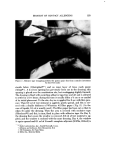
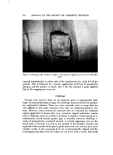
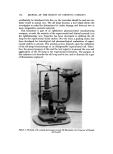
152 JOURNAL OF THE SOCIETY OF COSMETIC CHEMISTS Present methods for the detection of prospective allergens in the guinea pig, such as the Landsteiner-Draize test, are successful with strong sensitizers however, sensitizers of weak or intermediate strength are often missed (6, 7). For instance, Marzulli and coworkers, in a study of allergic contact dermatitis in the guinea pig and in man, reported that they were unable to sensitize any of several hundred guinea pigs to the topical anaesthetic '%enzocaine," where- as they could sensitize a substantial number of men in a human test popula- tion to this compound (5). Clinical]y, benzocaine is a fairly common cause of allergic contact dermatitis in man (8). We here propose a new method for rating, in the guinea pig, the allergic potential of prospective sensitizers of man. Means are taken to render the guinea pig more agreeable to sensitization, so that weaker allergens are recog- nized. The method derives from the "split-adiuvant" technique, in which chemical allergen and Freund's complete adiuvant are administered separate- ly to the skin, rather than as an emulsion (9, 10). MATERIALS AND METHODS Animals The subiects of these experiments are closed-colony, controlled randomly- bred, Hartley guinea pigs weighing 350-550 g. The animals are maintained on fresh Purina guinea pig chow supplemented by thrice weekly lettuce, and water ad libitum. Males or nonpregnant females are used. The colony is clini- cally free of infection with Streptococcus C we exclude animals of question- able health (skinny, poor coat, etc. ). The toe nails and distal portion of both rear feet are wrapped with water-proof adhesive tape so as to prevent skin damage from scratching or clambering by cage mates (Fig. 1). These "boots" are renewed as they are shed. Sensitization The test animal is clipped in an area of skin on the back lust behind the right shoulder girdle. The area to be clipped is delimited by a cloth frame whose square center measures about 2 x 2 cm. We use an Oster animal clipper with a size "0000" head the lower teeth of the head are adiusted so as to even- ly, and only slightly, over-ride the upper teeth-this minimizes skin irritation. Long hairs at the edges of the clipped patch, which might protrude into the site, are cut away with a scissor. The clipped patch is then shaved so as to re- move a good portion of the loose keratin in practice, a single-edge adiustab]e safety razor was found to be the best. We shave iust short of bleeding and, in place of shaving cream, saturate the site with water. The animal is now wrapped in a "window dressing" which consists of an outer layer of adhesive
Purchased for the exclusive use of nofirst nolast (unknown)
From: SCC Media Library & Resource Center (library.scconline.org)