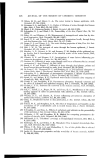
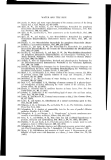
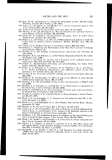
WATER AND THE SKIN 207 and the accompanying reaction of the structural elements of the tissue. The membrane diffusivity appears to be determined by the stability of the re- suiting hydrogen-bonded solvent structure, for it is largely the solvent in the membrane through which difi'usion occurs. The membrane-water association is apparently much tighter than the membrane-DMSO structure and the dif- [usivity of the membranc-water mcdia is accordingly much lower (28). Soaps and detergents are perhaps the most damaging of all substances rou- tinely applied to the skin (10, 115). Treatment of isolated human or animal callus with soap or detergent solutions can reduce its ability to hold water in a hmnid atmosphere (13, 43). Dilute aqueous solutions of anionic detergents were found to increase the permeability of water through human epidermis (99, 116, 117). The capacity to damage the skin appears to be a general property of charged surfactants (9,8, 108). The presence of anionic surfactants within the skin tissues greatly reduces the amount of "bound water" as measured by de- sorption experiments (43, 59,). The differences between anionic surfactants in their effects on water binding may be explained in terms of the damage they do to the corneum cell membranes, different degrees of damage resulting in the extraction of different quantities of water-soluble substances (108). The influence of anionic surfactants may be related to their ability to in- crease the permeability of the skin to water by altering the physical state of water in the skin in such a way as to permit greater freedom to the passage of charged hydrophilic substances (89). Anionic surfactants apparently bind strongly with the protein and cause a reversible denaturation and an uncoil- ing of the filaments. This is accompanied by a gross expansion of the tissue. Water diffusion in the presence of the soap is much easier through the ex- panded and unbound water regions than in the original membrane (9,8). In actuality, the mechanism of the loss of capacity of corneum to bind water in the presence of surfactants is still not understood (10). (Received July 31, 1972) •R. EFERENCES (l) Blank, I. H., Further observations on factors which influence the water content of the stratum corneum, J. Invest. Dermatol., 9.1, 9.59 (1953). ('2) Blank, I. H., Factors which influence the water content of the stratum corneum, Ibid., 18, 433 (1959.). (3) Laden, K., Natural moisturizing factors in skin, Amer. Per/urn. Cosmet., 89., 77 (1967). (4) Gaul, L. E., Relation of dew point and barometric pressure to horny layer hydration, Proc. Sci. Sec. Toilet Goods Ass., 40, 1 (1963). (5) Gaul, L. E., and Underwood, G. B., Relation of dew point and barometric pressure to chapping of normal skin, J. Invest. Dermatol., 17, 9 ( 1951 ). (6) Katz, M., and Paulsen, B. J., Absorption of drugs through the skin, in Brodie, B. B., and Gillette, J., Handbook of Experimental Pharmacology, Springer-Verlag, Berlin, ] 971, Vol. 28.

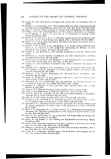
9,08 JOURNAL OF THE SOCIETY OF COSMETIC CHEMISTS (7) (9) (10) (u) (i3) (i4) (i5) (16) 07) (is) (i9) (23) (24) (25) ½6) ½7) (28) (29) (30) (3i) (32) (33) Onken, H. D., and Moyer, C. A., The water barrier in human epidermis, Arch. Dermatol., 87, 584 (1963). Berenson, G. S., and Burch, G. E., Studies of diffusion of water through dead human skin, Arner. J. Trop. Med., 31, 849. (1951). Blank, I. H., Cutaneous barrier, J. Invest. Dermatol., 45, 249 (1965). Scheuplein, B. J., and Blank, I. H., Permeability of the skin, Physiol. Be,)., 51, 702 (i97i). Baker, H., and Kligman, A.M., Measurement o[ transepidermal water loss by elec- trical hygrometry, Arch. Dermatol., 96, 441 (1967). Burch, G. E., and Winsor, T., Rate of insensible perspiration locally through living and dead human skin, Arch. lntern. Med., 74, 437 (1946). Singer, E. J., and Vinson, L. J., The water-binding properties of skin, Proc. Sci. Sect. Toilet Goods Ass., 46, 29 (1966). Mali, J. W. H., The transport of water through the human epidermis, J. Invest. Dermatol., 27, 451 (1956). Matoltsy, A. G., Downes, A.M., and Sweeney, T. M., Studies of the epidermal wa- ter barrier. Part 2. Investigation of the chemical nature of the water barrier, Ibid., 50, 19 (1968). Wurster, D. E., and Kramer, S. F., Investigations of some factors influencing per- cutaneous absorption, J. Pharm. Sci., 50, 288 (1961). Buettner, K., Diffusion of water vapor through small areas of human skin in a normal environmeut, J. Appl. Physiol., 14, 269 (1959). Burch, G. E., and Winsor, T., Diffusion of water through dead plantar, palmar and dorsal human skin and through toe nails, Arch. Dermatol., 53, 39 (1944). De Long, C. W., Thompson, R. C., and Kornberg, I5. A., Percutaneous absorption of tritimn oxide, Amer. J. Roentgenol., Radium Ther. Nucl. Med., 71, 1038 (1954). Scheuplein, R. J., Mechanism of percutaneous absorption. I. Routes of penetration and the influence of solubility, J. Invest. Dermatol, 45, 334 (1965). Spruit, D., and Malten, K. E., Epidermal water-barrier formation after stripping of normal skin, 1bid., 45, 6 (1965). Cronin, E., and Stoughton, R. B., Percutaneous absorption. Regional variations and the effect of hydration and epidermal stripping, Brit. J. Dcrmatol., 74, 265 (1962). Vickers, C. F. H., Existence of a reservoir in the stratum comeurn, Arch. Dermatol., 88, 20 (1963). Fox, C., Tassoff, J. A., Bieger, M. M., and Deem, D. E., Modification of the water- holding capacity of callus by pretreatment with additives, J. Soc. Cosmet. Chem., iS, •.63 (1962). WursteL D. E., and Munies, I4., Factors influencing percutaneous absorption of methyl ethyl ketone, J. Pharm. Sci., 54, 554 (1965). Idson, B., Biophysical factors in skin penetration, ]. Soc. Cosmet. Chem., 22, 615 (1971). Fritsch, W. F., and Stoughton, B. B., The effect of temperature and humidity on the penetration of C" acetylsalicylic acid in excised human skin, J. Int•esC Derrnatol., 41, 307 (1963). Scheuplein, B., and Boss, L., Effects of surfactants and solvents on the permeability of the epidermis, J. Soc. Cosmet. Ghem., 21, 853 (1970). McKenzie, A. W., and Stoughton, B. B., Method for comparing percutaneous ab- sorption of steroids, Arch. DermatoL, 86, 608 (1962). Hall-Smith, S. P., "Polythene" coverings in dermatological treatment, Br•t. Med. J., •, 1233 (1962). Sulzberger, M. B., and Witten, V. H., Thin plastic films in topical dermatologic ther- apy, Arch. Dermatol,, 84, 1027 (1961). Witten, V. H., Stein, S. J., and Michaelides, P., Use of thin pliable film in selected dermatoses, Ibid., 87, 458 (1963). Jacobi, O., Hygroscopic properties and the wettability of keratin materials, Kolloid- Z., 114, 88 (1949).
Purchased for the exclusive use of nofirst nolast (unknown)
From: SCC Media Library & Resource Center (library.scconline.org)