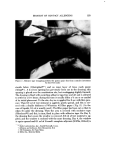
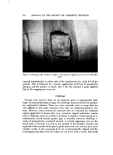
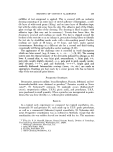
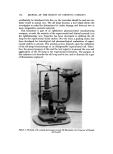
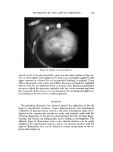
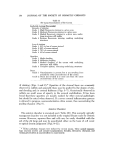
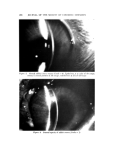
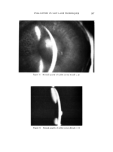
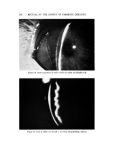
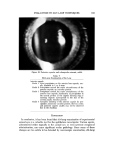
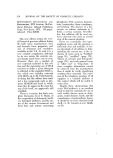
BIOASSAY OF CONTACT ALLERGENS 153 .v ..,,. •:.-'•-..•%., :-,.. :: .•:.:..:..::j:' :..'•/. ::,• .. .• . .-el •':::'::*t'*':: •. . .., .... :½.'-'? -•.:, i•,, .....-:'• ,..•.: ß ...,. • .'•.' ::.:...:..: .-:- .• . •.:... "•'.• .. 7' ' • ' • ..-,:. .. •.. ':.'.!.' •-',' :7' ' ".•.-:•/• . •:•-•.i.' •-'•'•'i• • •:".' •:¾.i u' ',.. •.:',': • -. •.:•.. ß .. • •c' "• • "' . ........... ,,. . ß .• : ' '•.'1•' ¾.•::•½• /. . •...-- .- ?•' ... =- . : .... . •.. stretch fabric (Elastoplast½*) and an inner layer of loose mesh gauze (Kling©t). A 2 x 2-cm opening has previously been cut in the dressing this opening is placed over the sensitization site, but overlapping slightly forward. The dressing is fixed with encircling adhesive tape fore and aft and is allowed to settle for a few hours during this time it usually slides a % cm or so caudad of its initial placement. To the site, dry ice is applied for 5 sec with firm pres- sure. Then 0.2 ml of test ointment is applied, gently spread, and this is cov- ered with a double thickness of Whatman #2 filter paper (Fig. 2). (In the case of liquids, 0.1 ml is usually used. ) The filter paper has been cut so that its edges fit under the dressing. Then the area is covered with occlusive tape (Blenderm©•) and this, in turn, fixed in place with adhesive tape. On Day 2, the dressing that covers the window is removed, 0.2 ml of test material is ap- plied, and the window is reclosed with the same dressing. Day 4, the window is again opened and 0.1 ml of Freund's complete ad]uvant (H37Ra, Difcoõ) is * Duke Laboratories, Inc., South Norwalk, Conn. ? Johnson and Johnson, New Brunswick, N.J. •+ 3M Company, St. Paul, Minn. õ Difco Co., Detroit, Mich.

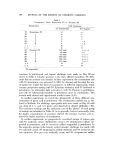
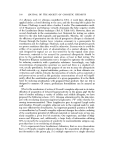
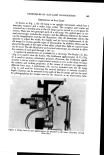
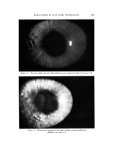
154 JOURNAL OF THE SOCIETY OF COSMETIC CHEMISTS ß .. •:•.:. .... . .. . ....... - -, - .•.• .e . ::•' ß :.•i •:• ........ • ...... 5 i." , •-:" ..:5 :,.: ":• -'"• ..... '•-•• :: ?2 •f •. •...'":•--"•".•..:'•.• '.--:..?'% •'.•::-.-i • = •: } -•'-•:' ..... .*•...:•.•.o, ........ .::.•:: •-• ?:•."::E: .... -•.• q.'•::::""::•'•.• ,"•-• •i•Si..•.'Sg •'•...: ....... • •: 5..:5•{• •' :: .:. 'i:•i "• ' '•' ' • :::':.': "• Z5•3• '• '•?•'.•:: • •. '. '"• -•:.'•. •:::::• •:':'.'.:"• :• ,• •:,s-: :5•: :•"• •: '•'::•.•57.. '3? *'•'• ' •7'• t-•• .,... ' . . . -. Figure 2. Dressing with window in place, test ointment applied and covered with filter paper injected intradermally on either side of the sensitization site (total 0.2 ml per animal). This is followed by a further application of 0.2 ml of prospective allergen, and the window is closed. Day 7, the test material is again applied. Day 9, all wrappings are removed. Challenge Toxicity tests must be done on all materials prior to experimental chal- lenge. In nonsensitized guinea pigs, the challenge material should not produce any substantial irritation. There are some materials such as soaps that are very difficult to test under occlusion since they are substantial primary irri- tants. However, most commercial materials that are intended for sustained topical application to human skin (e.g., cosmetics, topical antibiotics) can be used in challenge under an occlusive dressing. A negative control group of si- multaneously tested toxicity guinea pigs is included wherever challenge is made of prospectively sensitized animals. A normal appearing area on the dorsal back is selected it is best to test caudad of the shoulder muscles and cephclad of the muscles of the pelvic girdle since tests over muscles give more variable results. A site measuring 2 x 2 cm is atraumatical]y clipped and the overhanging long hairs from the edges are cut axvay with a scissor. One-tentl•
Purchased for the exclusive use of nofirst nolast (unknown)
From: SCC Media Library & Resource Center (library.scconline.org)