]. Soc. Cosmet. Chem., 25, 473-479 (September 19741 Testing Antiacne Agents in Mexican Hairless Dogs J. J. LOUX, M.S.,* P. D. DePALMA, B.S.,P and S. L. YANKELL, Ph.D.p Synopsis-The plugged follicles on the backs and flanks of MEXICAN HAIRLESS DOGS share clinical and histologic similarities to the comeclones seen in man. SOAP treatments cleaned follicle-containing areas but did not remove the follicular plugs. SALICYLIC ACID preparations were similarly ineffective. The use of BENZOYL PEROXIDE pro- duced slight extrusion of the follicular keratin plus mild irritation, and VITAMIN A ACID was markedly effective with associated dermal irritation. INTRODUCTION Several authors have reviewed the literature for information relating animal and clinical skin research (1, 2). A symposium presented at the 52nd annual meeting of the Federation of American Societies for Experimental Biology discussed the choice of animal models for the study of disease processes in man (3). Although there are many mammalian and avian models for clinical skin diseases, no references were cited in the above papers on any form of spontaneous animal acne. Currently, laboratory evaluations of acne treatments rely on chemically in- duced comedones in the ears of rabbits. The hyperkeratinization is similar to that causing follicular hyperkeratosis in occupational chloracne (4). Human sebum lipids (5) and fatty acids (6, 7) which have relevance to the etio- pathogenesis of acne also have been employed as acnegens in the rabbit. Van Scott reported at the 1970 symposium on the Biology of the Skin that the rhino mouse was a natural model of keratin invagination (8). By studying the skin histology of this animal in relation to the animal's age, a reproducible method for measuring progressive cyst formation was developed. Experimen- tal materials used to treat clinical acne were applied to the skin to test their efficacy in preventing or alleviating this keratin invagination. Sulfur and resor- cinol had no activity however, retinoic acid proved very effective. *Present address: 110 E. Hanover Ave., Cedar Knolls, N.J. 07927. ?Menley & James Laboratories, 1500 Spring Garden St., Philadelphia, Pa. 19101. Reprint requests should be addressed to Dr. Yankell. 473

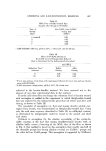
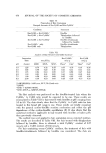
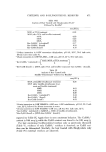
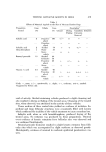
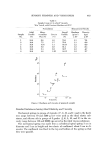
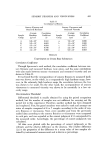
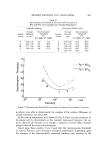
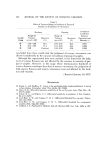
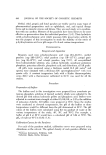
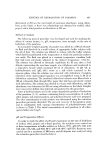
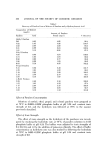
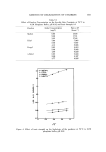
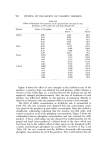
474 JOURNAL OF THE SOCIETY OF COSMETIC CHEMISTS In our laboratory, the flanks and back o[ the Mexican hairless dog have been observed to contain pigmented keratin [ollicular plugs which share some or certain clinical and histologic similarities to the comedones seen in man (9). In an endeavor to determine the suitability ooe these animals for routine acne experiments, a study was conducted to evaluate preparations currently employed to treat clinical acne. MATERIALS AND METHODS Four test sites, approximately 2.5 cm in diameter, with grossly evident follicular plugs, were selected on the back of each dog. Areas were carefully photographed prior to treatment to record control appearance and again at the conclusion of the study. Efficacy and irritation potential were evaluated from the resulting slides. Before and after treatinent, biopsies were obtained with a 6-mm Keyes cutaneous punch for histological evaluations. Following fixation of the tissues in 10% formalin, slides were prepared by routine histo- logic means, stained with hematoxylin and eosin, and examined utilizing stan- dard dermatopathologic criteria (10, 11) employed in recognizing inflamma- tory, degenerative, or proliferative changes. Test or control materials in solution or suspension were applied with a cot- ton-tipped applicator, Q-tip,* gently rubbed over the test site for 5 sec per treatment. Sites •vere treated at least once a day for 14-21 days. Materials tested included sulfur, hexachlorophene, salicylic acid alone or in various combinations benzoyl peroxide, and vitamin A acid (retinoic acid). Appropriate vehicles used for each test material were also evaluated on control sites. The influence of a bland soap, Ivory,* or an abrasive soap, Amo- Derm,* on site cleaning and comedone removal was also evaluated. The method used to test these soaps was as follows: a paper towel, moistened with water and rubbed with soap to produce a lather, was rubbed on the assigned test area on the dog's back for 5 sec. The lather was removed from the site with a clean towel moistened with water, and the treated area was then dried with a fresh dry towel. Photographs were taken prior to and upon com- pletion of these experiments however, no histological evaluations were per- formed. RESULTS The results of this study are given in Table I. Several vehicles used in the attempt to aid or enhance the penetration or efficacy of the test agent were tested without active agents as controls. A propylene glycol vehicle xvas de- *Chesebrough-Pond's, New York, N.Y. 't'Procter & Gamble, Cincinnati, Ohio. •High Chemical Co., Philadelphia, Pa.
Purchased for the exclusive use of nofirst nolast (unknown)
From: SCC Media Library & Resource Center (library.scconline.org)