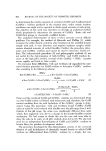
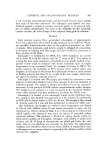
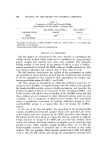
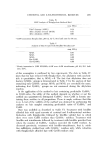
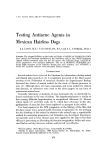
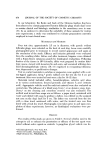
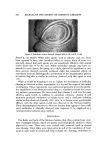
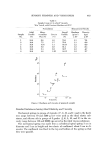
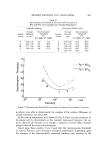
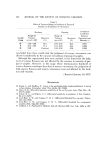
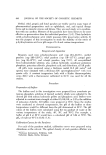
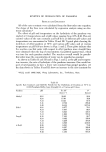
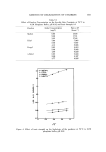
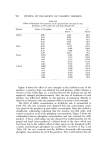
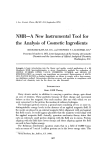
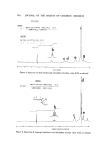
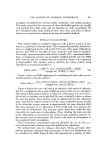
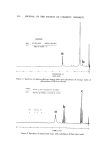
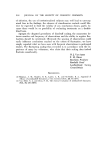
500 JOURNAL OF THE SOCIETY OF COSMETIC CHEMISTS •. 0.6 z r• 0.4 0.2 q 2.75 pH 3.66 4.59 pH6.41 pHZ55 i i 0 i I o 4'0 140 160 TIME IN HOURS Figure 1. Log of concentration of ethyl paraben against time at 70øC in 0.1M phosphate buffer, ionic strength 0.3, at various pH values Table III Specific Rate Constants and Half-life Periods for the Hydrolysis of Parabens at Various Temperatures in 0.1M Phosphate Buffer, pH 9.16, and Ionic Strength 0.3 Paraben Temperature k x-i0 • - -t •a (ø C) (hours-') (hours) M thyl 40 1.941 - Ethyl 40 0.735 943.0 Propyl 40 0.529 1310.0 n-Butyl 40 0.536 1292.0 Methyl 50 5.776 120.0 Ethyl 50 1.752 396.0 Propyl 50 1.205 575.0 n-Butyl 50 1.347 515.0 Methyl 70 30.63 22.6 Ethyl 70 8.877 78.1 Propyl 70 7.163 96.7 n-Butyl 70 9.391 73.8 n-butyl paraben, at the pH's and temperatures used in this study, when com- pared to the values obtained for propyl paraben. At 70øC in 0.1M phosphate buffer at pH 9.16, n-butyl paraben hydrolyzed faster than ethyl and propyl parabens. This phenomenon is difiieult to explain since there is little differ- enee between the activation energies .of the parabens at pH 9.16, as shown in

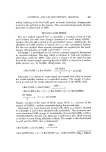
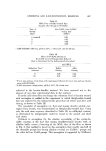
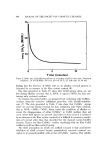
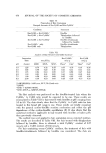
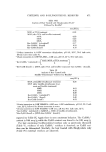
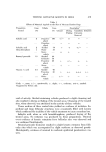
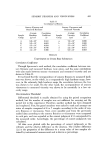
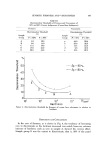
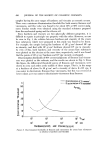
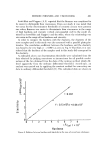
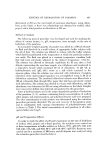
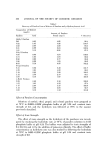
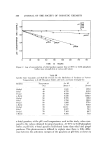
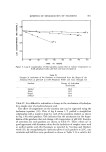
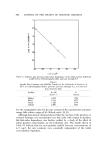
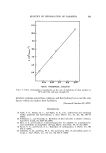
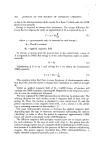
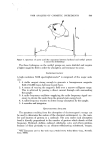
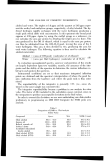
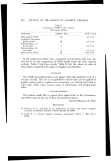
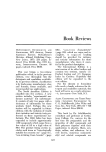
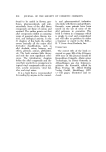
KINETICS OF DEGRADATION OF PARABENS 501 0.8 0.6 0.4 0.2 ' O G - 0 '-ø"---- soø c 70 ø C 400 C o 2b do 6b ,oo TIME IN HOURS Figure 2. Log of concentration of ethyl paraben against time at various temperatin'es in 0.1M phosphate buffer, pH 9.16, and ionic strength 0.3 Table IV Energies of Activation of the Parabens as Determined from the Slopes of the Arrhenius Plots at pH 9.16 in 0.1M Phosphate Buffer and Ionic Strength 0.3 Paraben Energy of Activation (kcal/mole) Methyl 20.8 Ethyl 18.7 Propyl 19.3 n-Bury1 21.0 Table IV. It is difficult to rationalize a change in the mechanism of hydrolysis for a simple ester of p-hydroxybenzoic acid. The effect of temperature on the reaction rate can be expressed using the Arrhenius equation (10). Plots of log k versus 1/T yielded a straight-line relationship with a negative slope for each of the parabens studied, as shown in Fig. 3 for ethyl paraben. This indicates that the mechanism for the degra- dation of the parabens does not change with temperature at pH 9.16. Energies of activation for each paraben are shown in Table IV. These values are in good agreement with literature values for the hydrolysis of simples esters such as methyl acetate and ethyl benzoate as reported by Newling and Hinshel- wood (11). By extrapolating the Arrhenius plots of each paraben to 23øC, rate constants and half-lives were predicted, as shown in Table V. It is valid to fol-
Purchased for the exclusive use of nofirst nolast (unknown)
From: SCC Media Library & Resource Center (library.scconline.org)