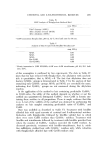
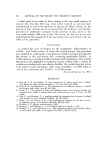
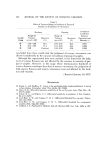
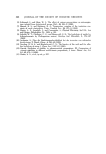
TESTING ANTIACNE AGENTS IN DOGS 479 moval and/or irritation. In addition, biopsies were taken h'om selected sites to evaluate comedone extrusion and irritation-induced changes. Preparations containing salicylic acid with or without hexachlorophene and several soap products produced no significant improvement of the comedone condition. No consistent irritation was observed. Treatment with 10% benzoyl peroxide re- sulted in slight improvement accompanied by some irritation. Vitamin A acid (retinoic acid) at 0.1% in an ethanol/propylene glycol vehicle caused marked comedone extrusion and irritation. Since similar results have been reported in clinical studies, the Mexican hairless dog appears to be a predictive model for assaying both efficacy and potential irritation of agents proposed for acne therapy. ( Received January 16, 1973) REFERENCES (9) (10) (11) (13) (14) (15) (16) 07) (1) Brown, V. K., Laboratory animals for dermatological research, J. Inst. Lab. Techs., 17, 122 (1966). (2) Orkin, M., Animal models (spontaneous) for human disease, Arch Dermatol., 95, 524 (1967). (3) Symposium: Choice of animal models for the study of disease process in man, Fed. Proc., 28, 160 (1969). (4) Jones, E. L., and Krizek, H., A technic for testing acnegenic potency in rabbits, ap- plied to the potent acnegen 2,3,7,8-tetrachlorodibenzo-P-dioxin, J. Invest. Dermatol., 39, 511 (1962). (5) Kligman, A.M., and Katz, A. G., Pathogenesis of acne vulgaris I. Comedogenic properties of human sebum in external ear canal of the rabbit, Arch. Dermatol., 98, 53 (1968). (6) Kligman, A.M., Wheatley, V. R., and Mills, O. H., Comedogenicity of human sebum, Ibid., 102, 267 (1970). (7) Kanaar, P., Follicular-keratogenic properties of fatty acids in the external ear canal of the rabbit, Dermatologica, 142, 14 (1971). (8) Van Scott, E. J. Transintegumental Screening o[ Drugs, in Montagna, W., Stoughton. R. B., and Van Scott, E. J., Advances in Biologit o[ Skin, Vol. XII, Pharmacologit and the Skin, Appleton-Century-Crofts, New York, 1972, pp. 523-33. Yankell, S. L., Schwartzman, R. M., and Resnick, B., Care and breeding of the Mexi- can hairless dog. Lab Anita. Care, 20, 940 (1970). Lever, W. F., Histor•atholog.tt o[ the Skin, Lippincott, Philadelphia, 1954. Schwartzman, R. M., and Orkin, M. A Comparative StudIt o[ Skin Diseases o[ Dog and Man, Thomas, Springfield, Illinois, 1962. Fulton, J. E., University of Miami, Miami, Fla., personal communication, 1972. Schwartzman, R. M., University of Pennsylvania School of Veterinary Medicine, personal communication. 1973. Piewig, G., Fulton, J. E., and Kligman, A.M., Pomade acne, Arch. Dermatol., 101, 580 (1970). Arundell, F. D., Acne vulgaris, Pediat. Clin. N. Amer., 18, 853 (1971). Kligman, A.M., Fulton, J. E., and Plewig, G., Topical vitamin A acid in acne vul- garis, Arch. Dermatol., 99, 469 (1969). Vasarinsh, P., Benzoyl peroxide-sulfur ]•tion, Ibid., 98• 183 (1968).

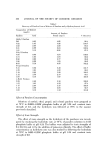
J. Soc. Cosmet. Chem., 25, 481-494 (September 1974) A Study on the Differential Thresholds of Sensory "Firmness" and "Viscousness" of Cream Base Substances KEIJI MOROSAWA, CHIYOKO OHTAKE, MOTOJI TAKAHASHI, TAKEO MITSUI, and SEIICHI ISHIKAWA* Presented September 14, 1972, 7th IFSCC Congress, Hamburg, Germany Synopsis-The DIFFERENTIAL THRESHOLDS of sensory "FIRMNESS" and "VIS- COUSNESS" were studied. It was noted that these properties changed continuously depending upon changes in HARDNESS and VISCOSITY which were measured instru- mentally. The minimum values of differential thresholds of both firmness and viscousness were found to be about 10% and 80% level of confidence. INTRODUCTION The differential thresholds of sensory "firmness" and "viscousness" have been used to describe some of the properties of cosmetic creams which are related to their application to skin. Weber's law, which is applicable to sense properties, states that when two stimuli, S and S + AS (AS is the differential threshold in stimulus S), are given, AS/S (Weber's ratio) represents the region in which AS/S is con- stant with variance of the given stimulus. This observation has been reported for visual sensitivity (1), hearing sensitivity (2), and taste sensitivity (3). However, up until the present, there have been few reports as to touch sensi- tivity. Scott-Blair (4) investigated the threshold of firmness using vulcanized rubber ( elasticity, 1-2 x 10⁷ dyne/cm 2) and that of viscousness using bitumen (viscosity, 106-107 cps) and found that the differential threshold of firmness was % that of viscousness indicating that firmness was three times easier to *Shiseido Laboratories, 1050 Nippa-cho, Kohoku-ku, Yokohama, Japan. 481
Purchased for the exclusive use of nofirst nolast (unknown)
From: SCC Media Library & Resource Center (library.scconline.org)