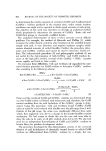
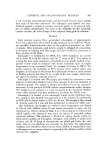
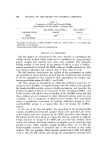
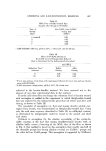
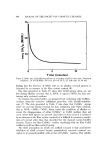
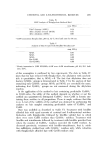
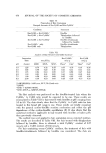
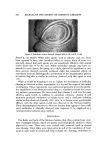
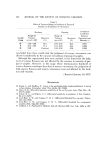
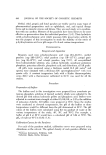
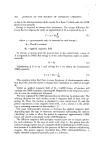
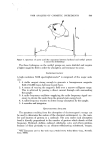
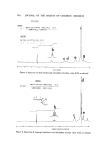
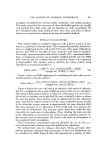
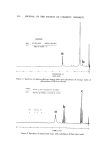
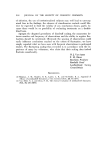
510 JOURNAL OF THE SOCIETY OF COSMETIC CHEMISTS OLEYL ALCOHOL E•UAI 101•1 IV = (AREA OF OLEFhl PROTONS) (MMOLES CHC13) 12,69 (AREA OF CHC13) (SAMPLE WT,) SIRUCIURE CH3 (CH2) 6 CH 2 CH:CH CH 2 (CH2) 6 Ch 2 OH G F E g E F D C b i OLLYL ALCOHOL Figure2. Spectrum of oleyl alcohol and ealctdation of iodine value (CCi• as solvent) EQUATIOI'I I d I SAP VALUE : (AREA OF CH Oil TIlE O) ([qPiOLLS CHCis) (56,1) (SAgPLE WEI6HI) (AREA OF CHC137 E D C CH3(CH 2 ) 13CH2/C',• C•3 OCH B '"% E II • r I I I I I I f ISOPROPYL PALMITATE-STRUCTURE Figure 3. Spectrum of isopropyl palmitate and calculation of ester value (CCh as solvent)

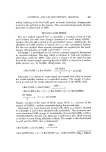
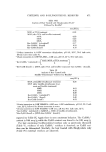
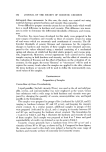
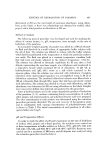
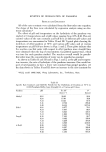
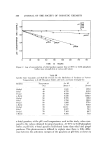
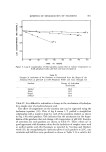
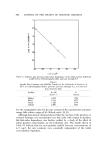
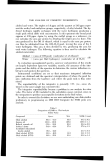
NMR ANALYSIS OF COSMETIC INGREDIENTS 511 all appear down field from normal methyl, methylene, and methine protons. The peaks caused by the resonance of these deshielded protons are usually well resolved frown other peaks and can therefore be easily quantitated. We have calculated iodine value, hydroxyl value, ester value, and moles of ethoxy- lation on raw ingredients employing the internal standard method. INTERNAL STANDARD METHOD This method utilizes a standard compound with a known amount of pro- tons as a quantitative reference peak. This compound preferably should reso- nate as a single band and be well resolved from any other peaks. Chloroform, benzene, and TMS are examples of some commonly used internal standards. The sample, internal reference, and solvent (usually CC14, deuterated chloro- form, or deuterated acetone) are accurately weighed directly into the NMR tube, scanned, and the resulting data are calculated. Figure 2 is a spectrum of oleyl alcohol. The equation used to calculate the iodine number using chloroform as an internal standard is: Iodine value = (ølefin "b" area) ( Mmoles CHCla ) (12.69) ( sample wt ) ( CHCla "a" (4) area ) Figure 3 shows an NMR application for calculating the ester value on iso- propyl palmRate using the equation: Ester value= (arcaofCHonoxygcn) (MmolesofCHCl•a•)___(56.•l) (5) ( sample wt) ( area of CHCla ) Figure 4 depicts the ease with which an estimate of the moles of ethoxyla- tion for a compound such as polyoxylthylene stearyl ether can be calculated. The terminal CH:• peak is used as a reference, and because it is not well re- solved only an estimate can be provided. Its area is divided by three to obtain the area per proton. Three protons must be subtracted from the ethoxylate peak, because the hydroxyl proton and the chain methylene group bonded to the ethoxylate oxygen resonate at approximately the same chemical shift. The unit structure of an ethoxylate [ (CH2) ,,O] reveals four protons per each mole of ethoxylation. The area per proton times four yields the area responsible for each mole of ethoxylation. Thus, dividing the total area due to the ethoxylation (corrected for the hydroxyl and methylene protons) by the area per mole of ethoxylation will result in the moles of ethoxylation in the compound under investigation. Chain branching in ethoxylated materials disallows the use of CH:4 as a reference peak and is therefore a possible pitfall in this calculation. The alcohol-water ratio for colognes, after-shave lotions, and many other finished products containing high percentages of these two substituents can be calculated by NMR. Figure 5 shows the spectrum for a mixture of ethyl
Purchased for the exclusive use of nofirst nolast (unknown)
From: SCC Media Library & Resource Center (library.scconline.org)