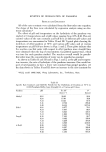
CYSTEINYL AND S-SULFOCYSTEINYL RESIDUES 465 er (5) used this mercurial previously and had found it to be more soluble than many of the other mercurials. The salyrganie add solution was stan- dardized against a sample of eysteine of known purity. A 1% aqueous solu- tion of sodiron nitroprusside was used as the indicator for the mereurial- eysteine reaction, the color change at the endpoint being pink to colorless. Methods Each analysis requires three preweighed subsamples of approximately 0.1 to 0.2 g taken from the treated keratin specimen to be analyzed. Where not spedfled, liquor-to-keratin ratios in the analytical procedure are 125:1 or greater. After treatment, each keratin sample is stripped of excess treat- ment liquor by blotting with filter paper and then washed by immersion in three portions of 6N H2SO4. Subsample i is hydrolyzed for MNP1 titer. MNP hydrolyses are earfled out in about 85 ml of 6N sulfurie add, for 17 hours at 95øC. The effects of varying the time and temperatures of hydrolysis were briefly studied. Com- parable results could be obtained with shorter hydrolysis times at higher temperatures in an evacuated bomb, for example 3•/• hours at 160øC. We prefer, however, the hydrolysis at 95øC because of its relative safety and simplicity. In all eases we found that the hydrolysate contains a small amount of fibrillar material, less than 3% by weight of the hair sample, which does not appear to interfere with the analysis. Subsample 2 is blotted with filter paper and washed by immersion in two portions of deaerated distilled water under nitrogen to prevent oxidation of sulfhydryl groups. The sample is blotted and alkali-reversed by successive immersion in two portions ooe 0.2M sodium sesquiearbonate under nitrogen. The sample is next washed by a 1-min immersion in the deaerated distilled water under nitrogen and then hydrolyzed to obtain the MNP2 value. Subsample 3 is treated as was subsample 2 prior to the hydrolysis step. The sample is then blotted and immersed in a 5% solution of aerylonitrile in 0.1M, pH 9.2 borate buffer at 32øC for 30 min. The sample is then rinsed in running water for I rain and then hydrolyzed to obtain the MNP.• titer. After hydrolysis, the samples are cooled to room temperature and diluted to 100 ml with distilled water. It was found convenient to carry out the hydrolysis in a 100-ml volumetric flask. A 5- or 10-ml aliquot is removed and added rapidly with stirring to four times its volume of saturated sodium carbonate solution. This produces a blanket of carbon dioxide which in- hibits aerial oxidation of mercaptide. Salyrganic acid solution is added from a buret, and 10-15 drops of nitroprusside are added just before the end- point. One or two titrations are necessary to determine the approximate endpoint. Care should be taken to avoid early addition of nitroprusside since it decomposes to an orange-colored compound in the alkaline medium which obscures the endpoint.

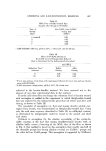
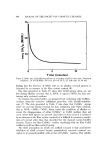
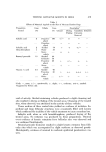
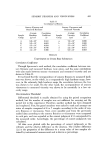
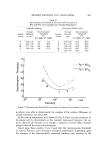
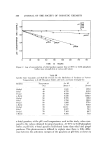
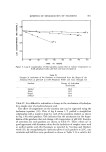
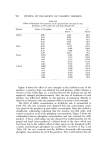
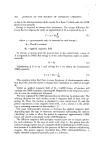
466 JOURNAL OF THE SOCIETY OF COSMETIC CHEMISTS Table I Comparison of MNP• and Elsworth-Phillips Determinations of Ker-CySSO,- in Human Hair a (Ker-CySH + Ker-CySSOa-) (Ker-CySSOa-) Analytical Method (meq/g) (meq/g) MNP• 0.60 b . . . Elsworth-Phillips ... 0.30 Immersion for 60 min in 1.0M NH•HSO•-3.0M urea, pH 5.8, 32øC, 50:1 bath ratio followed by centrifugation. Corrected for Ker-CySH content of untreated hair. RESULTS AND DISCUSSION The first phases of experimental •vork •vere directed at establishing the validity of this method •vhich could not be established by using standard keratin samples and controls since none •vere available. The Elsworth- Phillips method (1) •vas found, in one instance (Table I), to give a CySSOa- content equivalent to one-half the MNP• value on bisulfite-treated hair. This was, ho•vever, laborious and required close to three days of work. We did, however, demonstrate the validity of the assumptions on which our procedure is based and then sho•ved that the analytical results obtained in several experiments •vere consistent •vith expectations for samples con- raining predictable ratios of CySSOa- and CySH. The three groups of assumptions on •vhich this method is based are: (a) rinsing treated (bisulfite, mercaptan) keratin with 6N sulfuric acid quenches the keratin-bisulfite reaction, removes soluble mercaptans, and quenches the keratin-mercaptan reactions (b) treatment of hair containing CySSOa- ancl CySH residues •vith alkali causes rebuilding of the disulfide bonds and that these residues are not consumed by other chemical reactions under reversal conditions and (c) treatment of alkali-reversed keratin •vith acrylonitrile causes a quantitative conversion of cysteinyl sulfhydryl groups to /•-cy- anoethylsulfide groups in a manner that does not change the CySSOa- content. In the case of the first assumption, the quenching of the keratin-bisulfite reaction, bisulfite-treated keratin samples •vhich were quenched and rinsed in 6N sulfuric acid •vere analyzed by the MNP• procedure after storage in 6N suloeuric acid oeor from 10 rain to 7 days. The data are reported in Table II. Clearly one sees no change in the MNP• titer over the time studied. These results also indicate that large numbers of samples can be stored for long periods of time •vhich expedites sample handling. Thus, •ve see that the keratin-bisulfite reaction is quenched and is not reversed in this acidic medium. The one question which remains unanswered in this and others' work is: does the 6N sulkuric acid change the instantaneous cleavage level
Purchased for the exclusive use of nofirst nolast (unknown)
From: SCC Media Library & Resource Center (library.scconline.org)