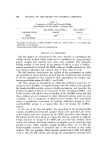
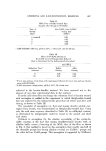
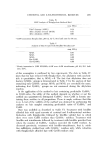
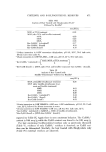
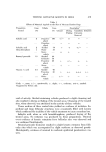
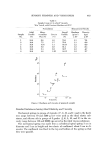
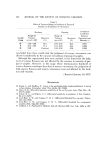
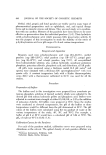
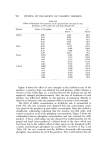
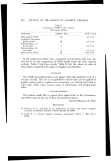
498 JOURNAL OF THE SOCIETY OF COSMETIC CHEMISTS Table I Recovery of Paraben from a Mixture of Paraben and p-Hydroxybenzoic Acid Composition of Mixture (mg/l.) Amount of Paraben Paraben Acid Found (mg/1.) % Recovery Methyl Paraben 503 0.00 4.95 98.4 4.02 1.03 4.05 100.7 3.02 2.06 3.00 99.3 2.01 2.58 2.03 100.9 1.01 5.16 0.98 97.0 Ethyl Paraben 4.66 0.00 4.70 100.9 3.73 1.03 3.70 99.2 2.80 2.06 2.77 98.9 1.86 2.58 1.85 99.5 0.93 5.16 0.95 102.2 Propyl Paraben 5.31 0.00 5.40 101.7 4.25 1.03 4.22 99.3 3.19 2.06 3.20 100.3 2.12 2.58 2.10 99.1 1.06 5.16 1.07 100.9 n-Butyl Paraben 5.29 0.00 5.30 100.2 *$.23 1.03 4.12 97.4 3 17 2.06 3.17 100.0 2.12 2.58 2.05 96.7 1.06 5.16 1.10 103.8 Effect of Paraben Concentration Solutions of methyl, ethyl, propyl, and n-butyl paraben were prepared at at 70øC in 0.0005-0.20M phosphate buffer at pH 8.24 and constant ionic strength of 0.3, and the hydrolysis was followed at 70øC in the manner previously described. Effect of Ionic Strength The effect of ionic strength on the hydrolysis of the parabens was investi- gated by studying the hydrolyric rate, at 70øC, of paraben soluti.ons in 0.1M phosphate buffer at pH 8.24. The buffers were adiusted to ionic strengths of 0.3, 0.6, 0.9, and 1.2 by the addition of potassium chloride. The effect of buffer concentration on hydrolytic rate was also studied by following the hydrolysis at 70øC in 0.005-0.20M phosphate buffer at pH 8.24 and constant ionic strength of 0.6.

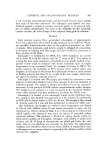
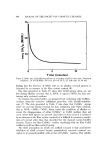
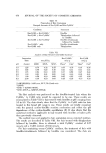
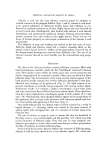
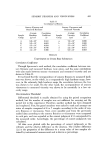
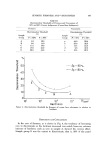
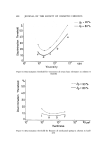
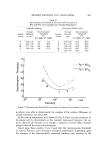
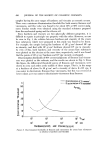
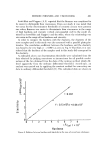
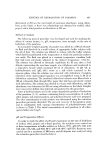
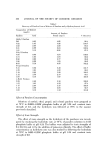
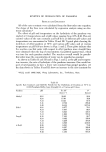
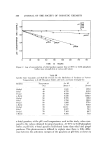
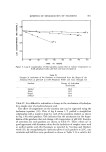
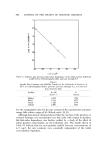
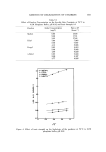
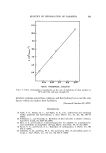
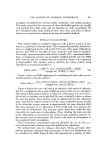
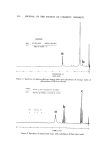
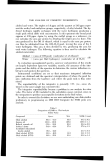
KINETICS OF DEGRADATION OF PARABENS 499 RESULTS AND DtSCUSS•ON All of the rate constants •vcrc calculated from the first-order rate equation. The slopes of the lines were calculated by regression analysis using an elec- tronic calculator.* The effect of pH and temperature on the hydrolysis of the parabens was studied at 3 temperatures and at pH values ranging from 2.75-9.16. The cal- culated values of the rate constants and half-lives at different pH values and temperatures are summarized in Tables II and III. Typical plots showing the hydrolysis of ethyl paraben at 70øC and various pH values and at various temperatures at pH 9.16 are shown in Figs. 1 and 2. These plots indicate that the reaction was first order with respect to ethyl paraben since straight lines were obtained when the log of concentration was plotted against time, which •vas true for each paraben studied. The reaction overall would be pseudo- first order since the concentration of water can be regarded as constant. As shown in Tables II and III and in Figs. 1 and 2, as the pH and tempera- ture increase, the rate of hydrolysis of the parabens increases. One would ex- pect n-butyl paraben to have a lower rate constant than propyl paraben, yet the data shown in Tables II and III show an increase in the rate constants for *Wang model 360K/362K, Wang Laboratories, Inc., Tewksbury, Mass. Table II Specific Rate Constants and Half-life Periods for the Hydrolysis of Parabens at 70øC in 0.1M Phosphate Buffer, Ionic Strength 0.3, at Various pH Values Paraben pH k x 10 a t '/• (hours-•) (hours) Methyl 9.16 30.63 22.6 8.24 17.80 38.9 7.33 10.24 67.6 6.41 2.710 255.0 5.49 0.414 1673.0 Ethyl 9.16 8.877 78.1 8.24 7.667 90.4 7.33 6.540 106.0 6.41 1.203 576.0 Propyl 9.16 7.163 96.7 8.24 5.982 120.0 7.33 4.238 164.0 6.41 0.568 1218.0 n-Butyl 9.16 9.391 73.8 8.24 6.387 109.0 7.83 4.580 15]..0 6.41 1.153 601.0
Purchased for the exclusive use of nofirst nolast (unknown)
From: SCC Media Library & Resource Center (library.scconline.org)