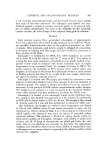
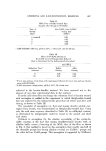
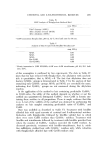
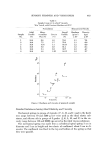
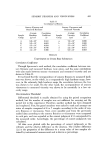
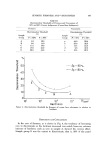
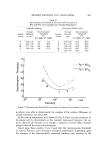
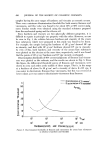
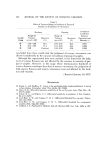
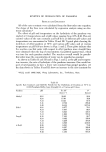
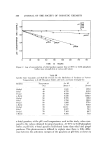
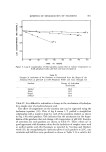
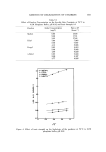
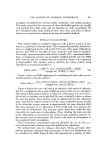
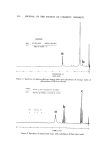
SENSORY FIRMNESS AND VISCOUSNESS 489 Sample Group Table IV Discrimination Thresholds of Firmness and Viscousness of 80% and 90% Correct Judgements (Standard Substances) Firmness (Spring) Viscousness (Silicone Oil) Average Discrimination Average Discrimination Hardness Threshold Sample Viscosity Threshold (g/cm 2) (%) Group (cps) (%) P=80% P=90% P•80% P:90% F G H I 2.54 x 10⁸ 8.0 11.5 J 1.49 x 10 * 15.5 27.5 8.47 x 10"9.5 16.0 K 6.43 x 10 •' 16.5 27.0 2.77 x 10" 6.0 10.0 L 1.98 x 10 • 12.5 17.5 1.06 x 10 -0 9.0 17.0 M 3.19 x 10222.5 37.5 N 1.72 x 10-0 30.0 47.5 o 50 ...c 40 o 30 '½- 20 • •0 k K 0 10 4 10 2 10 3 10 4 cps Viscosity ....... /Ip = 90 % • ,,lp = 80 % Figure 7. Discrimination threshold for viscousness of silicone oil in relation to viscosity members were able to discriminate the samples if the relative difference of sample's hardness was about 10%. In the ease of viscousness, as is shown in Fig. 5, there was the tendency of becoming easy to discriminate as the viscosity decreased however, the ex- treme decrease of viscosity, as in sample e, showed a reverse effect. Sample group d showed the easiest discrimination. Based upon these results, it was found that the discrimination threshold of sensory firmness and viscousness changed continuously depending upon the changes of the instrumentally measured hardness and viscosity of the

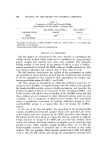
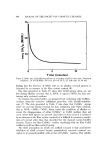
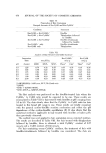
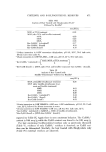
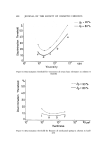
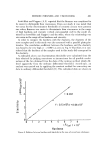
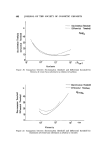
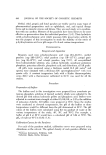
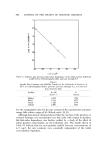
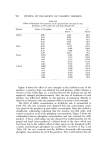
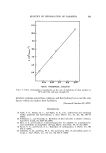
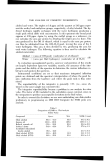
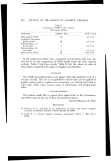
490 JOURNAL OF THE SOCIETY OF COSMETIC CHEMISTS samples having the same ranges of hardness and viscosity as cosmetic creams. There was a minimum discrimination threshold for both sensory firmness and viscousness, and this value was found to be about 10% at 80% correct judg- ment. Similar results were obtained using the standard substance prepared from the mechanical spring and the silicone oil. Since hardness and viscosity are two physically different properties, it is difficult to equate in principle one property with the other. However, as can be seen in Fig. 1, the relation between hardness and viscosity of the cream base substances which were prepared in this study was found to be linear. For example, the sample having the hardness of 102g/cm 2 showed 10:6 cps in viscosity, and that with 10 a g/cm -• hardness showed 104 cps in viscosity. In vie•v of this, both hardness and viscosity of the cream base substances were plotted on the abscissa at the same time, respectively, and it was found that the points of 102g/cm'-' hardness and 10 :• cps viscosity overlapped. Discrimination thresholds of 80% correct judgments of firmness and viscous- ness were plotted on the ordinate, and the results are shown in Fig. 8. From this figure, the differential threshold curves of firmness and viscousness were shown to cross each other at the middle of those ranges. That is, in the range at a hardness of above 9 x 10 g/cm'-' and a viscosity of above 9 x 10'-' cps, it was easier to discriminate firmness than viscousness, but this was reversed at lower values as it was easier to discriminate viscousness than firmness. 5O Discrimination of'Fi rmness', Discrimination of'Vi scousness •P=80• 10' 10 • 10 • 10 ' g/cm • 10 • 10 • 10 ' 10 • cps Hardnesslg/cm and Viscosity(cps) Figure 8. Discrimination thresholds of firmness and viscousness for cream base substances in relation to hardness and viscosity
Purchased for the exclusive use of nofirst nolast (unknown)
From: SCC Media Library & Resource Center (library.scconline.org)