84 JOURNAL OF THE SOCIETY OF COSMETIC CHEMISTS standardized swabbing technique, although not totally consistent and re- producible, was the method of choice for sampling the microflora of the outer eye. The first study involved a single swabbing of the eyebrow, the upper eyelid margin, and the lower eyelid margin of 21 subjects, both male and female. The second study involved four consecutive swabbings of the eyebrow and upper eyelid margin of five randomly selected female subjects to determine week-to-week variations of the outer eye microflora. In all cases, the swab- bings were done during the day and all female subjects wore their usual makb- Up. The swabbing technique employed presterilized, individually wrapped polyester fiber-tipped applicators* moistened with a sterile solution of 0.5% r'o15 sorbate 80' in normal saline. The premoistened swabs were streaked four times over the area being sampled with concomitant twirling to insure full surface contact. Immediately after sampling, each swab tip was broken off into a 20 x 125-mm screw cap test tube containing 10 ml of Letheen broth ( Difco ). All sample tubes were mixed by vortex for 1 min and i ml of each sample broth was serially diluted in sterile Polysorbate 80-saline. One milliliter of each sample dilution was plated in duplicate into Trypticase Soy Agar (TSA) for bacteria and Sabouraud's Dextrose Agar (SDA) for yeast and fun- gi. TSA plates were incubated at 35øC for 48 hours and SDA plates were incubated at 28øC for 5 days. The colonies found on these plates were re- ported as count per swab for the particular area examined. Swab-broth tubes were incubated at 35øC for 24 hours and then one loop- ful of each was streaked onto a TSA plate for isolation of the bacteria present. The plates were incubated first at 35øC for 24 hours and then at room tem- perature for an additional 48 hours. Representative dissimilar colonies were gram-stained. Colonies of gram-positive spore-forming rods were con- sidered as Bacillus sp. Colonies of gram-positive nonsporeforming rods re- sembling corynebacteria were considered lipophilic diphtheroids if the TSA colony was small and translucent, and as nonlipophilic diphtheroids if the TSA colony was large and dirty white. Colonies of gram-negative rods were transferred to Eosin Methylene Blue Agar (BBL), MacConkey's Agar (BBL), Brilliant Green Agar (BBL), and Pseudomonas Isolation Agar (Difco). Isolated colonies on these differential agars were transferred to Triple Sugar Iron Agar (BBL) and Simmons Ci- trate Agar (BBL). Fermentative gram-negative rods were identified by the Pathotec "Rapid I-D System"©$ and nonfermentative gram-negative rods were identified by a scheme of characteristics according to Pickett (6). *Falcon Plastics, Los Angeles, Calif. 90045. •Atlas Chemical, Division ICI America, Wilmington, Del. 19899. $General Diagnostics Division, Warner-Lambert Company, Morris Plains, N.J. 07950.

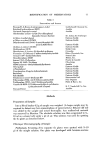
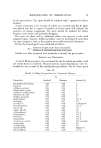
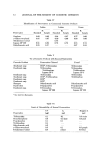
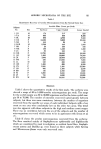
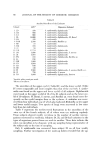
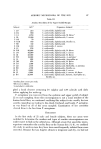
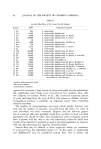
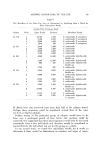
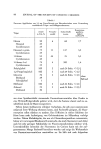
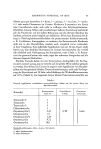
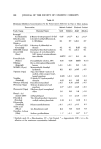
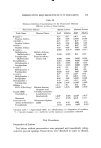
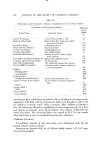
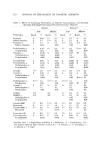
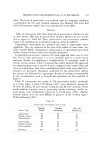
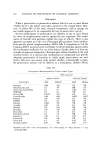
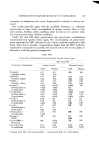
AEROBIC MICROFLORA OF THE EYE 85 Table I Quantitative Recovery of Aerobic Microorganisms from the Normal Outer Eye Subject Aerobic Plate Count per Swab No. Sex Eyebrow Upper Eyelid Lowe• EYelid -- i JD M 170 9. 1.5 225 3 CA M 980 850 $,100 4 BL M 860 4,700 5,900 2 DA F 14,400 6•900 55,000 5 MS F 440 50 3O 6 RAB M 2,500 440 1,060 7 RB F 20 330 150 8 MK F 185 1,330 1,380 9 JG F 50 230 60 10 MR F 10,700 90,000 60,000 11 JM M 1,600 80,000 70,000 12 JK F 3,000 25,000 24,000 13 PM F 230 16,000 7,000 14 JL M 240 600 1,000 15 DH F 1,800 650 8,000 16 CN F 3,900 1,300 25,000 17 LB F 600 1,300 2,500 18 BB F 140 4,700 1,600 19 PJ F 5,500 2,000 15,000 20 JP F 750 6,000 10,000 21 RN M 3,000 20,000 70,000 RESULTS Table I shows the quantitative results of the first study. The eyebrow area showed a range of 20 to 14,000 aerobic microorganisms per swab. The range for the eyelid margin was 50 to 90,000 organisms and for the lower eyelid mar- gin 30 to 70,000. The number of microbes recovered varied greatly between subjects, but there was some consistency between the number of organisms recovered from the specific eye areas of each individual. Subjects with a low count on one area were consistently low on the other two areas. This trend was also apparent with those subjects in the high and medium count ranges. There was no correlation between the sex of the subjects and the number of microorganisms recovered which seems to be in agreement with Evans et al. (7). Table II shows the aerobic microorganisms recovered from the eyebrow. The flora consisted mainly of Staphylococcus epidermidis and diphtheroids which are considered by most investigators as resident facial flora. Staphylo- coccus aureus and Bacillus sp. were found on three subiects while $arcina and Micrococcus [lavus were only recovered once.
Purchased for the exclusive use of nofirst nolast (unknown)
From: SCC Media Library & Resource Center (library.scconline.org)