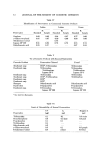
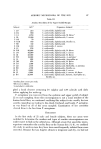
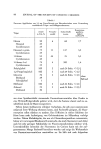
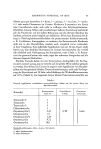
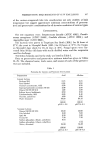
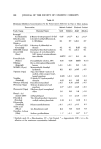
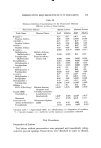
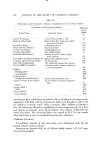
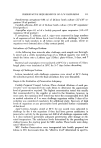
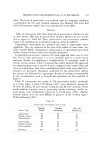
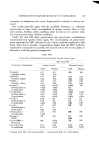
88 JOURNAL OF THE SOCIETY OF COSMETIC CHEMISTS Table IV Aerobic Microflora of the Lower Eyelid Margin Subject APC • Organis•ns Isolated 1 JD 225 S. epidermidis 2 DA 8,100 S. epidermidi, s' diphtheroids 3 CA 5,900 S. epidermidi, s' diphtheroids M. flavus ø 4 BL 55,000 S. epidermidis diphtheroids S. aureus 5 MS 30 S. epidermidis • RAB 1,060 S. epidermidis diphtheroids Bacillus sp. 7 RB 150 S. epidermidis diphtheroids 8 MK 1,375 S. epidermidis diphtheroids S. aureus 9 JG 60 S. epidermidis 10 MR 60,000 S. epidermidis diphtheroids M. flavus 11 JM 70,000 S. epidermidis diphtheroids S. aureus 12 JK 24,000 S. epidermidis diphtheroids M. flavus A. anitratus c 13 PM %000 S. epidermidi, s. diphtheroids 14 JL 1,000 S. epidermidis Aspergillus sp. 15 DH 8,000 S. epidermidis diphtheroids M. flavus Bacillus sp. 16 CN 25,000 S. epidermidi, s. diphtheroids M. flavus Bacillus sp. 17 LB 2,500 S. epidermidis diphtheroids Klebsiella A. anitratus iS BB 1,600 S. epidermidi, s. diphtheroids Bacillus sp. A. anitratus 19 PJ 15,000 S. epidermidis diphtheroids S. aureus oe0 JP 10,000 S. epidermidis diphtheroids S. aureus M. flavus 2l RN 70,000 S. epidermidis diphtheroids Bacillus sp. Sarcina Aspergillus sp. Paecilomyces '•Aerobic plate count per swab. " M icr o coccus fiavus. CAcinetobacter anitratus. expected to encounter a large variety of yeasts and molds. Results substantiate this expectation since fungi were recovered in low numbers from only two subjects. In contrast, Wilson et al. (10) recovered numerous species of yeast and fungi from the eyes of 29 of 138 women in Atlanta, Georgia. Geographical location is probably an important factor when evaluating normal facial flora. The number of microorganisms recovered varied greatly between sub- jects but the number of microbes recovered from the three eye areas of each individual was fairly consistent. Hygiene and the inherent proper- ties of a person's skin most probably would have an effect on their microbial population and should be taken into consideration when evaluating norma] flora. A person with dry skin or one xvho laboriously scrubs the facia] area would not be expected to maintain as great a microbial population as someone with oily skin practicing ]ess rigorous cleansing habits. Normal flora may be defined as those organisms which are consistent- ly recovered from the individuals tested (8). In this study, S. epidermidis and diphtheroids may be considered normal flora. But S. aureus and

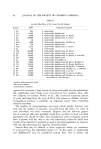
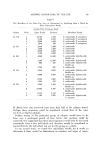
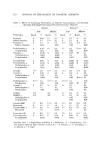
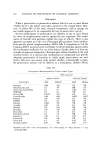
AEROBIC MICROFLORA OF THE EYE 89 Table V The Microflora of the Outer Eye Area as Determined by Swabbing Once a Week for Four Consecutive Weeks Aerobic Plate Count per Swab Week Upper Eyelid Eyebrow Microflora Found Subject 22 CM 23 'ru 24 BD 25 DA 26 EB 1 12,700 1,360 S. epidermidis P. aeruginosa 2 3,100 2,400 S. epidermidis P. aeruginosa 3 5,000 4,400 S. epidermidis P. ae•tginosa 4 1,800 1'80 S. epidermidis P. aeruginosa i 2,000 1,900 S. epidermidis 2 1,600 1,500 S. epidermidis 3 2,200 4,500 S. epidermidis 4 4,100 4,000 S. epidermidis i 6,200 14,400 S. epidermidis diphtheroids Bacillus sp. 2 1,700 12,700 S. epidermidis diphtheroids 3 860 400 S. epide•nidis diphtheroids Bacillus sp. 4 1,700 600 S. epidermidis 1 6,800 2,980 S. epidermidis diphtheroids Bacillus sp. 2 3,700 5,800 S. epidermidis diphtheroids Bacillus 3 2,500 1,900 S. epidermidis diphtheroids 4 1,800 450 S. epidermidis i 8,500 4,100 S. epidermidi• diphfi•eroids Bacillus sp. 2 17,000 4,700 S. epidermidis diphtheroids Bacillus sp. 3 2,140 2,110 S. epidermidis 4 1,100 1,200 S. epidermidis diphtheroids A. anitratus M. [lavus were also recovered from more than half of the subjects tested. Perhaps these organisms could be considered normal flora of the outer eye for Los Angeles subjects. Further testing of this particular group of subjects would have to be clone over a prolonged period of time before this question could be answered. One might find that these microorganisms would only be recovered consistently from a few individuals and therefore would be considered as normal flora for the individual, but not for the group as a whole. In our second study, we tested five individuals weekly for 4 weeks to determine if there would be fluctuations in numbers and types of micro-
Purchased for the exclusive use of nofirst nolast (unknown)
From: SCC Media Library & Resource Center (library.scconline.org)