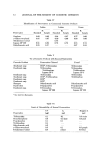
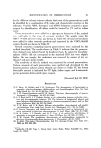
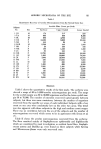
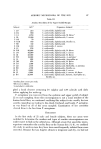
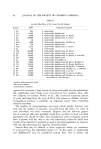
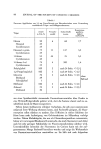
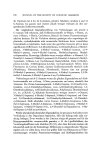
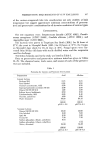
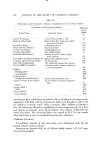
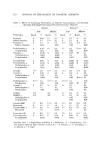
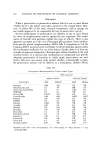
114 JOURNAL OF THE SOCIETY OF COSMETIC CHEMISTS DISCUSSION When a preservative or preservative mixture failed in one or more lotions (Tables II-IV), the failure most often occurred in the unaged lotion. How- ever, in about 30% of the tests, elevated temperature and/or storage for one month appeared to be responsible for loss of preservative activity. Several combinations of preservatives are effective in one or more lotions by virtue of complementary activity against the test organisms. The combi- nation of Germall with parabens typifies this type of activity. There is also apparent synergism as in the case of Bronopol plus parabens. Some combina- tions provide partial complementation. EDTA kills P. aeruginosa in 3 of the 4 Irgasan-EDTA mixtures tested, but failure to kill all challenge species makes this combination ineffective for any of the lotions. Finally, there is at least one example of apparent antagonism (Bronopol plus sodium Omadine in the acid nonionic lotion). It is obvious that combinations of compounds may provide adequate preservation of formulas in which single preservatives are inef- fective. However, one cannot easily predict whether a theoretically accepta- ble preservative mixture will be effective in a formulation additive effects, Table VII Preservatives Recommended for Various Lotion Types MIC Level (%) Anionic Lotion a Nonionic Lotion a Preservative Acid Alkaline Acid Alkaline Bronopol 0.05 NR 0.1 NR Dehydroacetic acid 0.1 NT NR NT Dioxin (Giv-Gard DXN) 0.1 0.1 0.15 0.2 DMDMH 0.1 0.1 NR 0.1 Dowicil 200 0.075 D 0.1 l) 0.1 0.1 Formaldehyde 0.05 0.05 0.075 0.075 Hibitane NR NR 0.1 NR MDMH 0.2 0.2 NR NR Nipastat 0.225 NR NR NR Noxyfiex 0.25 0.2 0.5 0.2 Ott•asept NR 0.38 NR NR Phenonip 0.5* NR NR NR Phenoxetol 1.0 1.0 1.0 NR Phenylethyl alcohol 1.0 1.0 NR NR Polycide A 0.15 0.1 0.15 0.1 Polynoxylin NR NR NR 0.3 S orbic acid 0.1 NT 0.15 NT Oreadinc, sodium 0.1' NR 0.1' 0.1' aSymbols used: NR = Not recommended NT = Not tested D: May discolor * = Ap- proximate MIC.

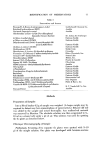
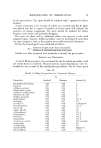
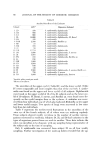
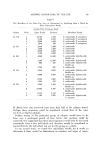
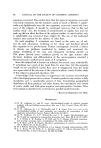
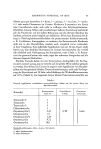
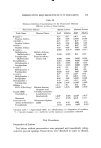
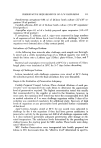
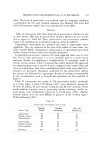
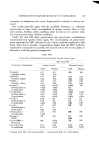
PRESERVATIVE REQUIREMENTS OF O/W EMULSIONS 115 synergism, or antagonism may occur. Experimental evaluation is always nec- essary. Our results generally agree with the available literature, i.e., adequate preservation is more easily accomplished in anionic systems than in non- ionic systems. Further, acidic conditions allow for the use of a greater num- ber of preservatives than alkaline conditions. Tables VII and VIII show preservatives and preservative combinations recommended for specific lotion types. The concentrations of preservative given represent the MIC obtained by the various methods employed in this study. Note, that in practice, concentrations higher than the MIC wottld be employed to compensate for possible loss of preservative due to heat, light, or interaction with other product components. Table VIII Preservative Combinations Recommended for Various Lotion Types Preservative Combination MIC Level (%) Anionic Lotion a Nonionic Lotion a Acid Alkaline Acid Alkaline Bronopol q- 0.1' 0.1' NR NR Omacline, sodium 0.05 0.05 DMDMH q- 0.1' 0.1' 0.1' 0.1' Oreadinc, sodium 0.05 0.05 0.05 0.05 MDMH q- 0.2* 0.2* 0.2* 0.2* Oreadinc, sodium 0.05 0.05 0.05 0.05 Bronopol q- 0.01•8 0.013 TM 0.005 NR Methylparaben q- 0.038 0.025 0.1 Propylparaben 0.009 0.006 0.025 Formaldehyde q- 0.013 0.018 0.038 0.038 Methylparaben q- 0.05 0.075 0.15 0.15 Propylparaben 0.013 0.018 0.038 0.038 Germall q- 0.38 0.5 0.5 0.5 Methylparaben q- O. 15 0.2 0.2 0.2 Propylparaben 0.038 0.05 0.05 0.05 Germall q- 0.5* 0.5* NR NR Methylparaben q- 0.1 0.1 Butylparaben 0.02 0.02 • lethy]paraben q- 0.15 NR NR NR Propylparaben 0.038 Hibitane q- NR NR 0.1 NR EDTA 0.05 Vancide 89RE q- NR 0.075 NR NR Phenoxetol 0.375 Preservative 68 q- 0.13 0.19 0.25 0.19 Formaldehyde 0.013 0.019 0.025 0.019 Symbols used: NR = Not recommended * --= Approximate MIC D = May discolor.
Purchased for the exclusive use of nofirst nolast (unknown)
From: SCC Media Library & Resource Center (library.scconline.org)