J. Soc. Cosmet. Chem. 26 299-313 (1975) ¸ 1955 Society of Cosmetic Chemists of Great Britain An appraisal of human head hair as forensic evidence J. PORTER* and C. FOUWEATHER-I' Synopsis--The evidential value of HUMAN HEAD HAIR in FORENSIC science is discussed. As well as basic techniques such as MORPHOLOGY and the identification of COSMETICS, an experiment to put the measurement of hair COLOUR on a less subjective basis, is described. Results show that with the techniques currently in use a definite method of relating a hair fibre to a particular individual is still not a reality, but, in cases of rare hair colour and the presence of cosmetic treatments, good discrimination can be achieved. INTRODUCTION At the present time the evidential value of hair in the forensic context is limited because no reliable means of characterization has yet been developed which allows the complete individualization of human hair (Simpson (1) Polson (2) Peterson, Haines and Webster (3)). This state of affairs is unsatisfactory as human hairs are often recovered from crimes of violence and many other serious crimes. The purpose of this review is to assess the present state of the available information, to discuss the results of recent work at the Home Office Central Research Establishment and finally to suggest possible lines of investigation. * Home Office Central Research Establishment, Aldermaston, Reading, Berks, RG7 4PN, England. ? Home Office Forensic Science Laboratory, Shakespeare Street, Nottingham, NG1 4FR, England. 299

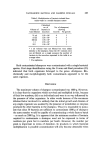
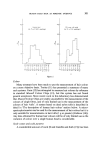
300 JOURNAL OF THE SOCIETY OF COSMETIC CHEMISTS Hair is an appendage of the skin corresponding anatomically with the epidermis. It consists of a shaft, a root and bulbous extremity embedded in the hair follicle. Hair and wool, in their natural unstretched state, belong to a group of proteins called the a-keratins. Keratins occur as the principal constituents of the horny layer of the epidermis and of related appendages such as horns, hooves, scales, hair and feathers, that are derived from the skin. Keratin fibres are very complex both at the histological level and at the chemical level owing to the multiplicity of protein molecules which are effectively cross-linked to give an integral structure. A microscopic examina- tion of a hair cross-section reveals the outer cuticular fibrous portion, an inner darker portion, the cortex, and in the centre of the cortex a central canal called the medulla. The outer cuticular layer takes the form of fine scales which cover the surface of the hair and act as a protective layer. The colour of the hair fibre is due to pigment granules (melanin), found princi- pally in the cortex, and to the presence of air bubbles in the medulla. The basic techniques that have found application are as follows: Morphology of hair Diameter In an early paper Wynkoop (4) concludes that hair shaft diameter bears little or no relationship to the age of an individual. Trotter (5) and Trotter and Dawson (6) came to similar conclusions in a later study. A more de- tailed examination (Kind (7)) of human head hair diameters revealed that there is little correlation between hair shaft diameters and a given individual. The variation of head hair diameters over an individual head was very similar to the variation of hair diameters over the population (Fig. 1). The diameter of hair is known to vary over the length of an individual fibre but recent work (Fouweather (8)) has shown that the variation of hair diameters along an individual fibre is not a useful parameter for hair characterization. Medullary index Owen (9) has demonstrated that the medullary index or fraction (the ratio of width of medulla to the width of the hair) is of little or no use in the characterization of human head hairs. However, the medullary index is known to be a means of discriminating between some animal species (e.g. cat from dog) (Kind (10)).
Purchased for the exclusive use of nofirst nolast (unknown)
From: SCC Media Library & Resource Center (library.scconline.org)