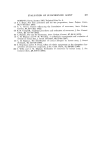
79. JOURNAL OF THE SOCIETY OF COSMETIC CHEMISTS (5) (6) (7) (s) (9) (10) (11) (12) (13) (14) (15) (16) J. F. Young, Humidity control in the laboratory using salt solutions-a review, J. Appl. Chem., 17, 241 (1967). J. Crank, The Mathematics of Diffusion, Oxford University Press, Ely House, Lon- don, 1956, Pp. 246-8. R. J. Scheuplein, Molecular structure and diffusional processes across intact epidermis, Final Comprehensive Report (Rep. No. 7), 1-81 (1963-67). R. L. Anderson, J. M. Cassidy, J. R. Hansen, and W. Yellin, Hydration of stratum corneum, Biopolymers, 12, 2789-2802 (1973). W. J. Moore, Physical Chemistry, Prentice-Hall Inc., Englewood Cliffs, N.J., 1965, Pp. 253-322. R. J. Scheuplein and L. J. Morgan, Bound water in keratin membranes measured by a microbalance technique, Nature, 214, 456-8 (1967). R. Anderson, J. M. Cassidy, J. R. Hansen, and W. Yellin, The effect of in vivo oc- clusion on human stratum corneum hydration-dehydration in vitro, J. Invest. Derma- tol., 61, 375-9 (1973). J. R. Hansen and W. Yellin, Water Structure at the Water-Polymer Inter[ace, Plenum Pnblishing, New York, N.Y., 1972, Pp. 19-28. J. D. Middleton, The mechanism of water binding in stratum corncure, Brit. J. Dermatol., 80, 437-50 (1968). E. I. Singer and J. Vinson, The water binding properties of skin, Proc. Sci. Sect. Toilet Goods Ass., 46, 29-33 (196,6). J. D. Middleton and B. M. Allen, The influence of temperature and humidity on stratum corneum and its relation to skin chapping, J. Soc. Cosmet. Chem., 24, 239-43 (1973). K. Walkley, Bound water in stratum corneum measured by differential scanning calorimetry, J. Invest. Dermatol., 59, 225-7 (1972).

I. Soc. Cosmet. Chem., 27, 73-86 (1976) Microbial Quality Control for the Manufacture of Cosmetic Emulsions C. KANO, B.S.,* O. NAKATA, B.S.,* S. KUROSAKI, B.S.,* and M. YANAGI, B.S.* Synopsis: Various aspects of a QUALITY CONTROL SYSTEM intended to insure the production of MICROBIAL FREE COSMETICS or cosmetics containing a minimum number of organisms are discussed. This subject has received world-wide attention and, at present, a great deal of time and effort is devoted to establishing such a system. The authors indicate the various sources and potential sources for MICROBIAL CONTAMI- NATION of cosmetics. Microbial contamination of cosmetics can result either from the raw materials or during the actual manufacturing, processing, and packaging operations or from both of these things. Emulsions contain many ingredients which will support the growth of microorganisms. Therefore, attention is given to a discussion of the quality control procedures concerning the manufacture of LARGE-SCALE COSMETIC EMUL- SIONS. The quality control program will be discussed as follows: (a) standardization of tech- niques which will reduce the microbial levels found in cosmetic raw materials (b) sterili- zation, sanitizing, and cleansing procedures for use during the manufacturing process (c) sterilization or sanitization of the packaging components and filling equipment so as to prevent microbial contamination during the packaging process and (d) establishment of test methods useful for microbial quality assurance. Finally, consideration is given to other aspects of a quality control system including on-the-job training programs for plant employees and plant maintenance and sanitation. INTRODUCTION In recent years the incidence of skin irritation caused by the application of cosmetics has been on the increase in Japan, and hence, the need for a non- irritant type of cosmetic has become increasingly popular. In order to manufacture such a cosmetic, careful selection of raw materials and particular attention to formulation are essential factors. Utmost care is necessary throughout the various stages of the manufacturing process, which must be carried out in a microbially free environment. This is an important factor and has come to represent what the consumer expects from a modern cosmetic manufacturer. *Shiseido Research Laboratories, Yokohama, Japan. '[Shiseido Osaka Factory, Osaka, Japan. 73
Purchased for the exclusive use of nofirst nolast (unknown)
From: SCC Media Library & Resource Center (library.scconline.org)