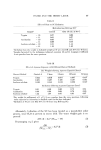
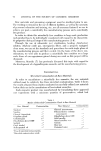
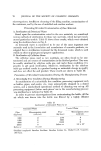
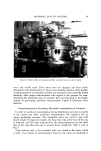
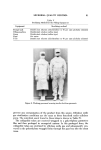
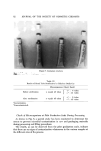
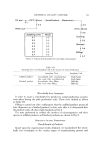
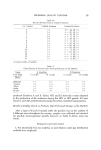
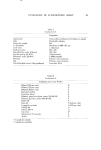
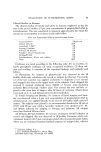
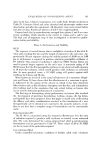
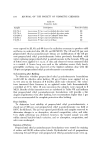
74 JOURNAL OF THE SOCIETY OF COSMETIC CHEMISTS Raw materials and processing equipment must be sterilized prior to use. The working environment, the use of efficient facilities, as well as the necessity of personnel education and training, etc., are all necessary factors if we are to achieve our goal a microbially free manufacturing process and a microbially free product. In order to obtain this microbially free condition in large-scale production each product has to be individually considered with regard to its characteris- tic properties during all steps of the manufacturing process (1-6). Through the use of ultraviolet (uv) sterilization, heating, disinfectant solution, ethylene oxide gas, microporous filters, and a properly equipped clean room, we can set the standards and procedures for each single phase of the manufacturing process and their control. On the basis of the above con- siderations, we were able to produce a microbially free emulsion on a large scale. Some of our experiences gained during our work on this project will be discussed. Moreover, Morrish (7) has previously discussed this topic with regard to the development of a hypoallergenic cosmetic and its manufacturing process. EXPERIMENTAL Microbial Contamination o[ Raw Materials In order to manufacture a microbially frec cosmetic, the raw materials utilized must bc relatively free from microbial contamination. Table I shows the results obtained from studies conducted on carefully refined raw materials before their use in the manufacture of low-irritant cosmetics. Each cosmetic product was manufactured by formulating these approved raw ingredients with a minimum quantity of preservatives, which had Table I Results of Microbial Contamination Check in Raw Material Raxv Material Contamination Raw Material Contamination Squalane -" Glycery] monostearate Vaseline _, Polyoxyethylene sorbitan Glyceryl trimyristate --' monostearate Propylene glycol -' Polyethylene glycol 400 Cellulose gum q_b Solid paraffin -'• Polyethylene glycol 1500 -' Microcrystalline xvax Sorbitol --' Ceresin Cetyl alcohol -' Bees wax Hydrogenareal oil _a Deionized water =Free of microbial contamination. "Microbial contamination noted.

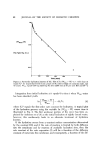
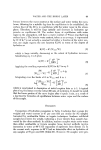
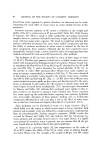
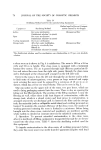
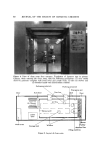
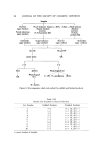
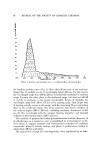
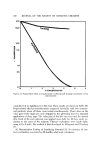
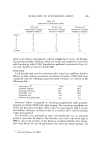
MICROBIAL QUALITY CONTROL 75 previously been shown to be dcrmatologically safe and capable of preventing secondary contamination of the product. While formalin and mc'rcurial germicides are recognized as very powerful preservatives their use in cosmetic pro, ducts is not permitted in Japan. We have also found that some of the halogenated salicylanilides were photoallcrgenics, therefore, they were not used in our formulations for these particular products. iLricrobial Contamination During Manufacturing Process In order to accomplish the production of a microbially free cosmetic, J•: •: necessary to have microbially free materials and manufacturing facilities with no contamination during processing. Figure i shows an outline of the various manufacturing steps carried out before various controls for microbiological contaminat'ion were estab- lished. Thus far, microbial contamination was found during deaeration, cool ing, storage, and filling. In the deaeration stage, the contamination was caused by airborne micro- organisms after air discharge and when new air was supplied. During the cooling process, the contamination was caused by residual liquid after wash- ing. Due to imperfect closure during storage, as well as because of the in- complete cleansing of the tank, airborne microorganisms were found to be causes of contamination. Finally, during the filling operation, due to the fact that no clean room was available, contamination was caused by airborne Oil part• •-(Emulsification) -- (Deaeration) -- (Cooling) -- (Storage) -- (Filling) Water part • Places contaminated and causes of contamination Deaeration: Contamination caused by air borne microorganisms due to air supply. Cooling: Contamination caused by residual liquid after machine Storage: Filling: washing. a) Contamination caused by b) Contamination caused by a) Contamination caused by b) Contamination caused by c) Contamination caused by Figure 1. Possible areas for introduction of microbial process air borne microorganisms. insufficient tank cleansing. air borne microorganisms. filling machine. the container. d) Contamination caused by the worker. contamination during marefracturing
Purchased for the exclusive use of nofirst nolast (unknown)
From: SCC Media Library & Resource Center (library.scconline.org)