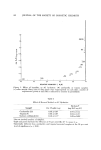
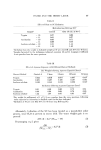
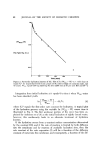
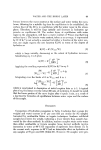
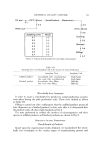
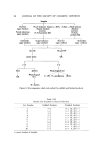
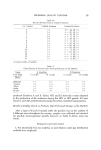
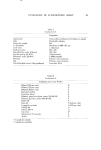
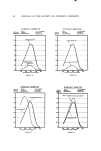
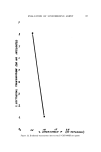
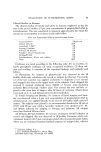
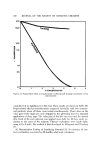
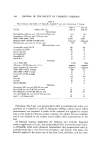
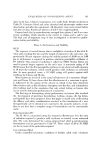
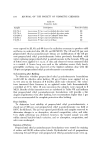
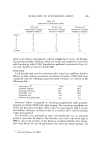
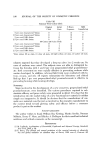
70 JOURNAL OF THE SOCIETY OF COSMETIC CHEMISTS tected from water exposure by plastic therefore, no statement can be made concerning the wash effect of warm water on water soluble fraction in the membrane. Excessive aqueous exposure of SC causes a reduction in dry weight and ability of the SC to retain water at 97 per cent RH (Table II! ). With 3 hours of exposure, the effect is small in both cantharidin and trypsin harvested samples however, sunburn exfoliated tissue loses weight and ability to absorb water with increasing water exposure. The trend in weight loss indicates that sunburn exfoliated membranes lose more water soluble components and that the ability of sunburn membrane to retain water is reduced by the loss of these components. Since sunburn exfoliated skin has been reported to have incompletely formed keratin, caution should be taken in comparing data from sunburn exfoliated SC with normal SC harvested by other methods. The hydration of SC has been described in terms of three types of water (8, 10, 11). The first type, primary bound water, is tightly bound water asso- ciated with strong protein hydrogen-bonded interactions. Primary bound wat- er constitutes the first 0.10 to 0.15 mg H20/mg SC absorbed by dry SC at 60 per cent RH (Fig. 1 ) and is necessary for normal pliability of SC (1). As the activity of water (RH) increases above 60 per cent, water sorption ap- pears to increase exponentially in relation to RH (Fig. 1). The water absorbed in this region is secondary water, bound to the primary water layer, constitut- ing 0.40 to 0.50 mg H20/mg SC (Fig. 1). At RH above 94 to 96 per cent, water content increases rapidly as free water, not directly bound to the mem- brane, is absorbed. In this region, SC will continue to absorb water xmtil the tissue begins to break down mechanically (7,8). Spectroscopic observations by Hansen and Yellin (12) indicate that continued water uptake in this re- gion results in an increase in primary water binding also hence, excessive free water opens up the molecular lattice exposing more primary hydration sites. Irreversible alteration of these primary binding sites or hydroscopic components affecting these sites may play a role in the effect of water expo- sure on the loss of mechanical integrity when the SC is hydrated (13,14). Since hydration can be described in terms of a single function (Fig.3), which holds over the region in which bound water is being absorbed, both primary and secondary water are defined by a single parameter, implying that they are interchangeable. Nuclear magnetic resonance (NMR) results dis- covered by Hansen and Yellin (12) also indicate that the interchange be- tween primary and secondary bound water is very rapid. Hence, if a signifi- cant amount of secondary water is present, one can assume that all the pri- mary bound sites are hydrated due to the rapid equilibrium As observed in a previous report (3), low temperatures on the order of 10 to 20øC reduce the ability of the SC to retain water at relative humidi- ties below 60 per cent. For example, a SC sample at 60 per cent RH retains

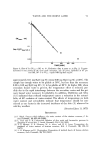
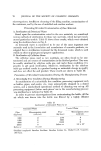
WATER AND THE HORNY LAYER 71 1.0 (Wma x -W) 0.1 (mg H20/m e S.C.) o.o• I i I I 0 100 200 300 400 Figure 3. Plot of In (Wmax- W) VS. t 1/2. Hydration data is same as in Fig. 2. Trypsin- harvested 8 mm punch of SC from male caucasian, age 45 years, hydrated at 97 per cent RH, 30 ø C to Wm•x equals 0.90 mg H,/mg SC approximately 0.11 mg H20/mg SC versus 0.06 mg H20/mg SC at 20øC. The sample has enough water to be pliable at 30øC, but less than the necessary 0.10 to 0.15 mg H20/mg SC (1) to be pliable at 20øC. At higher RH, when secondary bound water is present, the temperature effect is reduced, pos- sibly due to the rapid interchange between the secondary water and the pri- mary bound water necessary for pliability. In addition, Middleton and Allen (13) indicated that reduced temperature causes a reduction in the extensi- bility of SC exclusive of water content. The effects of temperature on both water content and extensibility indicate that temperature should be con- sidered as one factor in the increased incidence of dry skin (2) observed in cold dry weather. (Received June 11, 1975) REFERENCES (1) I. Blank, Factors which infiuepcc the water content of the stratum corneum, J. In- vest. Dermatol., 18, 433-40 (1952). (2) L. Gaul and G. B. Underwood, Relation of dew point and barometric pressure to chapping of normal skin, J. Invest. Dermatol., 19, 9-19 (1952). (3) T. S. Spencer, C. E. Linamen, W. A. Akers, and H. E. Jones, Temperature de- pendence of water content of stratum corncure, Brit. J. Dermatol., 92, 159-6d (1975). (d) A. M. Kligman and E. Christophers, Preparation of isolated sheets of human stratum corncure, Arch. Dermatol., 88, 702 (1963).
Purchased for the exclusive use of nofirst nolast (unknown)
From: SCC Media Library & Resource Center (library.scconline.org)