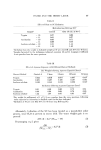
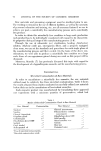
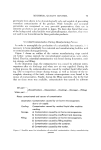
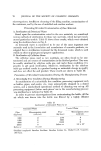
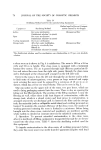
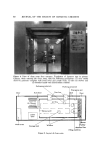
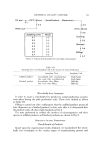
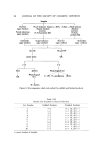
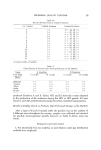
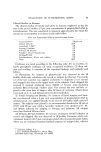
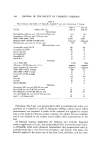
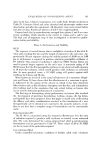
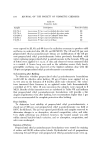
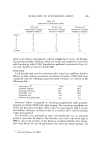
78 JOURNAL OF THE SOCIETY OF COSMETIC CHEMISTS Table IV Sterilizing Method used for the manufacturing Equipment Method used to Prevent Contmni- Equipn,e,,t Sterilizing Method nation Caused by Air Supply Kettles Hot water sterilization Microporous filter Disinfectant solution • (in joints) Pipes Ilot water sterilization Disinfectant solution a (in joints) Cooling equipments Hot water sterilization Storage tanks After hot water sterilization, drying by microbially free filtered air Didnfectant solution a (in joints) Microporous filter "The disinfectant solution used for sterilization was chlorhexidine in 70 per cent alcoholic solution. a clean room as is shown in Fig. 4 is satisfactory. The room is 10.8 m x 5.4 m wide and 2.6 m in height. This clean room is equipped with a horizontal laminar flow system. The air is passed through high efficiency particulate fil- ters and enters the room from the right side, passes through the clean room and is discharged at the exhaust grill arranged on the left side wall. Entry to the room is from the left side through the air shower and in order to limit entry of microorganisms, every person or large material and equip- ment entering the room must be exposed for a minirotan of 30 sec to an air shower, which has a 15 m/sec wind velocity. This can be seen in Fig. 5. One can notice on the upper side of the room, two pass boxes, which are used to bring packaging material into the room. There is also an opening for taking out the filled products. The position of the filling machines is near the filtering air wall, where there is the least degree of contamination, while the storage tank, which is a closed system and ]east prone to contamination, is arranged nearest the air discharge grill. In between the filter and the storage tank, the materials (such as collapsible metal tubes) and working personnel are located. To maintain the constant efficiency of the clean room, the number of working personnel entering the room is limited to a minimum. Before being brought into the clean room, material and machinery are sterilized, and the whole facility is checked at constant intervals for microbial contamination. 2. Operation: To prevent microbial contamination in the clean room, after it is sterilized, all filling equipment is transported through the air shower tunnel into the clean room. Table V shows the sterilizing method used for this equipment. To impede contamination in the clean room, all working personnel (before they enter the room) must wear sterile dust-free garments complete with head

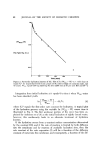
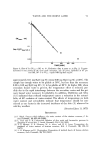
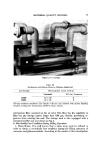
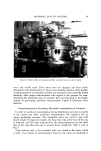
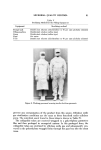
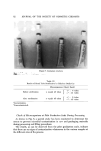
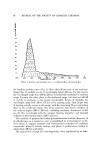
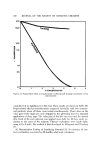
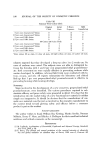
MICBOBIAL QUALITY CONTBOL 79 Figure 3. Highly efficient microporous filter mounted onto air inlet of kettle cover and mouth mask. Their shoes must be changed and their hands disinfected with chlorhexidine in 70 per cent alcoholic solution. Only healthy working personnel are selected, and they are required to have periodic health checkups. After proper indoctrination with regard to the purpose for man- ufacturing this particular type of cosmetic, they are instructed in the funda- mentals of preventing microbial contamination. Figure 6 illustrates these uniforms. Countermeasure for Preventing Microbial Contamination of Container In order to avoid any contamination during distribution and also. to impede to the utmost any other secondary contamination, the container has an unique packaging structure. The collapsible tubes are small in size with closed nozzles. To open the nozzles, the loose blue ring at the base of the cap is removed, and the tube is pierced by the sharp protrusion on the inner side of the cap when the cap is screwed down completely. This is seen in Fig. 7. Upon delivery only a few microbial cells were found in the tubes, which is quite a low degree of contamination however, the tubes are sterilized to
Purchased for the exclusive use of nofirst nolast (unknown)
From: SCC Media Library & Resource Center (library.scconline.org)