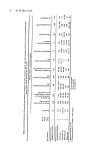
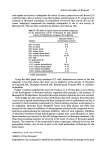
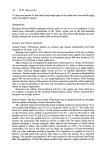
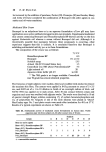
20 D.M. Bryce et al. be increased by the addition of parabens, Parker (29). Proserpio (30) and Jacobs, Henry and Cotty (31) have considered the combination of Bronopol with other agents in cos- metics and oil-water emulsions. Medicated Skin Cream Bronopol in an anhydrous base or in an aqueous formulation of low pH may have applications as an active antibacterial agent in skin care products. Experimental medicated skin creams containing Bronopol and Hexachlorophane BP showed activity on the skin against Escherichia coli whereas a cream without Bronopol did not. Although it is theoretically possible that synergism between these compounds is occurring, other experience suggests that this is unlikely. It is concluded therefore that Bronopol is exhibiting antibacterial activity per se in these formulations. The composition of the cream was as follows: % w/w Hexachlorophane BP 0.5 Bronopol 0.1 or 0.2 Sorbitol syrup 13.5 Arlacel 186 (ICI United States Inc.) 1.5 Cosmolloid wax 70H (Astor Petrochemicals)* 7.5 Light mineral oil 20 Aqueous citrate buffer pH 4.5 to 100 * The 70H grade is no longer available. Cosmolloid wax 70 grade has almost identical properties. The forearms of eight subjects were washed, dried and swabbed with alcohol to remove the transient skin flora. The creams were applied in 0.05-g amounts to areas of 5 x 2.5 cm, and 0.025 ml of a 1 in 10 dilution in broth of an overnight culture of Esch. coli NCTC 5934 was applied on to each cream. After 30 rain contact between cream and organism each area was swabbed with alginate swabs. The swabs were dissolved in 10 ml of quarter strength Ringer solution containing 1 •o of sodium hexametaphosphate and 1•o of polysorbate 80. Aliquots (1 ml) of the swab diluents were plated in 'Oxoid' MacConkey agar No. 3 and plate counts were made after incubation for 48 h at 37øC. Results of a typical experiment are shown in Table IX. Table IX. Antibacterial activity of medicated cream formulations on human skin. Viable organisms (per ml) from subjects (A-H) after contact time of 30 min Subjects Cream A B C D E F G H Base (no active agen0 + + + + + + + + Base+ 0'5•o Hexachlorophane BP + + + + + + + + Base+ 0'5•o Hexachlorophane BP+ 0.2•o Bronopol 7 2 1 1 2 0 3 9 Base + 0'5•o Hexachlorophane BP+ 0-1•o Bronopol 11 + + 6 20 20 0 29 + = uncountable numbers.

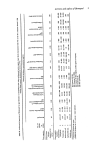
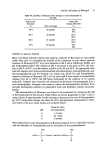
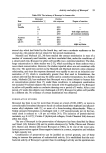
Activity and safety of Bronopol 21 Alcoholic Deodorant Spray An experimental alcoholic deodorant spray formulation containing 0.12• w/w Bronopol was found to be stable after one-year's storage at room temperature and 37 ø in a lacquered tinplate can, and showed a broad spectrum of antibacterial activity. Composition of the spray was as follows: •o w/v Diethyl Phthalate BPC 0.330 (v/v) Propylene glycol 0.167 Denatured ethanol B grade 750P 29.320 Perfume 0.083 Bronopol 0.100 Propellant 11/12 (1: 1)to 100 This formulation was packed into internally lacquered tinplate cans soldered with solder 2/98 and fitted with a standard valve. The can fill was 128 g. Samples were then placed on storage test at room temperature and 37øC, and examined at regular intervals over a period of one year. Chemical assays were carried out using an adaptation of the t.l.c. system described earlier. The results showed that no decomposition of the Bronopol had occurred. No corrosion of the container was observed. Microbiological assessments were carried out by spraying the formulation on to a 13 mm Whatman A.A. disc and allowing to dry. The discs were then placed on to agar seeded with various test bacteria and Candida albicans. The zones of inhibition were recorded after 18 h at 37øC. The results obtained after one-year's storage are shown in Table X. Table X. Antibacterial activity of Bronopol in an alcoholic spray formulation after one year storage at room temperatue and 37øC Diameter of zone of inhibition (+ 13 mm disc) in mm Sample 1 Sample 2 Test organism (containing Bronopol (containing initially at 0.12•o w/w) no Bronopol) Temperature of storage Room temperature 37 ø 37 ø $taph. aureus 8452 29 30 13 $taph. aureus FDA 35 35 13 Staph. albus NCTC 7944 28 29 13 Esch. coli NCTC 5934 26 26 13 Proteus vulgaris NCTC 4635 26 26 13 Ps. aeruginosa 10S 28 28 13 Candida albicans 239 13 13 13 Personal Hygiene or Foot Spray An experimental hygiene spray formulation containing Bronopol was found to be stable in a lacquered aluminium can and showed more antibacterial activity than a similar formulation containing chlorhexidine, even after 3 months storage at elevated temperature.
Purchased for the exclusive use of nofirst nolast (unknown)
From: SCC Media Library & Resource Center (library.scconline.org)