Evaluating the performance of antiperspirants 415 Panels should consist of at least twenty subjects (for adequate statistical analysis of data), randomly selected, who are screened as being fit to withstand thermal stresses. According to Majors and Wild (1) only about 1• of volunteer subjects are found to be unsuitable. Kuno (2) showed that eccrine sweating can be affected locally and centrally by the magnitude of the thermal stress. It can also be induced by emotional stimuli such as anger, frustration, embarrassment and even the mental stress associated with mental arithmetic as shown in the work of Quatrale, Stower and Felger (3). In order to prevent emotional sweating causing excess scatter in our thermal stress data, we impose the following restrictions on the test. (1) Subjects are asked to sit quietly in a waiting room held at 23øC for 1 h after they have changed into shorts and suntop plus a towelling robe. During this stabilisation period they are allowed one cup of hot coffee and are provided with magazines to read. (2) Groups of subjects are thermally stressed without their towelling robes whilst sitting in a warm room at an air temperature of 38-5 + 1 øC and relative humidity 35 _+ 5•. (3) Subjects are asked to keep both feet on the floor and maintain an upright posture. They are asked to avoid discussing emotive subjects. (4) Liberal applications of antiperspirant product are applied to the whole of the axillary region by experienced staff, at least 1 h before subjects are thermally stressed. Shelley and Hurley (4) showed that even hyperhidrotic subjects could be treated effectively if an antiperspirant treatment was applied before going to bed and occluded overnight. What we suggest happens during the night is that at some stage the sweat glands are inoperative, giving the active, available ions the opportunity to diffuse down the sweat ducts to the zone of action. If applied when the subject was sweating the active ingredient might be flushed away to avoid scatter in antiperspirant efficacy tests, applications should only be made when the glands in the area are inactive and at least 15 rain should be allowed for the product to dry. It is not clear whether or not the sweat glands responsible for thermal regulation in the axillae are the same ones that respond to emotional stimuli, neither is it known whether an effective antiperspirant causes (a) all glands to operate at a reduced rate, (b) all glands to operate for only a part of the time, or (c) some glands to cease functioning temporarily. Antiperspirants may cause a combination of (a), (b) and/or (c) to occur. Transient physiological factors make sweating difficult to control precisely. An example of this is the fact that the body thermostat setting changes quite markedly over a 24 h cycle. In addition, subjects who are suffering from an infection, such as the common cold, can have a high blood temperature without sweating, for a day or so before other symptoms appear. GRAVIMETRIC DETERMINATIONS OF ANTIPERSPIRANT EFFICACY Having defined potential sources of variation in the sweat rate in the axilla and ways of limiting their effect there are certain precautions that must be taken to ensure that useful data are obtained from gravimetric sweat collection procedures. Majors and Wild (1) showed that the right axilla (particularly if he is right-handed) in an individual may consistently sweat more than the left. Therefore it is necessary to establish a subject's right: left ratio before a test product is applied to one axilla. It is also accepted that even under well controlled temperature and humidity conditions a

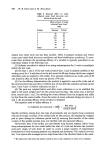
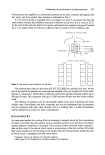
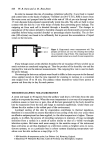
416 W. B. Davis and A.M. Rees-Jones Table I. Seasonal effect on sweat collected under fixed hot-room con- ditions from the back Mean amount of sweat collected from 4 cm a (mg) Subject Summer Winter 1 46 15 2 172 82 3 113 11 4 63 26 5 94 18 6 76 10 Mean 94 27 subject may sweat more one day than another. Table I compares summer and winter sweat rates under fixed hot-room conditions and fixed stabilisation conditions. To over- come these problems the percentage efficacy of a product is typically quantified on an individual subject in the following way. (1) Subjects are asked to refrain from using antiperspirants for 2 weeks immediately before the test week. (2) On days 1 and 2 of the test week (control days 1 and 2) subjects stabilise in the waiting room for 1 h and then sit in the hot-room for 80 min during which time weighed absorbent pads are applied to the axillae. Two separate collections are made, each of 20 min duration after an initial warm-up period of 40 min. (3) For the efficacy determinations the product is applied to one axilla at the end of the second control day and then 1 h before and 15 min after the collection periods on test days 3 and 4 and 1 h before collection on day 5. (4) The pads are weighed before and after sweat collections so as to establish the right to left sweat weight ratio* for the control and test days. The sweat ratio is derived from control days 1 and 2 by dividing the sweat collected from the assigned test axilla by that from the control axilla. From the ratios of sweat collected during test days 3, 4 and 5, the percentage efficacy of the product is obtained. The equation used to define efficacy is •o reduction in sweat rate= 100(1 - test ratio ] control ratio] Specific problems arising from this type of gravimetric test are mainly those concerned with (a) thorough coverage of the treated area by the product, (b) keeping the weighed pad in place during the collection period and (c) ensuring that transfer of the solids content of the applied product does not interfere with the measured efficacy. Gravimetric tests in the axillae are unavoidably long because subjects refrain from using antiperspirants for two weeks before the start of a trial and between the essential cross-over stages of such trials. In order to screen a larger number of experimental formulations a back-screening method was adopted and developed. This method involves ten, 2 cm square sites arranged as two strips from below the shoulder blade to the waist. * By using sweat rate ratios the scatter caused by day to day variations in sweat rate is reduced.
Purchased for the exclusive use of nofirst nolast (unknown)
From: SCC Media Library & Resource Center (library.scconline.org)