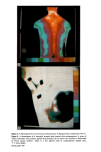
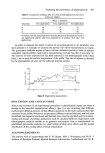
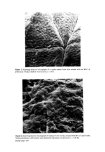
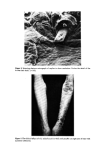
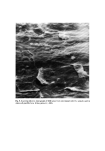
Figure 4. A thermogram of a non-sweating untreated back. A change of hue corresponds to 0'5 ø C. Figure 5. A thermogram of a thermally stressed back treated with antiperspirant. A cross of water (vertically) and product applied (horizontally) 20 cm below the shoulder is delineated by black square markers. There is a hot (green) strip of antiperspirant treated skin. 5 ø C scale length. Facing page 418

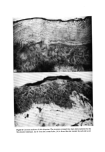
Figure 6. A thermogram of applied product evaporating in the axilla taken 10 min after application. The cool (coloured) cross is fading as the applications dry out. The surrounding areas appear white because they are hotter than the temperature range (1 ø C) covered by the ten colours. Figure 7. A thermogram of an axilla sweating during mental stimulation under ambient con- ditions. 5' C scale length. The normally hot central axillary region is 4 ø C cooler than the surrounding skin. Facing page 419
Purchased for the exclusive use of nofirst nolast (unknown)
From: SCC Media Library & Resource Center (library.scconline.org)