358 JOURNAL OF THE SOCIETY OF COSMETIC CHEMISTS object of the present work was to gain more quantitative information concerning the enhancement of sweat suppression by various modes of application. We used aluminum chloride as a model because it is the most effective of the metallic antiperspirants (1). METHODS The studies were carried out on 97 healthy young adults who served as paid volunteers. The amount of sweat suppression was estimated by taking silicone imprints during thermal sweating as previously described (3). STUDY 1. COMPARISON OF DIFFERENT MODES OF APPLICATION It is impossible to compare efficacy data from different laboratories, since very different methods are used. Moreover, the test formulations have varied greatly. In axillary tests, subject variability is a vexation. Within the same panel it often happens that some persons show no sweat suppression while others achieve a 75% anhidrosis. It is important to gain an understanding of the sources of so much variability. METHODS Effect of occlusion An area of 25 cm 2 on two sites of the lower forearms of eight subjects was spread with 0.1 ml of 20% aqueous AICl 3 ß 6H20 and allowed to dry. One site was then occluded with impermeable plastic film (Saran Wrap ©, Dow Chemical Co., Indianapolis, Ind.), while the other area was merely protected by a perforated plastic cup held in place by adhesive tape. The positive control consisted of 0.2 ml of 20% aluminum chloride solution applied via modified Duhring Chambers as described before (3). The exposures were for 3 hr, after which the sites were rinsed with tap water. The degree of sweat inhibition was assessed 24 hr later because anhidrosis is maximal at that time. Repeated short- term applications Five-cm squares of non-woven cloth (WEBRIL, © Curity) were soaked with 20% aluminum chloride solution and applied to the forearm or back under tape occlusion for 15 min, followed by water rinsing. Six subjects received one application. Another ten received a second 15-rain exposure on the following day. In another nine, two 15-minute applications were made twice daily for two successive days. In two groups of four volunteers each, 15-minute treatments were given twice a day for three and four days respectively. Sweat inhibition was assessed 24 hr after the last exposure. Additionally, three volunteers applied under supervision a liberal amount of 20% aluminum chloride to a designated area on their lower backs twice daily for seven days. The degree of anhidrosis was determined on the fourth and eighth day. Finally, three patches containing 20% aluminum chloride were applied to the lower backs of four subjects. One site was exposed for 15 min twice-daily for three days. The remaining two were sealed under impermeable tape for 3 and 24 hr respectively. Applications were scheduled in such a way that sweat suppression was determined

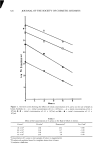
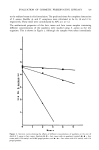
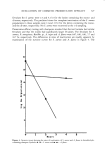
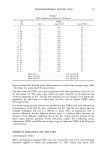
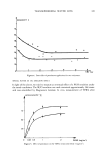
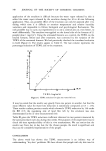
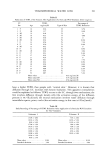
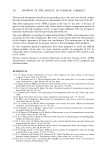
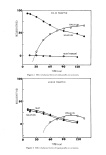
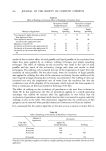
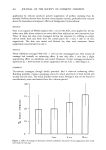
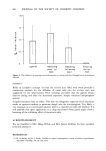
ANTIPERSPIRANT ACTION OF ALUMINUM SALTS 359 simultaneously in all three sites. The degree of anhidrosis was assessed 24 hr after the last exposure and again 7 days and 14 days later. Applications by iontophoresis , Since metallic salts are electrolytes, it is reasonable to suppose that under a positive electrical force, the cation would be efficiently propelled into the ducts. Aqueous solutions of aluminum chloride, aluminum hydroxychloride and aluminum sulfate at concentrations of 0.1%, 1.0%, 5.0%, 10.0% and 20.0% were applied iontophoretically to the volar forearms of three subjects with a current density of 0.3 mA/cm 2 for 5 min. A disc of filter paper, 15cm in diameter (Whatman #3, Whatman Ltd., England) was saturated with the test solution and placed beneath the anode. The indifferent electrode was grasped by the palm which contained a wet gauze pad. In another four subjects, 5% and 20% aluminum chloride, respectively, was iontophoretically applied for 15 rain to the same site on two consecutive days. To prevent epidermal damage, a current density of only 0.15 mA/cm 2 was used. Iontophoresis with physiological saline and patches of 5% and 20% aluminum chloride without current served as controls. As always sweat suppression was determined 24 hr after the last exposure. RESULTS Effect of Occlusion Occlusion of sites treated with 20% aluminum chloride greatly enhanced the anhidrotic effect, averaging about 77.5% (S.D. _+ 20%). This compares to a 37.5% suppression (S.D. + 18%) with the perforated cup. The difference is highly significant (p 0.01). Sweat inhibition in the chamber exposure averaged 72.5% (S.D. _+ 25%) comparable to Saran Wrap. © Short- term exposure With repeated short-term occlusive exposures, sweat inhibition increased with each treatment, becoming complete after twice-daily applications for four days (eight 15omin exposures). Repeated open applications were less effective, about 65% within three days. However, continued applications for another four days did not enhance the anhidrosis beyond this level. Figure 1 summarizes data on the degree and duration of the anhidrosis established by different occlusive schedules. A 24-hr application induced a solid anhidrosis (97.5%). Repeated 15-rain applications as well as one 3-hr exposure produced about a 77.5% sweat suppression. However, the durations were different. Fifteen-minute applications recovered at a strikingly faster rate, the antiperspirant effect having worn off almost completely by two weeks. After seven days the 24-hr exposure showed a higher degree of sweat suppression than 3 hr (about 75%). By 14 days the residual anhidrosis was about 30% and the difference had disappeared. Iontophoresis Surprisingly, iontophoretic application for 5 min did not result in sweat suppression. Two 15-rain low-current iontophoretic applications induced a somewhat greater degree of anhidrosis than the control sites (Table I). Saline iontophoresis caused no sweat suppression.
Purchased for the exclusive use of nofirst nolast (unknown)
From: SCC Media Library & Resource Center (library.scconline.org)