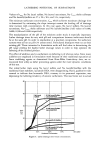
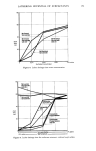
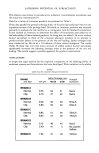
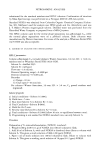
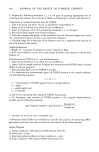
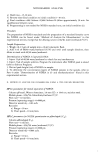
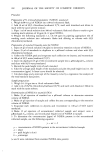
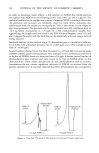
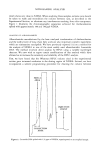
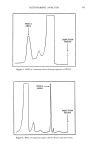
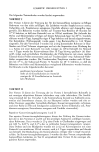
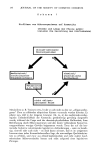
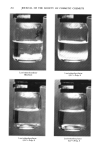
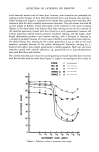
246 JOURNAL OF THE SOCIETY OF COSMETIC CHEMISTS In order to determine matric effects, a 30% solution of NDE1A-free triethanolamine was spiked with NDE1A at the following levels: 0.25, 0.80, 1.0, and 1.2 /.tg/ml. The statistical analysis for the samples and a series of aqueous NDE1A standards shows that the precision and accuracy are extremely close for both series, indicating that interferences from the matrix are not significant. This is also shown by the slopes of the curves generated. The standard and the spiked matrix has a 95% confidence limit of +0.5 ng which corresponds to +70 ppb for a 30% triethanolamine sample, thus approaching the 30 ppb trace level cited in the FDA's Federal Register notice (12), anna also compares favorably with the limit that can be realistically achieved using a thermal energy analyzer. Statistical analysis of the method using 12 observations gave a correlation coefficient (r) of 0.994, with a standard deviation (•) of _+_0.025 ppm and a 95% confidence level limit of _+0.055 ppm. Several batches obtained from the Dow Chemical Co. of fresh 99% commercial grade and 85% cosmetic grade triethanolamine were analyzed by this method and were found to be free of NDE1A down to a detection limit of 50 ppb. Likewise, several batches of diethanolamine were analyzed and were found to be free of NDE1A down to this detection limit. These results indicate that di- and triethanolamine used in cosmetic formulations do not contain significant amounts of NDEIA, as received from the primary manufacturer. It was also observed that 85% triethanolamine has a component NDEIA AREA INJECTION POINT 102 ppb NDE1A NDEIA AREA INJECTION POINT / 153 ppb NDE1A Figure 1. Clean 99% TEA and 85% TEA spiked at 102 ppb and 153 ppb, respectively.

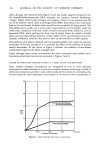
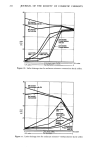
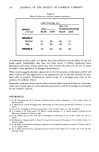
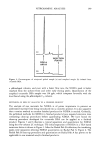
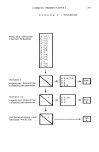
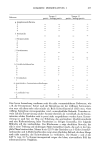
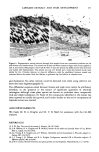
NITROSAMINE ANALYSIS 247 which elutes very close to NDE1A. When analyzing these samples, extreme care should be taken to wash and recondition the column between runs, as described in the Experimental Section, to eliminate any interferences resulting from this component. Figure 1 illustrates the chromatographic separation achieved for triethanolamine spiked with approximately 100 and 150 ppb NDEIA. ANALYSIS OF ALKANOLAMIDES Alkanolamides manufactured by the base catalyzed condensation of diethanolamine and the methyl ester of long chain fatty acids are also important cosmetic ingredients which are nitrosamine susceptible. We have previously reported (11) on a method for the analysis of NDEIA in one of the most widely used alkanolamides: Lauramide DEA. The method involved direct analysis by HPLC using a variable wavelength detector. We now wish to report certain modifications of that method which have allowed us to increase the sensitivity and reliability of the HPLC analysis. First, we have found that the Whatman HPLC column cited in the experimental section gave increased resolution in the during region of NDE1A. Second, we have incorporated a solvent programming procedure for cleaning the column between NDEIA AREA C•LLECTION AREA INJECTION POINT Figure 2. Cocamide DEA spiked with 5.35 ppm of NDEIA, superimposed on an unspiked sample.
Purchased for the exclusive use of nofirst nolast (unknown)
From: SCC Media Library & Resource Center (library.scconline.org)