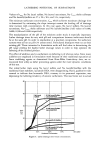
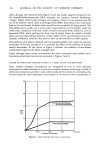
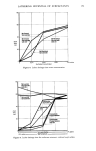
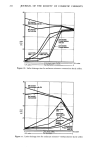
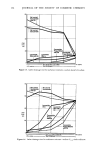
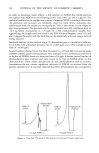
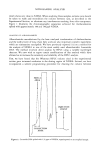
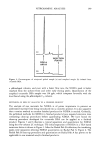
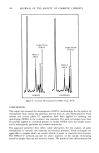
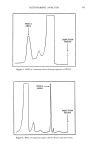
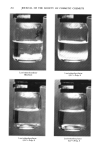
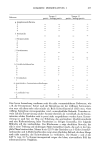
248 JOURNAL OF THE SOCIETY OF COSMETIC CHEMISTS analyses. This has eliminated ghosting which can appear from run to run. Third, detection is accomplished using a Waters fixed wavelength detector, giving greater sensitivity. Fourth, the sample size has been decreased to a 25% solution thus eliminating overloading of the column and lastly, the mobile phase has been changed to 40/60 methanol/water (V/V) with a 25-/al injection. The detection limit for this method is about 200 ppb. Statistical data of the method using 32 observations gave a correlation coefficient (r) of 0.999, with a standard deviation (tr) of +0.361 ng (+0.013 ppm) and a 95% confidence level limit of +0.737 ng (+0.029 ppm). When the reverse phase liquid chromatography method was extended to the analysis of NDEIA in cocamide DEA, it was difficult to separate NDE1A from other early eluting materials, resulting in an unacceptable high value for the detection limit. Also, the aqueous solvent used for the separation of NDE1A from the amides required evaporation prior to silylation, which prolonged the identification procedure using GC/MS confirmation. In an attempt to alleviate both problems, a method was developed to isolate the NDE1A from the amide by normal phase HPLC, followed by either quantitation on the reverse phase system or identification by GC/MS. The cocamide DEA was dissolved in 95/5 chloroform/methanol. The initial separation of NDEIA from the cocamide DEA was accomplished by directly injecting the sample on a /aPorasil column with 95/5 chloroform/methanol as the mobile phase. The collected area was evaporated and redissolved in water followed by reinjection and quantitation on a/aBondapak Q8 column. The evaporated collection from the/aPorasil column was also silylated and the mass spectra was found to be consistent with that of a known spectra of silylated NDEIA (11). Figure 2 shows the chromatogram of a spiked sample of cocamide DEA used to determine the retention time of NDEIA, along with the chromatogram of an unspiked sample, with the collected area indicated. Figure 3 shows the chromatograms of the area collections of the spiked and unspiked samples on the/aBqndapak C18 column. As can be seen in Figure 2, NDEIA could not be detected in the unspiked sample using normal phase chromatography while the collected-reinjected sample (Figure 3) showed a quantitatable peak at 260 ppb. NDEIA standards were collected from a /aPorasil column and the collections were reinjected on a /aBondapak (Qs) column. A statistical analysis using 28 observations was run on the reinjected standards. The correlation coefficient (r) was 0.826 with a standard deviation of + 1.271 ng (+0.051 ppm) and a 95% confidence level limit of +2.618 ng (+0.104 ppm). At this point, we feel the method is acceptable as a screen for NDEIA at 1 ppm or greater. As previously reported in this paper, NDEIA analysis was performed on a/aBondapak column. Since the NDEIA elutes very quickly, care must be taken to wash the column with methanol to prevent subsequent interferences from built-up material. To minimize the column purging time, and increase resolution, a Radial Compression Separation System was substituted for the stainless steel columns. The cocamide DEA sample procedure for NDEIA was followed by first separating the NDE1A on a Radial Pak B cartridge followed by quantitation on a Radial Pak A cartridge. Figure 4 shows the separation of NDEIA from cocamide DEA on the Radial Pak A cartridge (spiked and unspiked). The Radial Pak A cartridge retains NDEIA longer than it is retained on

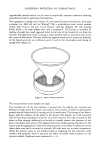
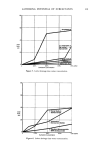
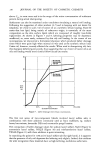
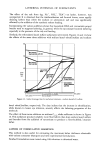
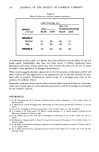
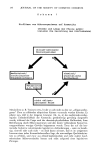
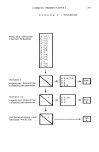
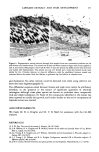
NITROSAMINE ANALYSIS 249 (a) NDE1A AREAS (b) I INJECTION POINTS Figure 3. Chromatogram of reinjected spiked sample (a) and unspiked sample (b) isolated from cocamide DEA. a /zBondapak column, and even with a faster flow rate, the NDE1A peak is better resolved from the solvent front and other early eluting peaks. Quantitation of the unspiked cocamide DEA sample was 250 ppb, which compares favorably with the level found using the/zBondapak C•8 column. EXTENSION OF HPLC-UV ANALYSIS TO A FINISHED PRODUCT The analysis of raw materials for NDE1A is of prime importance to prevent an adulterated material from being introduced into a cosmetic product. It is also apparent that a routine method to monitor finished products for NDE1A is needed. Generally, the published methods for NDE1A in finished products have required extensive time consuming clean-up procedures before quantitating NDEIA. We have found the clean-up procedure developed for cocamide DEA can be applied to a finished product. Figures 5 and 6 illustrate a typical separation and quantitation for NDE1A using the two-column LC technique. The initial separation of NDE1A in a TEA based sunscreen lotion is shown in Figure 5. After the Radial Pak B collection, the interfering peaks were separated, allowing NDEIA quantitation on Radial Pak A: Figure 6. The Radial Pak B clean-up procedure and quantitation on Radial Pak A has proven to be applicable to raw materials and/or finished products.
Purchased for the exclusive use of nofirst nolast (unknown)
From: SCC Media Library & Resource Center (library.scconline.org)