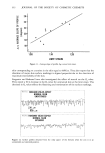
354 JOURNAL OF THE SOCIETY OF COSMETIC CHEMISTS Hoppe has used Eq. 11 to normalize, with respect to age, profile characteristics obtained from various age groups. The results discussed thus far indicate that the skin's surface profiles are: 1) anisotropic 2) site dependent 3) age dependent 4) a function of the state of stretch in the skin and 5) vary considerably across the surface of the replica. Each investigator must be cognizant of these sources of variation when attempting to assess changes in the skin's topography resulting from cosmetic treatment. The results discussed in the remaining portion of this section suggest that when these variables are accounted for evaluations of change in topography can be made. Marks and Pearse (15) investigated the effects of hydration on the horny layer. The volar aspects of the forearms of five subjects were hydrated by applying water soaked gauze under occlusion. The arms were occluded for different amounts of time ranging from one to twenty-four hours. The differences in the roughness parameters, A, • and H, obtained from SSB's taken before hydration and from adjacent sites after 1 h and 24 h hydration were not statistically significant. However the value of, A, and/-/, obtained after three hours hydration were significantly different from the prehydration values. Nicholls, King and Marks (9) used profilometry and surfometry to assess changes in the horny layer as a result of cosmetic treatment. In one series of experiments, the lower legs of six subjects were placed in 45øC water baths for twenty minutes. Alpha Keri Oil © was added to one of the water baths per subject. SSB's and impressions were taken from adjacent sites on the lateral aspects of the lower legs before treatment and again 5 rain, 60 rain and 240 min after treatment. Except for the value of, A, at 5 min the roughness parameters, A, and/-/m, used to characterize the profiles of the SSB's, did not differ significantly from the pretreatment values. No contralateral comparisons were reported. The roughness parameter, A, computed from casts of the post- treatment impressions was significantly different from the pretreatment control value at 60 rain and 240 min. However, the value for, A, obtained from casts of the contralateral control leg also differed significantly from the pre-immerson value at 60 min. No contralateral comparisons were reported. In a second series of experiments, Keri lotion © was applied to the lateral aspect of the lower legs of 6 subjects with normal skin and 6 subjects with dry skin. The product's efficacy was assessed in a similar fashion as described above. No significant differences between the control values of the roughness parameters and post treatment values were found for subjects with normal skin nor for those with dry skin. A comparison of normal skin to dry skin was not made. In a third study, Oil of Olay © was applied to the flexor aspects of the forearms of twelve subjects. Its effect on the stratum corneum was assessed in a similar way as described previously. Profile length, $, calculated from casts appeared to decrease after application of the product. Marks (10) has investigated the effects of twice daily applications of.' 1) an unspecified hydrating agent and 2) an emollient cream. These materials were used over periods of 14 and 28 days. No significant change in, A, was found after 7 days of treatment after 14 days of treatment nor 5 days after treatment was stopped. However, a trend toward a reduction in, A, might be present in the data. In each of the investigations described above, only one scan of unspecified length was run per replica or SSB. This approach combined with the actual variation in

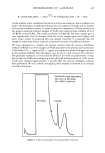
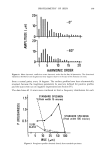
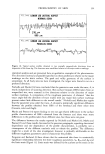
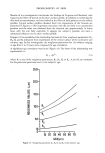
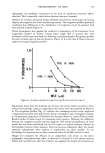
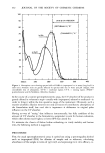
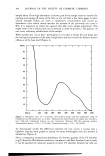
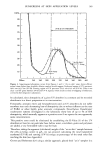
PROFILOMETRY OF SKIN 355 topography has probably contributed to the lack of significant treatment effects detected. This is especially critical when adjacent sites are compared. Ishida et al. (13) have presented results obtained directly from emery paper of varying degrees of roughness and from standard specimens. The roughness profiles generated confirmed that differences in the distribution of roughness could be assessed with their analysis method (Figure 9). These investigators also applied the method to impressions of the foreheads of an unspecified number of women, having either rough skin or smooth skin. The evaluation of skin type was made by observing microphotographs. Roughness profiles for each of these types of skin are shown in Figure 14. It is not clear if these curves are typical or average roughness profiles. 1.0-- 0.5- o 1 TYPE I SKIN SK I I I I T 5 10 25 50 100 WLE Figure 14. Roughness profiles for rough skin (type III) and smooth skin (type I). Impressions taken from the forehead of a 38 year old woman before and after a three minute hand massage, using an unspecified cold cream, were also analyzed by Ishida et al. The roughness profiles (Fig. 15) indicate that massaging reduces most roughness components and alters their distribution. These investigators also investigated changes in the geometric properties of forehead skin brought about by a peel-off facial mask. Results similar to those found for massaging were reported. However, the difference between the roughness profiles was less apparent. The statistical significance of these results has not been established nor has the replica to replica variation without an intermediate treatment been assessed. Does the previous replication affect the results obtained subsequently when replicas or impressions are taken serially? To my knowledge this question has not been answered when the SUMP method is used. Hoppe (12) evaluated the efficacy of an unspecified o/w cream on the skin's topography. Impressions were taken, as described in Section V, from twenty subjects before and one-half hour after the cosmetic was applied (the length of treatment nor
Purchased for the exclusive use of nofirst nolast (unknown)
From: SCC Media Library & Resource Center (library.scconline.org)