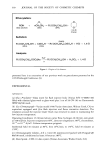
J. Soc. Cosmet. Chem., 31,367-370 (December 1980) In vitro microbiological mutagenicity studies of hydrocarbon propellants CARROLLJ. KIRWIN, WILLIAM C. THOMAS, Phillips Petroleum Company, Human Resources/Medical Department, B-.57 •IB, Bartlesville, OK 74004 and VINCENT F. SIMMON, Genex Laboratories, 12300 IVashington Ave., Rockville, &ID 20852. Received May 19, 1980. Synopsis The mutagenic potential of six gaseous hydrocarbon propellants has been evaluated in vitro using the Ames Salmondla/microsome assay. Some toxicity was observed with the higher molecular weight hydrocarbons, however none of the six propellants tested was found to be mutagenic. INTRODUCTION Chlorofluorocarbons were recently banned in the United States as propellants in aerosol spray cans. This ban was instituted because of concern over effects of potential depletion of ozone in the upper atmosphere. Various hydrocarbon propellants have been suggested as replacements for the chlorofluorocarbons. Due to possible widespread use of hydrocarbon propellants and possible human exposure to them, we have determined their mutagenic activity in in vitro tests. Six gaseous hydrocarbon propellants (Table I) were assayed for mutagenic activity using the Ames Salmonella/microsome assay (1). METHODS SALMONELLA TYPHIMURIM STRAINS TA1535, TA1537, TA1538, TA98, AND TA100 The Salmonella typhimurium strains used are all histidine auxotrophs by virtue of mutations in the histidine operon. When these histidine-dependent cells are grown on a minimal media petri plate containing a trace of histidine, only those cells that revert to histidine independence (his + ) are able to form colonies. The small amount of histidine allows all the plated bacteria to undergo a few divisions in many cases, this growth is essential for mutagenesis to occur. The his + revertants are easily scored as colonies against the slight background growth. The spontaneous mutation frequency 367

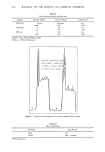
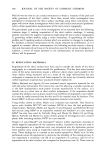
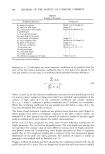
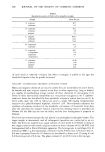
368 JOURNAL OF THE SOCIETY OF COSMETIC CHEMISTS Table I Quantitative analyses of hydrocarbon propellant samples. Sample Mole Percent A. n-butane 99.7 isobutane 0.3 n. isobutane 96.3 n-butane 3.8 propane 0.3 C. propane 99.9+ isobutane trace n-butane trace D. isopentane 97.2 n-pentane 2.8 E. n-pentane 98.7 cyclopentane 0.6 isopentane 0.4 cis-pentane-2 -- F. isobutane 97.40 n-butane 2.19 propane 0.40 ethane 0.01 of each strain is relatively constant, but when a mutagen is added to the agar the mutation frequency may be greatly increased. AROCLOR* 1254-STIMULATED METABOLIC ACTIVATION SYSTEM Many carcinogenic chemicals are inactive unless they are metabolized to active forms. In animals and man, enzyme systems in the liver or other organs (e.g., lung or kidney) are capable of metabolizing a large number of these chemicals to carcinogens (2-4). Some of these intermediate metabolites are very potent mutagens in the S. typhimu- rium test. Ames has described the liver metabolic activation system that we use (5). In brief, adult male rats (250 to 300 g) are given a single 500 mg/kg intraperitoneal injection of a polychlorinated biphenyl, Aroclor* 1254. This treatment enhances the synthesis of enzymes involved in the metabolic conversion of chemicals. Four days after the injection the animals' food is removed but drinking water is provided ad libitum. On the fifth day the rats are killed, and the liver homogenate is prepared as follows: The livers are removed aseptically and placed in a preweighed sterile glass beaker. The organ weight is determined, and all subsequent operations are conducted in an ice bath. The livers are washed in an equal volume of cold, sterile 0.15 M KC1 (1 ml/g of wet organ), minced with sterile surgical scissors in three volumes of 0.15 M KCI, and homogenized with a Potter-Elvehjem apparatus. The homogenate is centrifuged for 10 minutes at 9000 x g, the supernatant, referred to as the S-9 fraction, is frozen in dry ice. S-9 mix is prepared from the S-9 fraction as described by Ames et al. (5) using 0.1 ml S-9 fraction per ml of S-9 mix. The plates contain 0.5 ml of S-9 mix in the top agar.
Purchased for the exclusive use of nofirst nolast (unknown)
From: SCC Media Library & Resource Center (library.scconline.org)