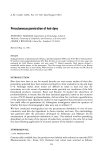
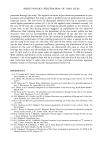
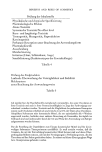
PERCUTANEOUS PENETRATION OF HAIR DYES 225 were collected at 6, 12, and 24 hours and from then on at 24-hour intervals for seven days. B. Human Volunteers The subjects were given plastic urine containers for each time period: 0-4, 4-8, 8-12, 12-24, 24-48, etc., up to 144 hours. For both species and for each time period, total urine weights were recorded and an aliquot removed for analysis. 4. RADIOACTIVITY DETERMINATION IN URINE All urine samples were filtered and assayed in PPD-triton-toluene with a liquid scintillation spectrometer. A •4C toluene internal standard (100,000 cpm) was added to each counting vial to determine the extent of quenching. The counting cocktail was 81% efficient and the background was 22 cpm. Most specimens were also counted by the wet ashing method (8). 5. DETERMINATION OF RADIOACTIVITY IN DYED HAIR Hair samples of known dry weight (40-80 mg) were digested overnight in counting vials, each containing 1 ml of Unisol. The digested samples were decolorized by the addition of 50% H20 2 and each was diluted with 15 ml of Unisol complement. Clear samples were equilibrated in the counting chamber at 4øC before counting on a Packard Tricarb liquid scintillation spectrometer. Three samples were analyzed for each hair lot with three radioactivity determinations for each sample. RESULTS 1. PERMANENT HAIR COLOR A. 2,4- Diaminoanisole The data on total excretion of radioactive dye are given in Table I. In the case of the rhesus monkey, they.reflect the counts obtained over 144 hours following application of the dye. In the case of human subjects, the time span was 96 hours as the counts at longer times were within background counts. Table I Scalp Penetration of 2,4-diaminoanisole Under Practical Hair Dyeing Conditions Species Radioactivity Radioactivity Dose Total Dye Total Dye Applied Excreted Excretion Applied Excreted (•tCi) (•tCi) (%) (•g) (•tg) Rhesus Monkey Rhesus Monkey Human (#1, male) Human (#2, male) Human (//3, male) 52 0.0! 2 0.023 43,500 !0.0 52 0.0!0 0.0!9 43,500 8.3 675 0.014 0.0021 642,860 13.5 493 0.027 0.0055 674,550 37.1 539 0.194 0.036 6! 2,220 220.4

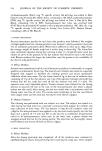
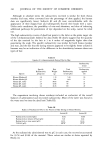
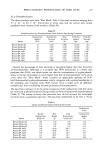
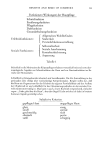
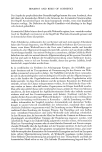
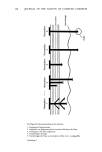
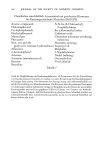
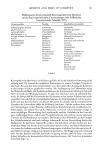
226 JOURNAL OF THE SOCIETY OF COSMETIC CHEMISTS Although in absolute terms the radioactivity excreted is similar for both rhesus monkey and man, when converted into the percentage of dose applied, the human data are significantly lower. Subjects //2 and //3 were uncomfortable with the appearance of their clipped hair and subsequently shaved their heads with a razor. Under such conditions, the possibility of cuts and abrasions, and thus of inducting additional pathways for penetration of dye deposited on the scalp, cannot be ruled out. The high radioactivity counts of dyed hair points to the latter as the prime target site of the 2,4-diaminoanisole. Indeed, the data (Table II) clearly suggest that the quantity of the dye retained by the hair is 3 to 4 orders of magnitude higher than that penetrating the scalp. The specific radioactivity was similar for both rhesus monkey and man, and the fact that the dyeing mixture appeared to be slightly better utilized in humans may be an indication of the difference in the absorbtivity between these two types of hair. Table II Uptake of 2,4-diaminoanisole-Derived Dye by Hair. Species Radioactivity in hair Specific Hair Total Radioactivity Radioactivity Weight Radioactivity applied /zCi/g hair (g) in hair (/zCi) (%) Rhesus Monkey ffl 2.9 1.78 5.18 10 Rhesus Monkey if2 3.3 2.01 6.64 12 Human (#1, male) 3.7 38.92 144 21 Human (#2, male) 2.8 32.86 95 19 Human (#3, male) 3.4 46.76 159 29 The experiment involving rhesus monkeys included an evaluation of the overall balance of administered and recovered radioactivity. Most of the latter was found in the water used to rinse the dyed hair (Table III). Table III Balance of Radioactive DAA in the Process of Hair Dyeing in Rhesus Monkey. Animal #1 Animal #2 Radioactivity excreted Radioactivity in shaven off hair Radioactivity in rinse water (t•Ci) TOTAL 0.012 0.010 5.18 6.64 43.55 41.10 48.74 47.75 As the radioactivity administered was 52/aCi in each case, the recoveries accounted for 93.7% and 91.8% of the material. These values are similar to those reported by Hruby (2).
Purchased for the exclusive use of nofirst nolast (unknown)
From: SCC Media Library & Resource Center (library.scconline.org)