J. Soc. Cosmet. Chem., 32, 247-252 (July/August 1981) Properties by design: A novel series of carboxylated surfactants KENNETH F. SCHOENE, MICHAEL H. NAIMA, HAROLD WOLF, PH.D., and MICHAEL A. ESPOSITO, Sandoz Co[ors & Chemicals, Route 10, East Hanover, NJ 07936. Received April 27, 1981. Presented at the Society of Cosmetic Chemists Annual Scientific Meeting, December 11-12, 1980, New York City. Synopsis By applying state-of-the-art computer modeling, an homologous series of ALKYL ETHER CARBOXYLATES has been generated which represents structure property data over a range of selected variables. Physioochemical properties of these representative structures have been determined which suggest interesting and novel uses. The unique chemistry of the carboxyl group in these structures, as well as the properties of currently marketed products of this type, suggested that a broader review of the general class would yield structures of high utility to a number of industries. By incorporating structural parameters confined to fatty and alkoxy chains of recognized benefit, we anticipated combinations of properties novel to this class. Indeed, a number of unusual and ostensibly useful property combinations have been shown to exist or are predicted by the COMPUTER MODEL. This paper presents these findings and suggests additional directions for research and development. INTRODUCTION On a routine basis, a new product formulator can chose from among thousands of available surfactants to fill his or her needs. In most cases, minor compromise in overall behavior is acceptable provided the chosen surfactant provides the sought after effect however, when the side effects are not tolerable, the formulator must either effect a serious compromise in product performance and quality or abandon the project altogether. Indeed, new surface-active agents appear in the literature regularly and while they swell the lists of commercially available materials, their uses are frequently quite esoteric. Broad application data are not generally available, and the prediction of chemical and physical properties, even within a homologous series, is becoming increasingly difficult due to the complexity of modern surfactants. This dilemma was viewed from two perspectives: to expand our line of carboxylated surfactants, and to do it in a way that would continuously benefit the industries we serve. Specific products for specific end uses is the ultimate goal but at best, a growing list of homologs can only hint at where to go next. 247

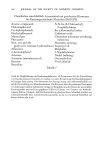
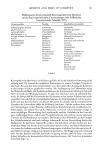
248 JOURNAL OF THE SOCIETY OF COSMETIC CHEMISTS A significant portion of carboxylated surfactant technology is the ethoxylated methyl carboxylated fatty alcohol: R--O--(C2H40)•--R'COOH, (I) where: R = C6H•3--to CmH37-- n = 1 to 100 R' = CH 2-- to C2H4--. Currently available products in the series lack sufficient variation (in a statistical sense) to be useful in confidently predicting the properties of other homologs within the series. Our task, therefore, was to determine and prepare representative variations which could be fashioned into a statistical model useful as a predictive tool. The determination of these variants, the generation of the data base, and the development of a predictive model and its utility in molecular design and product formulation are the subjects of this paper. STRUCTURE CHANGES AND MODELING A decision was made early in the program to modify the alkoxy moiety to include a block ethoxypropoxy configuration, where the PO group could occupy any position in the chain. This structural change greatly increased the number of possible homologs to the point where state-of-the-art computer modeling was mandated. Because of the inherent constraints in the computer modeling technique and as a consequence of the economic realities of raw materials supply, the general structure shown below was chosen as the operative molecular configuration. n--Cn H2n +l O--(EO)m(PO)p(EO)qRCOOH, (IX) where: n = 6 to 22 m+p+ q=60maximum p = 20 maximum R = CH2--. Design, optimization, and plotting were accomplished on time-shared interactive utilities available through Compuserve, Inc., Columbus, Ohio. The experimental model utilized a three-variable, n-factorial design sharing a common centerpoint and three independent variable values and ranges with a five-variable, five-level design of the Box-Wilson type. Application of the model to this configuration resulted in the identification of 44 specific molecules representative of a possible 800,000 within the defined universe. In addition, a number of internal checks were necessary to achieve statistical significance in the later contouring, or predictive, phase. Subsequent large scale laboratory preparation, structure confirmation, and properties' determinations followed. TESTING PROGRAM Time limitations and the large number of properties which we sought to measure for each of these compounds dictated that we select and measure only those which would have relevance to the personal care and household products industries and which would provide technologists with applicable data for formulation studies (Table I).
Purchased for the exclusive use of nofirst nolast (unknown)
From: SCC Media Library & Resource Center (library.scconline.org)