j. Soc. Cosmet. Chem., 35, 157-169 (May/June 1984) Free formaldehyde in anionic shampoos MARVIN ROSEN and ANDREW G. McFARLAND, Glyco Inc., Research and Development Department, Williamsport, PA 17701, Received November 15, 1983. Presented at the Society of Cosmetic Chemists Annual Scientific Meeting, December 1, 1983. Synopsis An analytical method has been developed for determining the free formaldehyde content of anionic sham- poos preserved with formaldehyde derivatives in the absence and presence of protein. The preservatives studied were DMDM Hydantoin, Imidazolidinyl Urea, Imidazolidinyl Urea II, and Quaternium 15. The method is based upon establishing an equilibrium of formaldehyde between the sample, the vapor phase, and an aqueous trampping solution. The trapping solution is analyzed colorimetrically for free formaldehyde at 513 nanometers using phenylhydrazine hydrochloride. Studies were conducted at temperatures of 23øC and 60øC and at concentrations of 0.1-0.8% preservative. The order of formaldehyde release found was Imidazolidinyl Urea DMDM Hydantoin Imidazolidinyl Urea II Quaternium 15. The amount of free formaldehyde released was the same at 23 ø and 60øC. Protein reduced the concentration of free formaldehyde present. In the absence of protein, the ratio of free to total formaldehyde increased with decreasing preservative concentration. In a protein shampoo, this ratio was independent of preservative level. INTRODUCTION Formaldehyde-releasing preservatives are known to hydrolyze in aqueous systems. How- ever, reliable analytical techniques have not been available for quantitating this reaction in cosmetic products. Two measurements are required to understand the chemistry involved in cosmetic systems. The first is the determination of free formaldehyde where "free" is defined as (a) the formaldehyde (or methylene glycol) formed by hydrolysis of the preservative, (b) excess formaldehyde used to synthesize the preservative, (c) for- maldehyde from other formaldehyde-based raw materials used to prepare the cosmetic product, and (d) formalin used as a preservative for the raw materials themselves. The second is the determination of total formaldehyde which is the sum of free formaldehyde and formaldehyde bound to the parent preservative. Wilson, using the Hantzsch reaction, established a reliable methodology for deter- mining the total formaldehyde content of cosmetic products containing formaldehyde (1) and formaldehyde-releasing preservatives (2). Liem (3) states that differential pulse polarography can be used to determine formaldehyde in cosmetics but no data were provided for formaldehyde derived from formaldehyde-releasing preservatives. With respect to free formaldehyde, Liem recognized the lack of data on how much free formaldehyde is present in products containing donor components. Through acom- 157

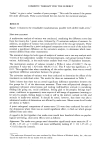
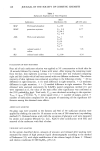
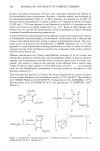
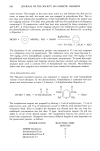
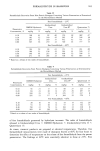
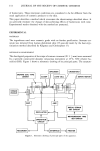
158 JOURNAL OF THE SOCIETY OF COSMETIC CHEMISTS bination of analytical techniques, he drew some conclusions regarding the stability of five formaldehyde donor preservatives. Recently, a bisulfite method was developed by the Bundesgesundheitsant (B.G.A.) in West Germany and adopted by the EEC for determining free formaldehyde in cosmetic products (4). Aqueous solutions of formalin (1.03% and 1.77%) were analyzed in our laboratory by the B.G.A. procedure and the results were found to be biased negatively by 23-37%. Based on these findings, this method was not used for the determination of free formaldehyde in anionic shampoos containing formaldehyde-releasing preservatives. A simple method for determining free formaldehyde in water is the quantitative reaction of formaldehyde with hydroxylamine hydrochloride. Hydrochloric acid is liberated and titrated with sodium hydroxide, giving a measure of formaldehyde present. This tech- nique is used to determine free formaldehyde in DMDM Hydantoin, per se. It is also applicable to other formaldehyde-releasing preservatives in water. It cannot be used in shampoos because of the interferences caused by the components of the cosmetic product with the hydrochloride salt. Feldman demonstrated the Conway microdiffusion technique to be an accurate and reproducible method for determining "free formaldehyde present in aqueous solutions together with formaldehyde reversibly bound to proteins, amino acids, and other com- pounds. The method is based on the principle of gas diffusion from a relative large volume of solution under analysis to a very small volume of water ..... and continued until the free formaldehyde concentration of the test solution is the same as in the absorbent solution (5)." This technique was applied to a study of four donor preservatives at various concentra- tions in anionic shampoos, with and without protein, at 23øC and 60øC. These products were DMDM Hydantoin [GLYDANT©], Imidazolidinyl Urea [GERMALL 115©], Imidazolidinyl Urea II [GERMALL II©], and Quaternium 15 [DOWICIL 200 ©] (Figure 1). CH2OH I H :•C•...'"N• ¸ A. H2OH CH 2 NH-C-NH // N 0 \ CH•OH -- B, 0 CH2OH II I HOCH2NH-- C --N CH20H I 0 N N /CH 2 CH=CHCI CI- 0 \ CH20H C. D. Figure 1. Formaldehyde releasing preservatives. A. DMDM Hydantoin B. Imidazolidinyl Urea C. Imidazolidinyl Urea II D. Quaternium 15.
Purchased for the exclusive use of nofirst nolast (unknown)
From: SCC Media Library & Resource Center (library.scconline.org)