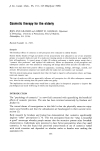
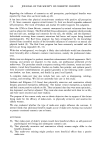
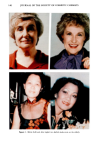
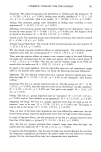
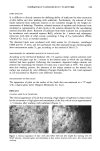
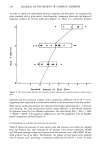
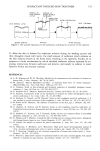
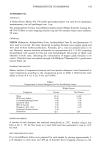
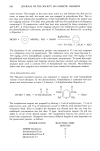
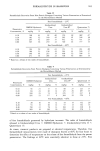
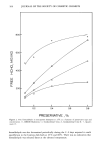
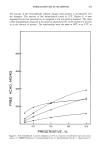
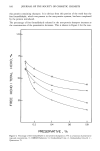
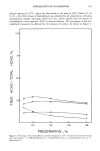
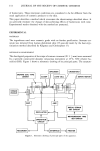
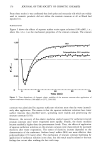
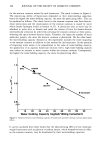
140 JOURNAL OF THE SOCIETY OF COSMETIC CHEMISTS Figure 1. Before (left) and after (right) two skilled make-overs on the elderly.

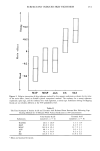
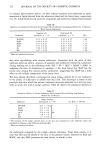
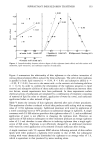
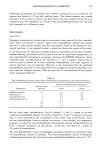
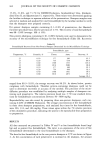
COSMETIC THERAPY FOR THE ELDERLY 141 Socializing.' The make-over groups rated themselves as "feeling more like going out" (F = 16,256 1,35 d.f., p 0.001), feeling more socially confident (F = 12.1 1,35 d.f., p 0.1), and more "glad to see people" (F Feelings.' The treatment groups rated themselves appearance (F = 34.225 1,35 d.f., p 0.001). Self-Image.' The treatment groups rated themselves = 20.306 1.35 d.f., p 0.001). as feeling more confident in their higher on the dimensions "want to be seen by other people" (F = 15.006 1.35 d.f., p 0.001) and "feel happy to look at myself in the mirror" (F = 46.225 1,35 d.f., p 0.001). Outlook on Lij•: The treatment groups rated themselves as having a more positive outlook (F = 4.556 1.35 d.f., p 0.05). Attitude Toward Make-Overs.' The attitude of the treatment groups was more positive (F = 25.6 1,35 d.f., p 0.001). We also found long-term beneficial effects on self-perception. The treatment groups improved more than the control group (F = 1123.6 1,34 d.f., p 0.001). There were also positive effects on cosmetic care: cosmetic usage in the week following the make-over increased more for the make-over groups than for the control group (F = 9.0 1.33 d.f., p 0.001). This was also true for cosmetic usage in the week one month after the make-over (F = 1025.15 1,33 d.f., p 0.001). In regard to the second hypothesis, that the physically attractive and unattractive might differ in the benefits from make-overs, we found the following short-term differences: Appearance.' The low physical attractiveness (p.a.) groups improved significantly more than the high (F = 15.525 1,35 d.f., p 0.01) on the dimension "well healthy looking." Socializing.' The low p.a. groups improved more on "feel like going out" (F = 13.78 1,35 d.f., p 0.001) they also improved more on the dimensions "socially confident" (F = 6. 125 1,35 d.f., p 0.025) and "feel glad to see people" (F = 9.03 1,35 d.f., p 0.01). Feelings.' The low p.a. groups improved more on "optimistic" (F = 15. 125 1,35 d.f., p 0.001, and on "feel confident in my appearance" (F = 4.5 1,35 d.f., p 0.05). Appearance Self Image.' The low p.a. groups improved more than the high on the di- mension "want to be seen" (F = 13.78 1,35 d.f., p 0.001) and "feel happy to look at self in the mirror" (F = 6.125 1.35 d.f., p 0.025). Thus, on most of the short-term dimensions that were affected by make-over, the low attractiveness groups improved significantly more than the high attractiveness groups. In terms of long-term effects, the self perception of the low p.a. groups improved more than that of the high p.a. groups (F = 131.22 1,34 d.f., p 0.001). Also, the low p.a. groups increased their cosmetic usage more than the high, one month after the make-over (F = 81.28 1,33 d.f., p 0.001). In regard to the third hypothesis, that the type of make-over would influence the outcome, the important comparisons are between the passive make-over and make-over training groups. For the short-term effects only two comparisons were significant:
Purchased for the exclusive use of nofirst nolast (unknown)
From: SCC Media Library & Resource Center (library.scconline.org)