j. Soc. Cosmet. Chem., 35, 345-350 (November 1984) Skin conditioning with glycerol DONALD L. BISSETT and JAMES F. McBRIDE, The Procter and Gamble Company, Miami Valley Laboratories, Cincinnati, OH 45247. Received April 30, I984. Synopsis Previously we observed that domestic pigs housed at 10% relative humidity develop visually dry skin which responds to treatment with known human skin conditioning materials [J. Soc. Cosmet. Chem., 34, 317-326 (1983)]. Here, glycerol is shown to improve dry skin visually on this animal model in a dose- dependent manner. There is an accompanying increase in skin levels of glycerol. Near-maximum effec- tiveness is achieved with once-to-twice-a-day application of a 20% aqueous solution. At 80% or greater, glycerol is as effective as petrolatum. Key results obtained with glycerol on the pig dry skin model are confirmed in human testing. Testing of aqueous solutions of several other polyols in the pig dry skin model indicates that volatile liquid and crystalline polyols are at best poor skin conditioners. INTRODUCTION In 1952 Blank (1) reported the importance of water in skin conditioning. Since then, humectants have been used widely to alleviate dry skin. Among the humectants used is glycerol, which has been shown to be quite hygroscopic (2-4). However, there has not been universal agreement that glycerol improves dry skin. In vitro, glycerol-treated stratum corneum has been observed to be more elastic (5). In vivo, glycerol increased skin conductance in direct relationship to its concentration (4) and improved the con- dition of surfactant-damaged dry skin (6). In contrast to these positive skin effects of glycerol, it has also been observed to have no effect (7) and suggested to have negligible or detrimental actions (2,3,8-10). Recently we reported on the use of the domestic pig as an animal model of human dry skin to screen skin-conditioning materials (11). We report here the use of that model to assess the skin-conditioning benefit of glycerol. The model is predictive of glycerol's effectiveness on human dry skin. MATERIALS AND METHODS In vivo pig skin condition testing was done as described previously (11). Unless indicated otherwise, treatment of pig dry skin with skin-conditioning materials was done by applying 1 ml of material per 150 cm 2 to the back once daily (Monday through Friday for 4 weeks). Skin condition grades were taken on Monday prior to treatment on that 345

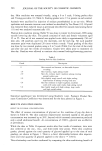
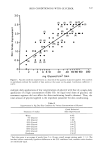
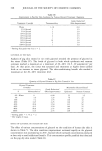
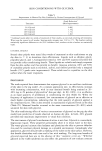
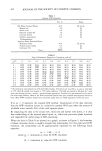
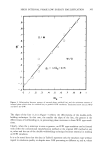
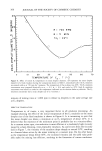
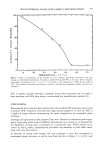
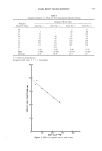
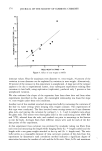
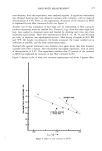
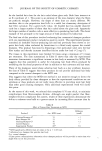
346 JOURNAL OF THE SOCIETY OF COSMETIC CHEMISTS day. Skin condition was assessed visually, using a 0 to 5 scale, 0 being perfect skin and 5 being poor skin (11 Table I). Starting grades were 2.5 or greater on each animal. Animals were sacrificed by injection of sodium pentobarbital in an ear vein. Whole epidermis and stratum corneum were isolated as described by Van Duzee (12). Glycerol was extracted from isolated tissue as previously described for natural moisturizing factor (11) and was analyzed enzymatically (13). Human skin condition testing (Table V) was done in winter (in Cincinnati, OH) using outside lower leg dry skin. The panels consisted of male and female volunteers aged 25 to 55. One ml of test material was applied twice daily to approximately 150 cm 2 skin area. All panelists used two test materials, one for each leg. All such possible treatment pairs were duplicated 20 times within a study. Visual grading of the skin was done by two trained graders using a 0 to 5 scale (Table I) at the start of the study and after one and two weeks of treatment. Grades were taken prior to treatment on that day. Panelists were allowed to continue their normal bathing/showering practices. Table I Grading Scale for Skin Condition Grade Description 0 1.0 2.0 3.0 4.0 5.0 Skin smooth and lustrous, no detectable dryness or ashing Skin lustrous, slight ashing visible Skin dry, without luster moderate ashing covering general surface area Skin slightly rough overall with slight scaling high amount of ashing covering total area Skin has moderate to high roughness moderate scales with some small cracks high ashing overall Skin highly rough with high scaling, large cracks and high overall ashing Statistical significance was determined using Student's t-test. Pearson's Product Mo- ment Correlation Coefficient was determined for the data plotted in Figure 1. RESULTS AND CONCLUSIONS EFFECT OF GLYCEROL CONCENTRATION The effect of various concentrations of glycerol on the condition of pig dry skin is shown in Table II. The skin condition improvement increased rapidly as the glycerol concentration was increased up to 20%, beyond which increased concentration produced only a small additional benefit. At concentrations of •80%, glycerol was as effective as petrolatum. While the data in Table II represent results after four weeks of treatment, data were also collected at the one-, two-, and three-week time points. These skin condition grades, plotted against the total quantity of glycerol applied up to the time of each grading, are shown in Figure 1. There is a direct relationship between skin improve- ment and total quantity of glycerol applied to the skin (r = 0.872). This relationship was further confirmed by comparing the skin-conditioning benefit of
Purchased for the exclusive use of nofirst nolast (unknown)
From: SCC Media Library & Resource Center (library.scconline.org)