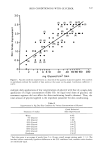
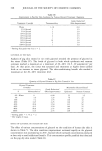
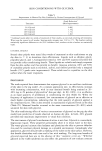
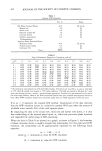
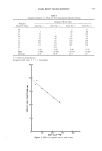
SKIN CONDITIONING WITH GLYCEROL 349 Table V Improvement in Human Dry Skin Condition by Various Concentrations of Glycerol Grade Reduction a Treatment (Skin Improvement) 5 % Glycerol 0.86] 10% Glycerol 1.44] 20% Glycerol 1.741 40% Glycerol 1.82 • Combined results (after two weeks of treatment) of three studies, no one study involving all treatments. Water was the control in all studies. Starting grade averages were 2.02 to 2.71. The brackets indicate statisrically significant differences at the 95% confidence level numbers within a bracket are statistically equal. GLYCEROL ANALOGS Several other polyols were tested (four weeks of treatment) as skin conditioners on pig dry skin (n = 3) to determine their effectiveness. Liquids such as ethylene glycol, propylene glycol, and 1,3-propanediol (tested as 10% and 50% aqueous solutions) did not provide a skin-conditioning benefit. These liquids are volatile and simply evaporate from the skin surface and thus provide no benefit. Aqueous solutions (10% and 50%) of crystalline polyols such as erythritol, xylitol, and sorbitol provided only a marginal benefit (0.5 grade units improvement). These solids tend to crystallize on the skin surface when the water evaporates. DISCUSSION The work reported here demonstrates that aqueous glycerol is an excellent conditioner of dry skin in the pig model. At a constant application rate, its effectiveness increases with increasing concentration, with its near maximal benefit being attained at 20- 40% (up to 29 •xmoles of glycerol/cm 2 skin per day). At 80-100%, it is as effective as an equal quantity of petrolatum in conditioning the skin (Table II). When the frequency of application is increased, low concentrations of glycerol are as effective as much higher concentrations, indicating that the total quantity of glycerol applied is the important factor. This is also revealed in examination of glycerol levels in the skin (Table IV). Maximal benefits occurred at the same concentrations (20-40%) which saturated the skin with glycerol. The skin-conditioning effect of various concentrations of glycerol on the pig dry skin model were predictive of results observed on human dry skin. In both, 20% glycerol provided near maximum improvement in visual skin condition. The exact nature ofglycerol's mechanism of action is not clear. Glycerol is a nonvolatile, hygroscopic liquid. These properties presumably allow it to retain water in the skin. The water-glycerol mixture then hydr. ates and plasticizes the skin to prevent dehydra- tion and the resultant physical damage in a stressful environment. Immediately after application, glycerol also provides a masking of the scales on the skin surface. However, this benefit diminishes with time and is lost with washing. The long-term benefits of glycerol reported here are in the absence of this "cosmetic cover-up." Whether glycerol in the viable epidermis can also affect the generation of new stratum corneum

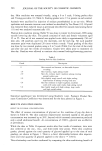
350 JOURNAL OF THE SOCIETY OF COSMETIC CHEMISTS is not known. Alteration of the course of tissue synthesis might result in a stratum corneum more resistant to dehydration. Testing of a variety of polyols revealed that crystalline and volatile liquid polyols were ineffective in long-term benefits. It appears that a hygroscopic, nonvolatile, viscous polyol (glycerol) is best suited to function as an effective skin-conditioning agent. ACKNOWLEDGMENT We gratefully acknowledge the human skin-conditioning work done by Daniel P. Harmon of the Procter and Gamble Company. REFERENCES (1) I. H. Blank, Factors which influence the water content of the stratum corneum, J. Invest. Dermatol., 18, 433-440 (1952). (2) H. C. Lindenwald and R. Tawashi, Hygroscopicity, Am. Perf. Cosmet., 80, 31-35 (1965). (3) O. K. Jacobi, Humectants versus moisturizers, Am. Cosmet. Perf., 87, 35-36 (1972). (4) G. P. Serban, S. M. Henry, U. F. Cotty, and A.D. Marcus, In vivo evaluation of skin lotions by electrical capacitance: II. Evaluation of moisturized skin using an improved dry electrode, J. Soc. Cosmet. Chem., 32, 421-435 (1981). (5) M. M. Rieger and D. E. Deem, Skin moisturizers. II. The effects of cosmetic ingredients on human stratum comeurn, J. Soc. Cosmet. Chem., 25, 253-262 (1974). (6) D. R. Highley, V. O. Savoyka, J. j. O'Neill, and J. B. Ward, A. stereomicroscopic method for the determination of moisturizing efficacy in humans, J. Soc. Cosmet. Chem., 27, 351-363 (1976). (7) A.M. Kligman, Regression method for assessing the efficacy of moisturizers, Cosmet. Toilet., 93, 27-35 (1978). (8) C. Fox, J. A. Tassoff, M. M. Rieger, and D. E. Deem, Modification of the water holding capacity of callus by pretreatment with additives, J. Soc. Cosmet. Chem., 13, 263-279 (1962). (9) B. Idson, What is a moisturizer?, Am. Cosmet. Perf., 87, 33-35 (1972). (10) R. J. Chudzikowski, Skin versus the weather, Mfr. Chem. Aerosol News, 44, 35-41 (1973). (11) D. L. Bissett and J. F. McBride, The use of the domestic pig as an animal model of human dry skin and for comparison of dry and normal skin properties, J. Soc. Cosmet. Chem., 34, 317-326 (1983). (12) B. F. Van Duzee, Thermal analysis of human stratum corneum, J. Invest. Dermatol., 65, 404-408 (1975). (13) O. Wieland, "Glycerol," in Methods of Enzymatic Analysis, H. U. Bergmeyer, Ed. (Academic Press, New York, 1965), pp 211-214.
Purchased for the exclusive use of nofirst nolast (unknown)
From: SCC Media Library & Resource Center (library.scconline.org)