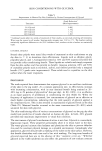
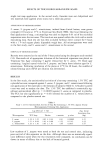
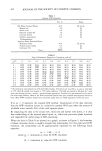
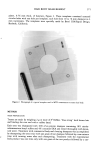
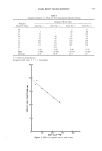
EFFECTS OF TRICHLOROCARBANILIDE SOAPS 353 single test soap application. In the second study, forearms were not delipidized and test materials were applied seven times over a three-day period. APPLICATION OF MICROORGANISMS S. aureus, S. pyoge,es and C. mi,utissim•m, isolated from clinical lesions, were grown overnight (18 hours) at 37øC in Trypticase Soy Broth (TSB). One hour following the final application of soap, a microsyringe was used to dispense 0.01 ml of the microbial suspensions onto the test areas. The inoculum was spread within the circle with a sterile inoculating loop. Each test site was then occluded (without direct contact) for 5 hours with a 1 5/s inch square plastic disposable weigh boat. All microorganisms were used in the first study, and S. a•rem and C. mi,,tissimum in the second. REMOVAL OF MICROORGANISMS Bacteria were removed at the end of the 5-hour period using the detergent scrub method (14). One-tenth ml of appropriate dilutions of the harvested organisms was plated on Trypticase Soy Agar containing 5 pog/ml tetracycline for S. a•rem, 5% blood agar containing 1 pog/ml crystal violet for S. pyoge,es, and brain heart infusion agar for C. mi,•tissim•m. Following incubation of the plates at 37øC for 48 hours, the number of colony-forming units (CFU) per dilution was determined. RESULTS In the first study, the antimicrobial activities of a bar soap containing 1.5% TCC and a placebo bar were compared against S. aureus, S. pyogenes, and C. minutissimum following one application of the materials to the forearms of subjects (Table I). A Student's paired t-test was used to analyze the data. The 1.5% TCC bar exhibited a statistically sig- nificant antimicrobial effect (p = 0.00005) against S. aureus as compared to placebo. The TCC bar also significantly (p = 0.03) lowered the number of C. minutissimum as compared to the placebo-treated site. Table I Study 1: In Vivo Antimicrobial Activity of Soap Bar Containing 1.5% TCC Against Several Microorganisms Following One Application Log CFU/cm 2 _+ SD Microorganism TCC Soap Placebo t-statistic p-value Avg. Initial Inoculation Size (log) S. aureus 3.19 -+ 1.22 4.82 _+ 0.66 8.61 0.00005 6.51 S. pyogenes 1.21 _+ 0.84 1.03 + 0.88 -1.23 0.1142 6.22 C. minutissimum 3.26 -+ 1.36 3.83 -+ 1.01 1.94 0.0314 6.47 Low numbers of S. pyogenes were noted at both the test and control sites, indicating poor survival of this organism on the skin. Although there was no statistically signif- icant difference noted when the two treatments were compared, no conclusions can be drawn in terms of efficacy due to the lack of bacterial growth.

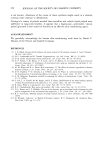
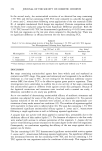
354 JOURNAL OF THE SOCIETY OF COSMETIC CHEMISTS In the second study, the antimicrobial activities of an identical bar soap containing 1.5% TCC and the bar containing 0.8% TCC were compared to a placebo bar against S. aureus and C. minutissimum following seven applications of the test materials (Table II). A complete randomized block design was employed. Pairwise comparisons within the blocks were conducted using the Least Significant Difference procedure. Both the 1.5% TCC bar and 0.8% TCC bar demonstrated significantly (p • 0.05) lower counts for both test organisms on the test sites when compared to the placebo bar. There was no significant difference in efficacy between the two bars containing TCC. Table II Study 2: In Vivo Antimicrobial Activity of Soap Bars Containing 1.5% TCC and 0.8% TCC Against Two Microorganisms Following Seven Applications Microorganism Log CFU/cm 2 - SD Avg. Initial Inoculation Size 1.5% TCC soap 0.8% TCC soap Placebo (log) S, aureus 2.7P* - 0.98 2.49 • -+ 0.66 4.00 b - 0.86 6.54 C, minutissimum 2.22 c -+ 1.68 2.11 c + 1.53 3.84d-- + 1.24 6.17 Values sharing a common superscript were not found to be significantly different at p • 0.05. DISCUSSION Bar soaps containing antimicrobial agents have been widely used and marketed as cosmetics and OTC drugs. One agent used extensively and recognized to be an effective deodorant in a bar soap is TCC. I, vitro testing for the minimum inhibitory concen- tration (MIC) has shown TCC to be effective against gram positive organisms. These investigations were undertaken to confirm the i, vivo activity of bar soaps containing this antimicrobial agent at different levels against certain skin pathogens. Because of the logistical restrictions and enormous costs involved with a normal use study, a laboratory controlled i, vivo study was preferred. An i, vivo method of determining antimicrobial efficacy of antibiotic ointments and powders was adapted for assay of the efficacy of bar soap materials (13). Ten percent aqueous solutions of the test materials were utilized, as this is the approximate con- centration of soap under normal use conditions (15). The numbers of organisms applied were equivalent to those seen in infected skin (16). The soap bar containing 1.5% TCC demonstrated significant antimicrobial efficacy against S. aureus and C. minutissimum following a single application as well as following repeated application. S. pyogenes does not survive well when applied to normal skin, presumably due to the inhibitory effects of skin surface lipids (17). The forearms of subjects in the first study were washed with acetone to enhance persistence of this organism. S. pyogenes did not survive even following acetone treatment to the same degree as the other test organisms. Consequently, no conclusions regarding the efficacy of the test soaps against this or- ganism can be drawn. The bar containing 0.8% TCC demonstrated significant antimicrobial activity against S. aureus and C. minutissimum following repeated application. No significant difference was determined between the bar containing 0.8% TCC and the bar containing 1.5% TCC against the test organisms under the conditions of this study. This suggests that
Purchased for the exclusive use of nofirst nolast (unknown)
From: SCC Media Library & Resource Center (library.scconline.org)