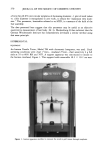
j. Soc. Cosmet. Chem., 35, 351-355 (November 1984) In vivo effect of antimicrobial soap bars containing 1.5% and 0.8% trichlorocarbanilide against two strains of pathogenic bacteria MARY BETH FINKEY and NEAL C. CORBIN?, Armour Research Center, Scottsdale, AZ 85260,' LOUISE B. AUST, Hill Top Research, Inc., Scottsdale, AZ 85251 RAZA ALY and HOWARD I. MAIBACH, Department of Dermatology, University of California, San Francisco, CA 94143. Received October 6, 1983. Synopsis The study was conducted to confirm the antimicrobial efficacy of bar soap formulations containing 1.5% 3,4,4'-trichlorocarbanilide (TCC) or 0.8% TCC against common skin pathogens. A laboratory controlled in vivo technique was utilized which involved application of test materials followed by inoculation with a known number of test organisms. Following a 5 hour occlusive period, the remaining organisms were removed and enumerated. Both bars demonstrated significant antimicrobial activity against Staphylococcus aureus and Corynebacterium minutissimum. It appears that this method provides a means of verifying in vivo antimicrobial efficacy prior to conducting larger scale clinical studies. INTRODUCTION The causative agents of 75 % of all cutaneous infections are Staphylococcus aureus and Streptococcus pyogenes of these, 50% are due to S. aureus (1). S. aureus has been indicated in furuncles and carbuncles, whereas both organisms have been indicated in impetigo and pyoderma. Another disease of the skin, erythrasma, is caused by the organism Corynebacterium minutissimum (2,3). The incidence of erythrasma in young adults has been found to be 19% (4) among mental patients it has been shown to be as high as 43% (5). Studies demonstrating the prophylatic effect of antibacterial soaps against such cuta- neous infections were conducted in the late 1960's and early 1970's. Leonard (6) de- termined that a bar containing 2% of a mixture of 3,5-dibromosalicylanilide (DBSA), 3,4'5-tribromosalicylanilide (TBSA), 3,4,4'-trichlorocarbanilide (TCC), and 4,4'-di- chloro-3-(trifluoromethyl) carbanilide (DTFC) reduced the incidence of superficial cutaneous infections in a military academy population. Duncan et al. (7) reported similar results using a bar containing 2% of a mixture of DTFC, TBSA, and TCC in a prison population. A bar containing 1.5% of a mixture of equal amounts of hexachlorophene and TCC was also shown by Mackenzie (8) to be efficacious in reduction of superficial cutaneous infections in a Naval Academy population. Dodge et al. (9) determined that Deceased, December 31, 1983 351

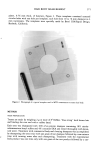
352 JOURNAL OF THE SOCIETY OF COSMETIC CHEMISTS a soap containing a 2% mixture of DBSA, TBSA, DTFC, and TCC was effective in the prophylaxis of erythrasma. With the FDA restriction in 1972 on the use of hexachlorophene to prescription use only (10) and the confirmation of the photoallergenicity of halogenated salicylanilides (11, 12), these ingredients were removed from antibacterial soaps for over-the-counter sale. Currently antibacterial bar soaps available to consumers contain either TCC and/ or 2,4,4'-trichloro-2'-hydroxy diphenyl ether (triclosan). Major clinical studies have not been conducted with these bars for numerous reasons: 1) It is difficult to find a relatively confined population in the U.S. that would be acceptable to an Institutional Review Board and that would have sufficient incidence of infection to allow determination of any change in the incidence 2) As Leonard (6) noted, it is difficult to enforce appro- priate controls and blinding 3) Few dermatologists would be willing to perform the large numbers of physical and bacteriological examinations needed over the extended time periods necessary 4) Enormous study costs would be difficult to justify. The objective of the study reported here was to confirm the antimicrobial efficacy of bar soap formulations containing TCC at varying levels against common skin pathogens by applying a laboratory controlled in viva technique. An in viva method for testing antimicrobial ointments or powders (13) was modified for this purpose. MATERIALS AND METHODS SUBJECTS Thirty subjects, male and female, with normal skin were included in each investigation. They were instructed to use non-medicated soap for all bathing and washing two weeks prior to study. TEST MATERIALS Soap bars containing 1.5% TCC and 0.8% TCC were prepared at the Armour Research Center, Scottsdale, AZ. The level of TCC was verified by UV absorption. The bars were principally composed of the sodium salt of fatty acids derived from tallow and coconut oil. Additionally, they contained small amounts of recognized cosmetic ingre- dients, such as certified colors, chelants, and fragrance. Although the bars were similar, they differed in the levels of TCC (1.5 and 0.8%) and the method by which the TCC had been incorporated into the bar. The efficacy of the TCC soap bars was compared to that of a placebo bar which did not contain TCC. All soaps were tested as ten percent aqueous solutions. TEST SOAP APPLICATION Circular areas, 2.7 cm in diameter, were drawn on the flexor surface of both forearms. Next, 0.3 ml of the test solutions were applied to designated sites using a 1.0 ml syringe and spread evenly within the area with a sterile applicator. The materials were left on the site for a 60 second period, followed by a 30-second rinse with tap water. In the first study, the forearms of subjects were delipidized with acetone prior to a
Purchased for the exclusive use of nofirst nolast (unknown)
From: SCC Media Library & Resource Center (library.scconline.org)