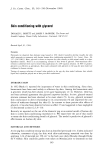
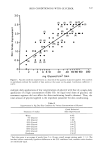
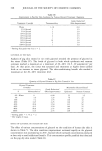
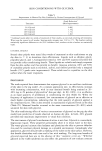
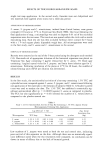
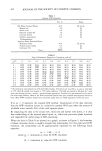
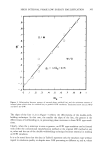
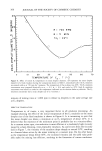
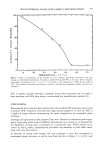
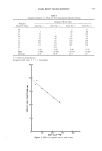
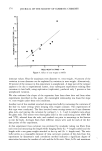
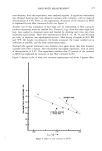
SKIN CONDITIONING WITH GLYCEROL 347 3.01 1.5 (5)• 1.0 ß (6) ß ß (7) •4) (3} (3l {2) {5• (4) (3) (2} {6) (5) (2) (8) (6) (2) (4) (3) ß ß ß ß ß ß ß ß {13) (4) 0 ß ß ß (8) (3) {3) [ I I I I I I II I 1 2 4 6 8 10 20 40 60 80 100 200 mg Glycerol/cm 2 Skin Figure 1. Pig skin condition improvement as a function of the quantity of glycerol applied. The numbers in parentheses indicate the number of data points at that point on the graph. Correlation coefficient = 0.872. multiple daily applications of low concentrations of glycerol with that of a single daily application of a high concentration (Table III). At equal total doses of glycerol, the treatment regimen did not affect the skin-conditioning benefit obtained. Thus, the total amount of glycerol applied is the important parameter for skin conditioning. Table II Improvement in Pig Dry Skin Condition by Various Concentrations of Glycerol Treatment (4 weeks) Grade Reduction a (Skin Improvement) Water 0.00] 5 % Glycerol 0.95 ] 10% Glycerol 1.46] 20% Glycerol 1.95 1 40% Glycerol 2.08 60% Glycerol 2.00 80% Glycerol 2.50 100% Glycerol 2.50 Petrolatum 2.50 a Each data point is an average of results from 5 to 10 pigs overall average starting grade = 3.3. The brackets indicate statistically significant differences at the 95% confidence level numbers within brackets are statistically equal.

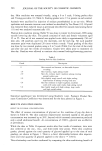
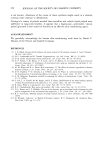
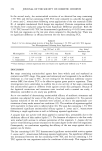
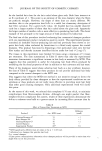
348 JOURNAL OF THE SOCIETY OF COSMETIC CHEMISTS Table III Improvement in Pig Dry Skin Condition by Various Glycerol Treatment Regimens Treatment (4 weeks) Treatments/day Grade Reduction • (Skin Improvement) Water 1-10 0.0 5 % Glycerol 1 1.5 5 % Glycerol 2 2.0 10% Glycerol 1 2.0 10% Glycerol 2 2.5 20% Glycerol 1 2.5 10% Glycerol 10 3.0 20% Glycerol 5 3.0 100% Glycerol 1 3.0 Starting skin grade was 4.0 n = 2. GLYCEROL IN THE SKIN Analysis of pig skin treated in vivo with glycerol revealed the presence of glycerol in the tissue (Table IV). The levels of glycerol in both whole epidermis and stratum corneum reached a maximum at a treatment of 20-40% (14.5-29 p•moles/cm 2 per day). At that point, the tissue was saturated and treatment at higher doses yielded little or no increase in tissue glycerol. The skin-conditioning benefit also reached a maximum at the 20-40% treatment level. Table IV Quantity of Glycerol Present in Pig Skin Treated In Vivo Glycerol Treatment (4 weeks) Micromoles Glycerol/Gram b Grade Reduction • Micromoles/cm 2 (Skin Improvement) Epidermis Stratum Corneum 0% -Water 0 0.00 25 3.5 5% 3.6 1.25 76 22 10% 7.2 1.75 110 32 20% 14.5 2.25 136 32 40% 29.0 2.50 132 52 60% 43.5 2.50 146 52 80% 58.0 2.75 130 51 100% 72.5 2.75 138 48 Starting grade = 3.75' n = 2. Dry weight of tissue. EFFECT OF GL¾CEROL ON HUMAN DRY SKIN The effect of various concentrations of glycerol on the condition of human dry skin is shown in Table V. The skin condition improvement increased rapidly as the glycerol concentration was increased up to 20%, beyond which increased concentration produced at best only a small additional benefit. This concentration profile parallels that obtained on the pig dry skin model (Table II).
Purchased for the exclusive use of nofirst nolast (unknown)
From: SCC Media Library & Resource Center (library.scconline.org)