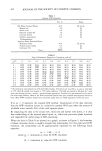
EFFECTS OF TRICHLOROCARBANILIDE SOAPS 355 variations in the processing of bar soaps may affect the antimicrobial activity of these products. This may allow reduced consumer exposure to the active ingredients while maintaining antibacterial activity levels. Unpublished in vitro data (Theiler and Santora, personal communication) have indicated a sigmoidal relationship between antimicrobial activity and percent of specially incorporated TCC. Additional unpublished data (North-Root and Demetrulias, personal communication) have shown that approximately equal concentrations of TCC remain on the skin following washing with either the 1.5 % or 0.8% TCC bars. Based on the data obtained, it appears that this method provides a valuable screening tool prior to the initiation of a large scale clinical prophylactic study. REFERENCES (1) S. N. Cohen, "Treatment of Cutaneous Staphylococcal and Streptococcal Infections," in Skin Micro- biology.' Relevance to Clinical Injgction, H. I. Maibach and R. Aly, Eds. (Springer Verlag, New York, 1981), pp 329-332. (2) I. Sarkany, D. Taplin, and H. Blank, Organism causing erythrasma, Lancet, 2, 304 (1962). (3) I. Sarkany, D. Taplin, and H. Blank, Erythrasma--common bacterial infection of the skin,J. Amer. Med. Assoc., 177, 120-122 (1961). (4) D. Somerville, Erythrasma in normal young adults,.]. Med. Microbiol., 3, 57-64 (1970). (5) D. Somerville, R. Seville, W. Noble, and J. A. Savin, Erythrasma in a hospital for the mentally subnormal, Br..]. Dermatol., 82, 355-560 (1970). (6) R. R. Leonard, Prevention of superficial cutaneous infections, Arch. Derre., 97, 548-552 (1968). (7) W. C. Duncan, B. G. Dodge, and J. M. Knox, Prevention of superficial pyogenic skin infections, Arch. Derm., 99, 465-468 (1969). (8) A. R. MacKenzie, Effectiveness of antibacterial soaps in a healthy population,.]. Amer. Med. Assoc., 211, 973-976 (1970). (9) B. G. Dodge, W. R. Knowles, M. E. McBride, W. C. Duncan, and J. M. Knox, Treatment of erythrasma with an antibacterial soap, Arch. Derre., 97, 548-552 (1968). (10) Federal Register, Vol. 37, pp. 20160-20163 (September 1972). (11) S. Epstein and T. Inta, Photoallergy from soaps,.]. Amer. Med. Assoc., 194, 1016-1017 (1965). (12) S. Epstein, Photosensitizers in soaps,.]. Amer. Med. Assoc., 195, 190 (1966). (13) R. Aly and H. I. Maibach, In vivo methods for testing topical antimicrobial agents,.]. Soc. Cosmet. Chem., 32, 317-323 (1981). (14) P. Williamson and A.M. Kligman, A new method for the quantitative investigation of cutaneous flora,.]. Soc. Cosmet. Chem., 32, 317-323 (1981). (15) P. J. Frosch, "Irritancy of Soaps and Detergent Bars," in Principles of Cosmetics for the Dermatologist, P. Frost and S. N. Horwitz, Eds. (C. V. Mosby, St. Louis, 1982), p 10. (16) H. I. Maibach, "Experimentally-Induced Infections in the Skin of Man," in Skin Bacteria and Their Role in Infections, H. I. Maibach and G. Hildick-Smith, Eds. (McGraw-Hill, New York, 1965), pp 85 -94. (17) R. Aly, H. I. Maibach, W. G. Strauss, and H. R. Shinefield, Survival of pathogenic microorganisms on human skin, J. Invest. Dermatol., 58, 205-210 (1972).

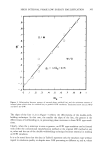
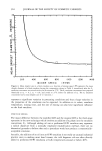
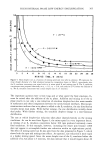
j. Soc. Cosmet. Chem., 35, 357-368 (November 1984) Low-energy emulsification. Part VI: Applications in high-internal phase emulsions T. J. LIN, 628 Enchanted Way, Pacific Palisades, CA 90272, and Y. F. SHEN, Shen Hsiang Tang Chemical Co., Ltd. P.O. Box 150, Talchung, Taiwan. Received December 22, 1983. Presented at Annual Scientific Meeting, Society of Cosmetic Chemists, New York, December 2, 1983. Synopsis Low-energy emulsification (LEE) is a novel emulsification method by which thermal energy is selectively applied to only a portion of the external or internal phase instead of to the entire emulsion as in conventional emulsification. Although LEE has proven to be extremely energy-efficient and very practical in processing a wide-range of commercial emulsions, it has been difficult to apply the technique to emulsions with large internal phase volumes because of potential irreversible phase inversion. The inversion problem is partic- ularly acute when LEE is carried out at relatively high ratios of unheated phase to heated phase. The modified LEE technique involves withholding of a portion of the internal phase liquid as well as a portion of the external phase. The emulsion is made in three stages, with application of thermal energy only during the first-stage concentrate preparation. Tests on O/W emulsions stabilized with anionic and nonionic surfactants indicate that the new method can effectively prevent permanent phase inversion in high-internal phase emulsions and allow LEE pro- cessing at higher ratios of unheated phase to heated phase than did the original LEE method. It was discovered that mixing time and mixer rpm as well as the bulk temperature and the size of the withheld phase have significant effects on the mean droplet size of finished emulsions. INTRODUCTION Low-energy emulsification (LEE), as originally introduced by Lin, involves a two-stage processing of emulsions (1). A portion of the emulsion's intended external phase fluid is withheld and an emulsion concentrate is first made with application of thermal energy. Generally, the withheld phase (alpha phase) is not heated and serves to cool the bulk during the second stage processing which involves a dilution of the emulsion concentrate. Hence the greater the ratio of the unheated withheld phase to the heated external phase (beta phase), the greater will be energy conservation and cost-reduction. In this work, o• and [3 are defined as the weight fractions of the unheated and heated phases respectively. Subscripts i and e are used to denote the emulsion's internal and external phases. It has been demonstrated in pilot plants as well as in many manufacturing plants in different parts of the world that LEE can be extremely useful in processing a wide range of cosmetic, food, and pharmaceutical emulsions with significant reduction of energy and processing costs. The increase in productivity due to a reduction in the cooling 357
Purchased for the exclusive use of nofirst nolast (unknown)
From: SCC Media Library & Resource Center (library.scconline.org)