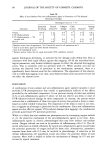
92 JOURNAL OF THE SOCIETY OF COSMETIC CHEMISTS (11) (12) (13) (14) (15) (16) (17) (18) E. W. Kellogg and I. Fridovich, Superoxide, hydrogen peroxide, and singlet oxygen in lipid perox- idation by xanthine oxidase system, J. Biol. Chem., 250, 8812-8817 (1975). E. A. Kitchen, W. Dawson, K. D. Rainsford, and T. Cawston, "Inflammation and Possible Modes of Action of Anti-Inflammatory Drugs," in Anti-Inflammatory andAnti-Rheumatic Drugs, K. D. Rains- ford, Ed. (CRC Press, Boca Raton, FL, 1985), pp. 48-52. R. Rampoldi, N. Macedo, W. Alallon, and J. Sanguimetti, Topical vitamin E and ultraviolet radiation on human skin, Med. Cutan, Ibero Lat. Am., 18, 269-272 (1990). J. Murray, D. Darr, J. Reich, and S. Pinnell, Topical vitamin C treatment reduces ultraviolet B radiation-induced erythema in human skin, Clin. Res., 39, 548A (1991). T. F. Anderson, C. Peterson, and T. Hamilton, Meclofenomate inhibition of UV-induced erythe- ma--A randomized, placebo-controlled, double-blind study, Photoderm., 6, 63-68 (1989). W. S. Miller, F. R. Fuderman, and J. G. Smith, Aspirin and ultraviolet light-induced erythema in man, Arch. Dermatol., 95, 357-358 (1967). E. K. Edwards, S. N. Horwitz, and P. Frost, Reduction of the erythema response to ultraviolet light by non-steroidal antiinflammatory agents, Arch. Dermatol. Res., 272, 263-267 (1982). P. M. Farr and B. L. Diffey, A quantitative study of the effect of topical indomethacin on cutaneous erythema induced by UVB and UVC radiation, Brit. J. Dermatol., 115, 453-466 (1986).

J. Soc. Cosmet. Chem., 43, 93-100 (March/April 1992) Influence of formulation factors on the deposition of liposornal components into the different strata of the skin J. DU PLESSIS, K. EGBARIA, and N. WEINER, College of Pharmacy, University of Michigan, Ann Arbor, MI 48109-1065. Received August 25, 1991. Synopsis The effects of lamellarity and total lipid concentration on the deposition of liposomal components into the various skin strata were determined using in vitro diffusion experiments. Large unilamellar vesicles, mul- tilamellar vesicles, and dehydration/rehydration vesicles composed of egg lecithin, cholesterol, and cho- lesteryl sulfate at lipid concentrations of 10, 25, and 50 mg/ml were tested. The results suggest that mixing and interaction of liposomal bilayers with the stratum corneum is extensive and that the skin is capable of incorporating large amounts of lipids when they are applied in a bilayer configuration. For each type of liposome tested, the amount of lipid deposited in the deeper skin strata of pig skin was at least ten times higher than that deposited in mouse skin. Lamellarity had little effect on the deposition of liposomal components into the skin strata when the formulations were compared at equal lipid concentrations. INTRODUCTION Liposomes are microscopic vesicles composed of one or more lipid bilayers arranged in concentric fashion, enclosing an equal number of aqueous compartments (1). Various amphipathic molecules have been used to form the liposomes, and the method of preparation can be tailored to control their size and morphology. The classification of liposomes is often confusing and can be based on whether they contain only one (uni- lameliar) or more (multilamellar) bilayers, their size, or their method of preparation. Recently, a great deal of interest in the use of liposomes in skin gels or skin creams has been generated in the field of cosmetics. Phospholipids are widely used for topical applications in cosmetics and dermatology, since they have a high content of esterified essential fatty acids, the proper blend of which is believed to increase the barrier function of the skin and decrease water loss within a short period of time after application (2,3). The key ingredient that keeps the human skin soft and flexible is water. Skin, partic- ularly the horny layer, performs a significant protective role by providing, in addition to mechanical protection, a barrier against extraneous substances. This function of the horny layer is dependent on its elasticity, determined by the content of fats and inor- ganic salts, as well as by the hydration state. Increasing the skin humidity leads to an increase in its elasticity (5). 93
Purchased for the exclusive use of nofirst nolast (unknown)
From: SCC Media Library & Resource Center (library.scconline.org)