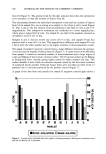
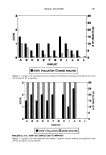
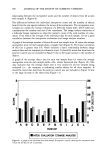
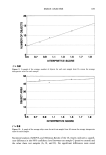
100 JOURNAL OF THE SOCIETY OF COSMETIC CHEMISTS radiolabeled lipids is not maintained in the deeper skin strata suggests that the lipo- somal components are diffusing independently in these regions. Cholesteryl sulfate is more polar than cholesterol, and the two molecules should diffuse at independent rates once they are no longer associated in a bilayer configuration. The combined results suggest that topically applied liposomal formulations could be an effective delivery system for the treatment of skin. Since these liposomal formulations provide sustained, enhanced levels of lipids in the skin, they may be of value to cosmetic products by encapsulating a variety of ingredients such as moisturizers and skin care agents. Furthermore, these formulations can be optimized, with respect to liposomal type and lipid concentration, to release material to the various layers of the skin at defined rates. ACKNOWLEDGMENTS J.D.P. was on sabbatical leave from the Department of Pharmaceutics, Potchefstroom University for C.H.E., Potchefstroom, South Africa. We thank the Foundation for Research Development, CSIR, Pretoria, and Eli Lilly (S.A.) Pty (Ltd.) for sabbatical grants. We also thank Hoffmann-LaRoche, Inc., and several other companies for partial support of this project. REFERENCES (1) A.D. Bangham, M. M. Standish, and J. C. Watkins, The action of steroids and streolysins on the permeability of phospholipid structures to cations, J. Mol. Biol., 13, 138-145 (1965). (2) M. M. Rieger, Skin lipids and their importance to cosmetic science, Cosmet. Toiletr., 102, 36-49 (1987). (3) C. Protrey, P. J. Hartop, and M. Press, Correction of the cutaneous manifestations of essential fatty acid deficiency in man by application of sunflower-seed oil to the skin, J. Invest. Dermatol., 64, 228-235 (1975). (4) G. Imokawa, S. Akasaki, Y. Minematsu, and M. Kawai, Importance of intercellular lipids in water- retention properties of the stratum corneum, Arch. Dern•tol. Res., 281, 45-51 (1989). (5) C. Artman, J. Roding, M. Ghyczy, and G. Pratzel, Influence of various liposome preparations on skin humidity, Parfumerie und Kosmetik, 5, 326-332 (1990). (6) W. S. Oleniacz, U.S. Patent, 3, 957, 971 (1976). (7) M. Tagawa, K. Shinozaki, Y. Kurata, K. Matsumoto, and Y. Tabata, Application of hydrogenated lecithin for cosmetics, 14th IFSCC, 1986, Vol. 1, p. 335. (8) F. Szoka and D. Papahadjopoulos, Procedure for preparation of liposomes with large internal aqueous space and high capture by reverse-phase evaporation, Biochem, 75, 4191-4198 (1978). (9) C. J. Kirby and G. Gregoriadis, "A Simple Procedure for Preparing Liposomes Capable of High Encapsulation Efficiency Under Mild Conditions," in Liposome Technology, G. Gregoriadis, Ed. (CRC Press, Boca Raton, FL, 1984), Vol. 1, pp. 19-28. (10) S. Grayson and P.M. Elias, Isolation and lipid biochemical characterization of stratum corneum membrane complexes: Implication for the cutaneous permeability barrier, J. Invest. Dermatol., 78, 128-135 (1982). (11) H. Schafer, G. Stuttgen, A. Zesch, W. Schalla, and J. Gazith, Quantitative determination of percutaneous absorption of radiolabeled drug, in vitro and in vivo by human skin, Curr. Probl. Dern•tol., 7, 80-94 (1979). (12) K. Egbaria, C. Ramachandran, D. Kittayonond, and N. Weiner, Topical delivery of liposomal interferon, Antimicrob. Agents Cheroother., 34, 107-110 (1990). (13) N. Weiner, F. Martin, and M. Riaz, Liposomes as a drug delivery system, Drug Devel. Ind. Pharm., 15, 1523-1554 (1989). (14) J. C. Tsai, M. J. Cappel, N. D. Weiner, G. L. Flynn, and J. Ferry, Solvent effects on the harvesting of stratum corneum from hairless mouse skin through adhesive tape stripping in vitro, Int. J. Pharm., 68, 127-133 (1991).

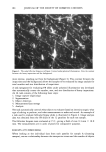
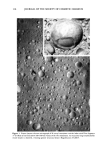
J. Soc. Cosmet. Chem., 43, 101-112 (March/April 1992) Quantitative assessment of cyanoacrylate follicular biopsies by image analysis DAVID G. GROH, OTTO H. MILLS, JR., and ALBERT M. KLIGMAN, Skin Care Laboratory, Personal Care Products Research and Development, Amway Corporation, Ada, MI 49355 (D.G.G.), Hill Top Research, Inc., East Brunswick, NJ 08816 (O.H.M.), and University of Pennsylvania, Philadelphia, PA 19104 (A. M. K. ). Received November 27, I99I. Presented at the Annual Scientific Meeting of the Society of Cosmetic Chemists, New York, December 5-6, 199•. Synopsis A method has been developed for quantifying the comedogenic effect of topically applied products using image analysis. Cyanoacrylate follicular biopsies are evaluated under polarized light, which brightly illu- minates horny casts and microcomedones, enabling rapid measurement of density and size distribution. A number of substances were tested on the backs of human subjects. There was a high correlation between stereomicroscope scores for comedogenicity and the readout by digital image analysis (r) 0.9). INTRODUCTION The rabbit ear model was the first widely used procedure for determining whether a topically applied substance could induce comedones. In the early eighties Mills and Kligman developed a human model for assessing comedogenic substances (1). The "non-animal" aspect of this model has greater meaning today than when it was first developed. In that model, test substances were applied under occlusion for one month on the upper part of the backs of young adult black men having large follicles. The suitability of each subject was checked by the noninvasive "follicular biopsy" technique (2). The follicular biopsy (FB) samples the contents of sebaceous follicles. To obtain a follicular biopsy, the skin surface was coated with a thin layer of methyl cyanoacrylate glue and a glass slide was applied firmly. After one minute, the slide was carefully peeled off, bringing with it a thin layer of stratum corneum and follicular horny extensions. Hyperkeratotic follicles on the follicular biopsy appeared as cylinders of horny material surrounding extracted veilus hairs (Figure 1). Follicular biopsies obtained at the end of the four weeks were then evaluated using a standard four-point scale: 0, noncomedogenic 1, smallish horny cylinders, involving at least half of the follicles 2, moderately sized horny masses lol
Purchased for the exclusive use of nofirst nolast (unknown)
From: SCC Media Library & Resource Center (library.scconline.org)